Your IT team does not need another dashboard. It needs breathing room





This article has been supplied and will be available for a limited time only on this website.
Michael Currie, Director at The Cloud Crew
I do not think most IT teams need another dashboard. Many mid-market IT teams already have enough places to look. The real pressure starts after the dashboard lights up.
Someone still has to decide whether the alert is urgent, who owns it, how quickly it should be escalated, and what must change to prevent the same issue from recurring. The problem is not always a lack of information. More often, it is the gap between what IT teams can see and what they have the time and specialist cover to act on.
That gap is becoming harder to ignore. Microsoft 365 changes, cloud workloads, endpoint alerts, backup checks, licence renewals, service tickets, procurement questions, email security notifications, user demands, and compliance requests do not arrive in a neat order. They arrive together, usually while something else is already on fire.
Visibility is not the same as relief
Technology vendors often sell visibility as if seeing more automatically means managing better. Visibility is useful, but it is not relief. If every tool creates another alert stream, report, or portal to check, the IT team may end up with more evidence of pressure, not more capacity to deal with it.
This is not only a local frustration. SolarWinds’ 2026 State of Monitoring and Observability research found that 77% of surveyed IT professionals cite limited visibility across on-premises and cloud environments as a major observability hurdle, while 55% say their organisations use too many monitoring and observability tools. It also found that organisations manage an average of seven monitoring tools, which can fragment data and delay incident response.
For a lean South African IT team, that is significant. Tool sprawl creates a human load as well as a technical one, because someone still has to interpret the alerts, prioritise the work, and explain the risk to the business.
The work still lands somewhere
I have a lot of respect for internal IT teams because they usually know where the pressure sits. They know which systems are fragile, which business units need more support, which supplier is slow to respond, which renewal is approaching, and which recurring issue has never been fully resolved.
The difficulty is that knowing the problem is not the same as having the capacity to fix it. A small team may be expected to keep users productive, manage suppliers, check backups, respond to alerts, monitor security, support cloud platforms, control costs, and still find time to plan properly. Add skills pressure in areas such as cybersecurity, cloud computing, AI, and data engineering, which have been reported to remain among the hardest roles to fill in South Africa, and the strain becomes more understandable.
This is why another dashboard is rarely the answer. A dashboard can show that something needs attention. It cannot chase the supplier, test the restore, check the licence allocation, interpret the security alert, or explain the risk to leadership.
Support should reduce noise
The wrong external support model simply adds more admin. It gives the internal team another inbox, another escalation path, and another unclear handover point.
A better model gives the internal team breathing room. It brings in specialist capability where the business needs depth, while leaving business context and decision-making close to the people who understand the organisation best. That might mean co-managed IT support, Microsoft 365 management, cloud optimisation, backup and recovery support, security monitoring, licensing reviews, or project delivery.
The important point is that external support should reduce noise, not add to it. It should make it easier to identify the issues that need action, escalate quickly, resolve problems properly, and prevent the same work from cycling through the support queue.
Breathing room is operational resilience
I do not see breathing room as a soft benefit. It is part of operational resilience, because a permanently overloaded IT team loses more than response time. It loses the planning capacity and documentation discipline needed to review licences before renewal, test backup recovery before an incident, improve security controls before an audit, and challenge whether another tool is really needed.
For mid-market leaders, the better starting point is to look at where work is getting stuck, which alerts are not being acted on quickly enough, which suppliers are adding complexity, and where internal people are carrying risk because nobody else has enough context to help.
A useful support model gives the internal team fewer grey areas, clearer escalation, and enough specialist cover to focus on work that needs their judgement. Another dashboard can show the pressure. It cannot absorb it.
Article Enquiry
Email Article
Save Article
Feedback
To advertise email advertising@creamermedia.co.za or click here
Research Reports

Projects


Latest Multimedia

Latest News

Showroom
M and J Mining are leading suppliers of physical support systems as used by the underground mining industry. Our selection of products are not...
VISIT SHOWROOM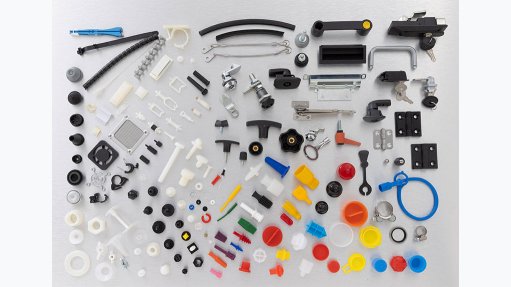
We are responsible manufacturers of essential components. Manufacturing 80 million parts a week, we have over 1 billion parts in stock.
VISIT SHOWROOM



Announcements
What's On
Subscribe to improve your user experience...
Option 1 (equivalent of R125 a month):
Receive a weekly copy of Creamer Media's Engineering News & Mining Weekly magazine
(print copy for those in South Africa and e-magazine for those outside of South Africa)
Receive daily email newsletters
Access to full search results
Access archive of magazine back copies
Access to Projects in Progress
Access to ONE Research Report of your choice in PDF format
Option 2 (equivalent of R375 a month):
All benefits from Option 1
PLUS
Access to Creamer Media's Research Channel Africa for ALL Research Reports, in PDF format, on various industrial and mining sectors
including Electricity; Water; Energy Transition; Hydrogen; Roads, Rail and Ports; Coal; Gold; Platinum; Battery Metals; etc.
Already a subscriber?
Forgotten your password?
Receive weekly copy of Creamer Media's Engineering News & Mining Weekly magazine (print copy for those in South Africa and e-magazine for those outside of South Africa)
➕
Recieve daily email newsletters
➕
Access to full search results
➕
Access archive of magazine back copies
➕
Access to Projects in Progress
➕
Access to ONE Research Report of your choice in PDF format
RESEARCH CHANNEL AFRICA
R4500 (equivalent of R375 a month)
SUBSCRIBEAll benefits from Option 1
➕
Access to Creamer Media's Research Channel Africa for ALL Research Reports on various industrial and mining sectors, in PDF format, including on:
Electricity
➕
Water
➕
Energy Transition
➕
Hydrogen
➕
Roads, Rail and Ports
➕
Coal
➕
Gold
➕
Platinum
➕
Battery Metals
➕
etc.
Receive all benefits from Option 1 or Option 2 delivered to numerous people at your company
➕
Multiple User names and Passwords for simultaneous log-ins
➕
Intranet integration access to all in your organisation