Offgrid water treatment, reuse 'living laboratory' opened in Gauteng

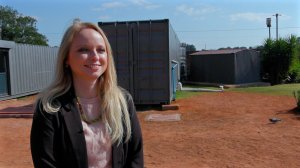
ZHAW senior researcher Dr Devi Bühler speaks about the low-tech water treatment project


A research and demonstration project to treat and directly reuse wastewater, which will form a living laboratory to provide data to Swiss and South African researchers, has been launched at the Manger Care Centre, in Benoni, Gauteng.
The Manger Care Centre was selected because it is an operational facility. It provides a haven for about 250 homeless people, trains them in various skills and aims to rehabilitate them and enable them to find jobs.
It has a bakery, workshop, events centre and greenhouses for growing crops on site.
The aim of the water reuse project is to separate the wastewater streams, with so-called grey water captured from showers, kitchens and laundries that will be treated using biological remediation and then reused to flush toilets, for irrigation and laundry.
Black water, which is water captured from toilets, will also be separated and treated using the same biological treatment process, and the aim is to eventually use this treated water for irrigation.
The idea was to create a self-sufficient system that operated with the least impact on the surrounding environment and created closed loops for as many of the water cycles as possible, said Zurich University of Applied Sciences (ZHAW) Ecological Engineering Institute of Natural Resource Sciences senior researcher Dr Devi Bühler.
The decentralised design approach aimed to treat water where it was generated, which removed the need to build water and wastewater infrastructure. Additionally, source separation of wastewater was easier at a local level and separation made targeted treatment of the water much simpler, she said.
The process uses biological treatment, which sees the separated wastewater sent to a settling tank and then to a series of biological filters that use an artificial substrate on which microorganisms grow.
The microorganisms digest the biological chemicals in the water over a period of about two to three days. The grey water treatment plant produces about 2 000 l/d of water, while the black water treatment plant produces about 500 l/d of treated water.
Samples of the water were taken as it entered and once it had been treated. The quality of the water must be suited for its intended use, said Bühler at the launch on June 29.
Once the water is treated, it will be directly used for nonpotable water applications at the centre.
However, treated black water would first be tested and, while the aim was to use it for irrigation of crops, it would initially not be used until the tests had confirmed that the quality was suitable for the application, she added.
The project will generate data for the scientists at ZHAW and Stellenbosch University.
“The aim was to develop a low-technology solution. Low-technology wastewater treatment solutions often produce low water quality that is not suited for reuse. High-technology wastewater treatment solutions produce very high quality water, but are costly and complex.
“The aim of this project is to create a solution that is as low-technology as possible while producing the highest water quality possible,” she said.
The biofilter system used microorganisms to treat the water, which was a natural process that occured in the environment. The aim was to take this process and turn it into technology, she told the government, academic and civil delegates.
The substrate provided a surface area for the biofilm to grow on so that the microrganisms could biodegrade the organic matter and thereby clean the water, she said.
The researchers intend to provide fit-for-purpose water reuse by matching the water quality to the intended applications.
“We can use low-grade water for irrigation or flushing toilets, which requires less resources to treat to the required quality than treating it to potable standards. Depending on the water quality, we may change the configuration and the aim is to optimise the system,” Bühler said.
The solar-powered solution was built in 6 m shipping containers, and the centre would serve as a living lab, she said.
Further, researchers from Stellenbosch University have developed an online low-cost, continuous monitoring system that the researchers could use to observe the water quality and ensure it was safe for reuse, she emphasised.
“[Charity nonprofit organisation] Khulisa helps to integrate and educate users. It is not only about the technology, but about user feedback and having a dialogue with people to how it can be made to work over the long term.
“It is not only about the ideas researchers have, but about co-creating solutions with the intended beneficiaries and communities,” said Bühler.
The goal is to generate data, see how the solution works, optimise it and build up capacity and education alongside the Manger Care Centre as a foundation to scale up into the next phase, she explained.
She added that the Swiss and South African research partners were willing to share their findings and the challenges they encountered with other researchers.
“My original interest was to develop a wholly offgrid and self-sufficient house that would see all the systems – not only water - be self-sustaining. However, a visit to an informal settlement in South Africa was life-changing.
“On the one side, I saw all the challenges, but I also saw the opportunities, and the people in the community were open to ideas that could solve some of the challenges they face.”
This was the genesis of the offgrid water treatment and reuse project. It originally started in Khayelitsha, in the Western Cape, but the nonprofit community centre that was the local partner lost funding and had to shut its doors.
This low-technology water research project also lost some of its funding, but Bühler was determined to continue the project.
Manger Care Centre met the research team during work in Cape Town for the Embassy of Switzerland and asked for such a solution to be built at its facility, said Manger Care Centre CEO Zen Teitge.
This research project saw technology being transferred North to South and South to North, as researchers had the opportunity to test systems in both the Swiss and South African environments, said Bühler.
“The Manger Care Centre site provides an opportunity to test the technology under real-life operating conditions while supporting skills development, education and community engagement,” she said.
Article Enquiry
Email Article
Save Article
Feedback
To advertise email advertising@creamermedia.co.za or click here


Projects


Latest Multimedia
Latest News

Showroom

ALBIS FLANGES — founded in 1965 — is a petro-chemical approved manufacturer of flanges and fittings in most grades of steel, listed with Sasol,...
VISIT SHOWROOM
We partner growth of our select clients through our comprehensive and competitive integrated international logistics, trade finance and information...
VISIT SHOWROOM


Announcements
What's On
Subscribe to improve your user experience...
Option 1 (equivalent of R125 a month):
Receive a weekly copy of Creamer Media's Engineering News & Mining Weekly magazine
(print copy for those in South Africa and e-magazine for those outside of South Africa)
Receive daily email newsletters
Access to full search results
Access archive of magazine back copies
Access to Projects in Progress
Access to ONE Research Report of your choice in PDF format
Option 2 (equivalent of R375 a month):
All benefits from Option 1
PLUS
Access to Creamer Media's Research Channel Africa for ALL Research Reports, in PDF format, on various industrial and mining sectors
including Electricity; Water; Energy Transition; Hydrogen; Roads, Rail and Ports; Coal; Gold; Platinum; Battery Metals; etc.
Already a subscriber?
Forgotten your password?
Receive weekly copy of Creamer Media's Engineering News & Mining Weekly magazine (print copy for those in South Africa and e-magazine for those outside of South Africa)
➕
Recieve daily email newsletters
➕
Access to full search results
➕
Access archive of magazine back copies
➕
Access to Projects in Progress
➕
Access to ONE Research Report of your choice in PDF format
RESEARCH CHANNEL AFRICA
R4500 (equivalent of R375 a month)
SUBSCRIBEAll benefits from Option 1
➕
Access to Creamer Media's Research Channel Africa for ALL Research Reports on various industrial and mining sectors, in PDF format, including on:
Electricity
➕
Water
➕
Energy Transition
➕
Hydrogen
➕
Roads, Rail and Ports
➕
Coal
➕
Gold
➕
Platinum
➕
Battery Metals
➕
etc.
Receive all benefits from Option 1 or Option 2 delivered to numerous people at your company
➕
Multiple User names and Passwords for simultaneous log-ins
➕
Intranet integration access to all in your organisation