South Africa needs demand-side EV policies to unlock industry growth, KPMG expert says

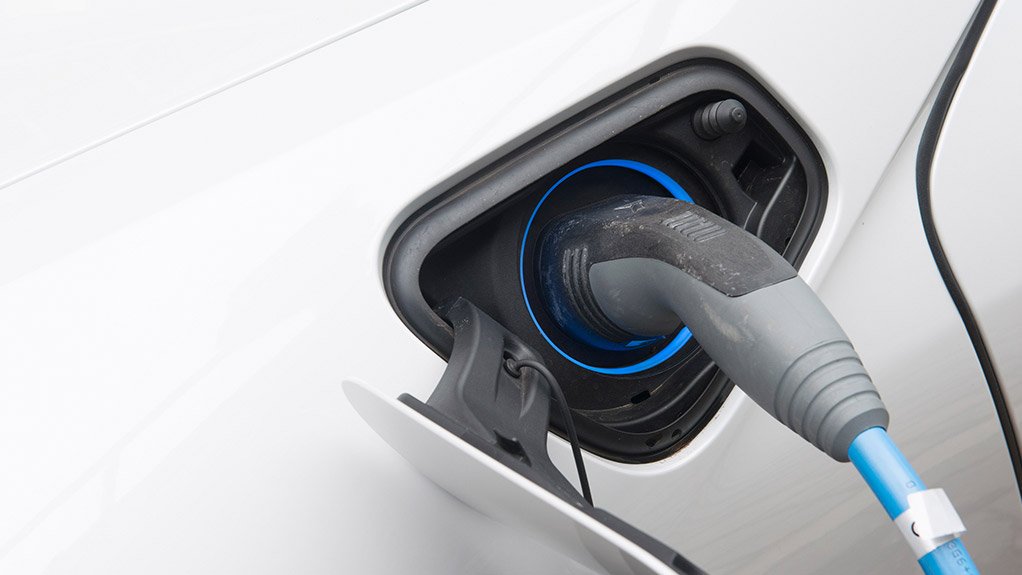



South Africa's electric vehicle (EV) market has reached a pivotal moment, with consumer demand now outpacing government policy and creating an urgent need for measures that stimulate local adoption, KPMG automotive sector lead Dex Machida says.
Delivering a keynote address at WesBank EVolution 2.0, held at The Forum Conference Venue, in Johannesburg, on July 22, he argued that South Africa's EV policy framework should evolve beyond production incentives to include stronger demand-side measures that accelerate adoption, support charging infrastructure investment and strengthen the country's competitiveness in the global automotive transition.
Additionally, Machida said official EV sales figures understated the pace of growth as they did not fully account for the influx of new market entrants, particularly Chinese manufacturers, that had introduced relatively affordable battery electric vehicles (BEVs) to South Africa.
“Today, that demand has clearly accelerated to point where it's already getting to the inflection point. The demand side has pretty much overtaken what is happening on the ground from a production perspective,” he said.
He also noted two factors identified in KPMG's Global Automotive Executive Survey, namely charging infrastructure and affordability, which had driven the recent acceleration in EV adoption, with affordability proving to be the key catalyst.
While South Africa's passenger vehicle market now offered consumers a broad range of electric models, Machida said the commercial vehicle segment continued to face supply and ecosystem constraints, including limited charging infrastructure, service networks and supporting regulations.
Moreover, he acknowledged government's introduction of the 150% tax incentive for investments in EV production, saying the measure had been designed to safeguard South Africa's automotive manufacturing base, which supports more than 100 000 jobs.
However, he argued that market conditions had changed significantly since the incentive was conceived, with consumer demand now overtaking production-focused policy interventions.
As a result, Machida said South Africa's policy framework needed to become more agile, warning that incentives supporting manufacturing alone would not deliver long-term industry growth without corresponding measures to stimulate local demand.
He also pointed to the country's tax treatment of BEVs as an example, noting that EV buyers currently faced a higher import duty than buyers of internal combustion engine vehicles, given that EVs were classified as luxury products.
Machida added that this effectively penalised consumers and businesses seeking to adopt cleaner transport technologies, creating a contradiction between production incentives and demand-side taxation.
Turning to charging infrastructure, he argued that the private sector had largely driven the rollout of South Africa's public charging network, enabling EV travel between major city nodes without significant government intervention.
However, he cautioned that private investment alone would not sustain future network expansion unless EV adoption reached commercially viable volumes.
“There isn't a business case for most of the charging infrastructure providers until you get a certain volume of vehicles – 100 000 vehicle numbers. The question we need to be asking is how do we get to the 100 000 units?" Machida noted.
He also identified fleet operators as the most effective catalyst for reaching that threshold, noting that commercial fleets typically operated from central depots where overnight charging could be implemented efficiently and where operators regularly replaced vehicles in large volumes.
Looking beyond South Africa, he highlighted several global trends reshaping the global automotive industry, including the growing influence of Chinese manufacturers, increasing geopolitical risks affecting fuel prices and energy security, and the emergence of autonomous vehicle technologies.
Article Enquiry
Email Article
Save Article
Feedback
To advertise email advertising@creamermedia.co.za or click here
Research Reports

Projects


Latest Multimedia

Latest News

Showroom
Stewarts & Lloyds is a leading steel, tube, and engineering product supplier in South Africa.
VISIT SHOWROOM
ROSOND provides fast, efficient, safe, and cost-effective drilling and grouting services to mining and exploration industries throughout Africa.
VISIT SHOWROOM



Press Office
Announcements
What's On
Subscribe to improve your user experience...
Option 1 (equivalent of R125 a month):
Receive a weekly copy of Creamer Media's Engineering News & Mining Weekly magazine
(print copy for those in South Africa and e-magazine for those outside of South Africa)
Receive daily email newsletters
Access to full search results
Access archive of magazine back copies
Access to Projects in Progress
Access to ONE Research Report of your choice in PDF format
Option 2 (equivalent of R375 a month):
All benefits from Option 1
PLUS
Access to Creamer Media's Research Channel Africa for ALL Research Reports, in PDF format, on various industrial and mining sectors
including Electricity; Water; Energy Transition; Hydrogen; Roads, Rail and Ports; Coal; Gold; Platinum; Battery Metals; etc.
Already a subscriber?
Forgotten your password?
Receive weekly copy of Creamer Media's Engineering News & Mining Weekly magazine (print copy for those in South Africa and e-magazine for those outside of South Africa)
➕
Recieve daily email newsletters
➕
Access to full search results
➕
Access archive of magazine back copies
➕
Access to Projects in Progress
➕
Access to ONE Research Report of your choice in PDF format
RESEARCH CHANNEL AFRICA
R4500 (equivalent of R375 a month)
SUBSCRIBEAll benefits from Option 1
➕
Access to Creamer Media's Research Channel Africa for ALL Research Reports on various industrial and mining sectors, in PDF format, including on:
Electricity
➕
Water
➕
Energy Transition
➕
Hydrogen
➕
Roads, Rail and Ports
➕
Coal
➕
Gold
➕
Platinum
➕
Battery Metals
➕
etc.
Receive all benefits from Option 1 or Option 2 delivered to numerous people at your company
➕
Multiple User names and Passwords for simultaneous log-ins
➕
Intranet integration access to all in your organisation