Trump versus the truth


Donald Trump was at it again this month, repeating the lie that Somali-born Minnesota Congresswoman Ilhan Omar married her brother to enter the US and describing her country of origin as “a fourth-world nation”.
The claim that Omar’s former husband is actually her sibling had been widely debunked and repeatedly denied, before Trump cited it again on March 16 in remarks referencing ongoing federal enforcement efforts.
In true Trump style, he did not provide a shred of evidence that Omar committed immigration fraud. At least, when he confronted President Cyril Ramaphosa about an ongoing white genocide in South Africa during the South African leader and his delegation’s May 2025 White House visit he whipped out photos and played video footage supposedly “corroborating” his claims. Except that some of the photos were actually from the Democratic Republic of Congo. Moreover, one of the videos, an aerial shot of what was passed off as a burial site for genocide victims at some place in KwaZulu-Natal, was subsequently revealed by investigative journalism to exist only in Trump’s fertile imagination.
What Trump peddles is what the world has come to know as fake news, a term that he himself popularised in 2016 when he lobbed it at a journalist who had dared to ask him an uncomfortable question while on the campaign trail for his first term as US President.
By the way, fake news comes in three shades. The first is disinformation, or deliberate lies. The second is misinformation – the innocent sharing of incorrect information, often owing to sloppy journalism. The third is mal-information, or the weaponisation of damaging information, which frequently happens in the world of politics when rivals divulge dirt about each other.
One thing about fake news is that it does not end up as just words on a newspaper page or radio or television soundbites, but is a force multiplier for mistrust, division and poor decision-making. When a leader of Trump’s stature repeats false claims, such as the baseless allegations about Omar or a white genocide in South Africa, the effects ripple far beyond the headlines.
Claims without evidence make people distrust courts, governments and democratic processes. For example, Trump’s repeated allegations about Omar’s personal life, despite denials and fact-checks, may cause his supporters to doubt the legitimacy of elections, citizenship processes and refugee programmes.
On a societal level, when citizens cannot agree on what is true, polarisation deepens, and dialogue may become impossible.
Fake news about foreign countries may cause diplomatic strain. This is exemplified by the 2025 Ramaphosa-Trump meeting in the Oval Office of the White House, which became tense because of repeated unverified claims that framed South Africa, a veritable democracy, as a failed State.
Such disinformation – I refuse to accept that Trump’s claims were innocent misinformation – can sow distrust between nations, leading to harder diplomatic negotiations and misinformed foreign policy. This can only harm international trade, security cooperation and global stability.
For individuals, baseless claims such as those levelled at Omar may stoke harassment, threats and social stigma. What’s more, entire communities, such as Somali-Americans or black South African immigrants in the US, may be painted as illegitimate, which contributes to hate crimes, discrimination and social exclusion.
Why does fake news find traction and endure?
The reason, according to our media studies egghead friends, is quite simple. In the main, people don’t have to check if it’s true – if it fits what they already believe or makes them feel something, it sticks.
This is why Trump’s silly lies about Congresswoman Omar or South African farmers keep popping up. Once a story like that gets into people’s heads, it’s hard to get it out, and it makes it easier for new false stories to take hold.
It is in this same ecosystem of simple, memorable falsehoods that Trump’s characterisation of Somalia as a “fourth-world nation” takes root. The phrase is short, striking and easy to repeat, but it ignores the rich, diverse cultures and resilience of the Somali people.
By reducing a complex country into a single negative label, it sticks in the mind more easily than nuanced facts or context ever could.
Like other fake news, it is not meant to inform but to provoke and simplify. And it works.
Article Enquiry
Email Article
Save Article
Feedback
To advertise email advertising@creamermedia.co.za or click here
Research Reports
Projects

Latest Multimedia
Latest News
Showroom
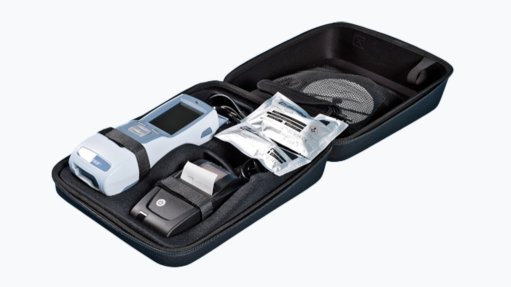
Developed to exceed the latest EN 15964 standards for police breathalysers proving that it will remain accurate and reliable for many years to come.
VISIT SHOWROOM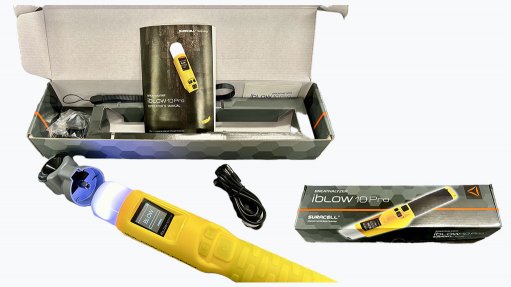
Supplier & Distributor of the Widest Range of Accurate & Easy-to-Use Alcohol Breathalysers
VISIT SHOWROOM
Press Office
Announcements
What's On
Subscribe to improve your user experience...
Option 1 (equivalent of R125 a month):
Receive a weekly copy of Creamer Media's Engineering News & Mining Weekly magazine
(print copy for those in South Africa and e-magazine for those outside of South Africa)
Receive daily email newsletters
Access to full search results
Access archive of magazine back copies
Access to Projects in Progress
Access to ONE Research Report of your choice in PDF format
Option 2 (equivalent of R375 a month):
All benefits from Option 1
PLUS
Access to Creamer Media's Research Channel Africa for ALL Research Reports, in PDF format, on various industrial and mining sectors
including Electricity; Water; Energy Transition; Hydrogen; Roads, Rail and Ports; Coal; Gold; Platinum; Battery Metals; etc.
Already a subscriber?
Forgotten your password?
Receive weekly copy of Creamer Media's Engineering News & Mining Weekly magazine (print copy for those in South Africa and e-magazine for those outside of South Africa)
➕
Recieve daily email newsletters
➕
Access to full search results
➕
Access archive of magazine back copies
➕
Access to Projects in Progress
➕
Access to ONE Research Report of your choice in PDF format
RESEARCH CHANNEL AFRICA
R4500 (equivalent of R375 a month)
SUBSCRIBEAll benefits from Option 1
➕
Access to Creamer Media's Research Channel Africa for ALL Research Reports on various industrial and mining sectors, in PDF format, including on:
Electricity
➕
Water
➕
Energy Transition
➕
Hydrogen
➕
Roads, Rail and Ports
➕
Coal
➕
Gold
➕
Platinum
➕
Battery Metals
➕
etc.
Receive all benefits from Option 1 or Option 2 delivered to numerous people at your company
➕
Multiple User names and Passwords for simultaneous log-ins
➕
Intranet integration access to all in your organisation