Tau says Cabinet-approved industrial strategy to be backed by implementation plan

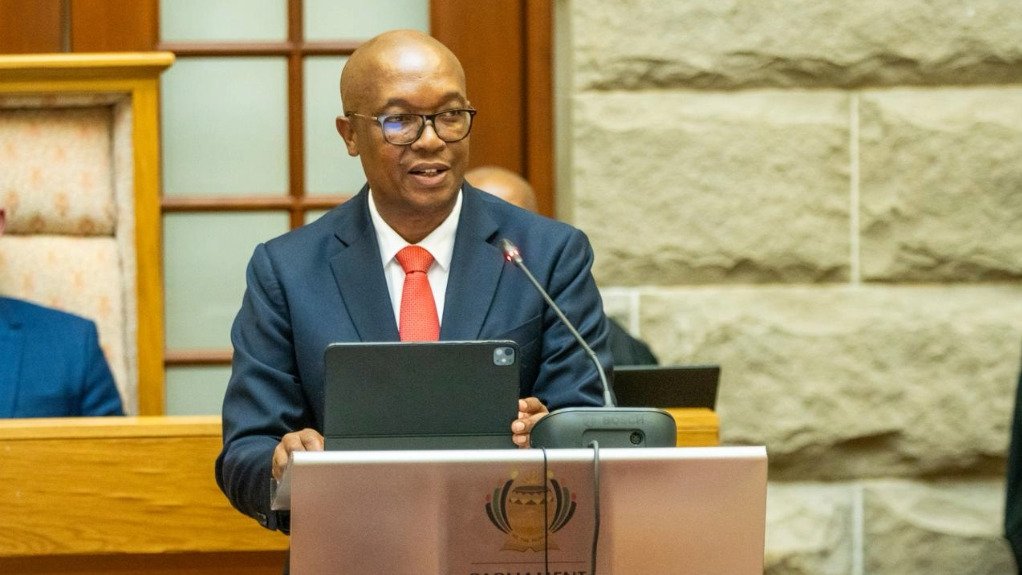



Trade, Industry and Competition Minister Parks Tau says the themes of decarbonisation, diversification, and digitalisation will now anchor South Africa’s Industrial Development Strategy, following its recent approval by Cabinet.
Describing the strategy as a consistent and forward-looking policy during his Budget Vote address in Parliament on Tuesday, Tau said it would direct the country’s industrialisation agenda.
He said it also reflected the reality that South Africa could not compete in the world of the future using the tools of the past.
“This strategy recognises that the structure of South Africa’s economy is transforming.
“We are clear that this strategy is about positioning South Africa as a leading player in the green economy, implementing a forward-looking industrial policy that creates jobs, and using trade policy to support export resilience and growth,” Tau said.
While the strategy had not yet been released, the Minister said it would be matched by an implementation plan.
The strategy was linked directly to the way the country planned to leverage its critical minerals endowment, which Tau said created the platform for “inclusive growth, green industrialisation, innovation and the circular economy”.
He also flagged impending changes to the Automotive Production Development Plan, which he said was being reviewed with a view to “stimulate new investments in South Africa and supporting the growth of our component manufacturers”.
Government also planned to drive the strategy through efforts to expand localisation and by using special economic zones to support manufacturing competitiveness through the provision of reliable infrastructure and industrial financing.
However, many of the department’s immediate priorities related to preventing the further loss of capacity from established industries, including steel, ferrochrome and sugar.
“In the steel sector, for instance, the Industrial Development Corporation is taking strategic steps to stabilise the industry, which is vital for our broader manufacturing base,” Tau said in his speech, while also defending recent moves to increase tariffs on upstream and downstream steel products during his response to the debate.
He said South Africa was not alone in using trade instruments to support its domestic steel industry, citing tariff measures that had been introduced in the US and that were being introduced in the EU as examples.
Following a far-reaching Steel Tariff Review, government had increased tariffs on a large number of steel products to the World Trade Organisation bound rate, which is the highest level that a member can legally impose.
It also announced that its tariff rebate programme would be extended to importers that could showed there was no local production capacity. However, the guidelines for those rebates were still awaited.
He added that the ferrochrome support package was breathing new life into plants that had been struggling under cost pressures, but made no specific mention of Eskom applications to extend a discounted electricity tariff of 62c/kWh to two ferrochrome producers.
The transformation of the racial composition of the South African economy was also a theme that was emphasised throughout, with Tau describing it as a moral, constitutional and economic imperative.
In his response to the debate, during which government’s broad-based black economic empowerment policy was questioned by parliamentarians from the DA and the FF Plus, Tau said the policy would not be reversed, but rather enhanced.
Article Enquiry
Email Article
Save Article
Feedback
To advertise email advertising@creamermedia.co.za or click here
Research Reports

Projects


Latest Multimedia
Latest News


Showroom

Developed to exceed the latest EN 15964 standards for police breathalysers proving that it will remain accurate and reliable for many years to come.
VISIT SHOWROOM
Supplier & Distributor of the Widest Range of Accurate & Easy-to-Use Alcohol Breathalysers
VISIT SHOWROOM


Press Office
Announcements
What's On
Subscribe to improve your user experience...
Option 1 (equivalent of R125 a month):
Receive a weekly copy of Creamer Media's Engineering News & Mining Weekly magazine
(print copy for those in South Africa and e-magazine for those outside of South Africa)
Receive daily email newsletters
Access to full search results
Access archive of magazine back copies
Access to Projects in Progress
Access to ONE Research Report of your choice in PDF format
Option 2 (equivalent of R375 a month):
All benefits from Option 1
PLUS
Access to Creamer Media's Research Channel Africa for ALL Research Reports, in PDF format, on various industrial and mining sectors
including Electricity; Water; Energy Transition; Hydrogen; Roads, Rail and Ports; Coal; Gold; Platinum; Battery Metals; etc.
Already a subscriber?
Forgotten your password?
Receive weekly copy of Creamer Media's Engineering News & Mining Weekly magazine (print copy for those in South Africa and e-magazine for those outside of South Africa)
➕
Recieve daily email newsletters
➕
Access to full search results
➕
Access archive of magazine back copies
➕
Access to Projects in Progress
➕
Access to ONE Research Report of your choice in PDF format
RESEARCH CHANNEL AFRICA
R4500 (equivalent of R375 a month)
SUBSCRIBEAll benefits from Option 1
➕
Access to Creamer Media's Research Channel Africa for ALL Research Reports on various industrial and mining sectors, in PDF format, including on:
Electricity
➕
Water
➕
Energy Transition
➕
Hydrogen
➕
Roads, Rail and Ports
➕
Coal
➕
Gold
➕
Platinum
➕
Battery Metals
➕
etc.
Receive all benefits from Option 1 or Option 2 delivered to numerous people at your company
➕
Multiple User names and Passwords for simultaneous log-ins
➕
Intranet integration access to all in your organisation