Study indicates commercial potential for biofuels but South Africa needs base price to drive development

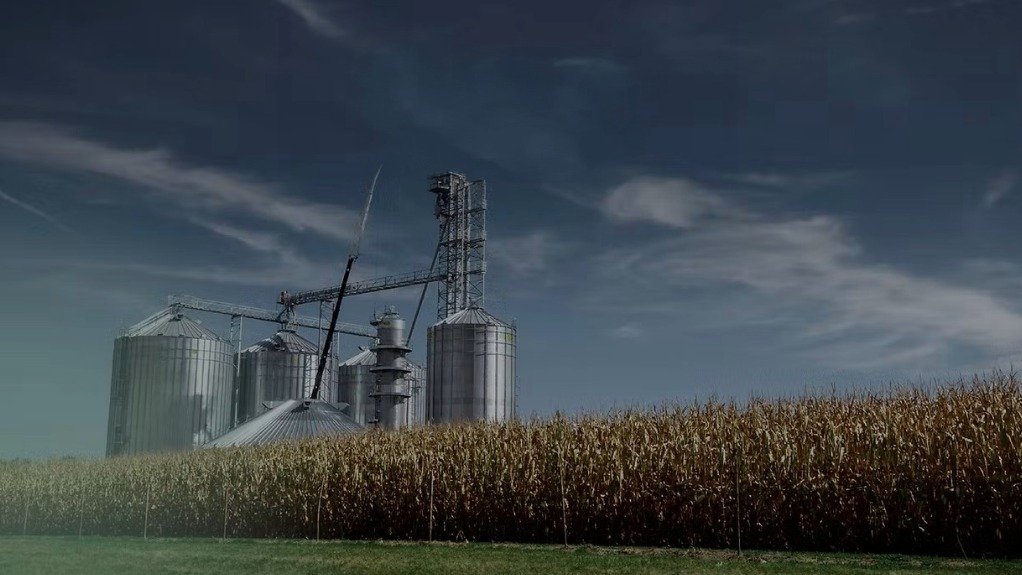



The South African Sorghum Bioethanol Study, produced by market research and strategy company BluePrint and commissioned by the Localisation Support Fund, shows that there are viable commercial opportunities for the production of bioethanol from crops in South Africa.
However, farmers and chemicals industry professionals attending a roundtable discussion held at the Industrial Development Corporation, in Sandton, on May 27, emphasised that there was little incentive for farmers to plant crops, if there was not clear demand, addressable markets and minimum prices for the crops.
These views are based on South Africa's 18-year journey, started in 2007, to follow in the footsteps of fellow Global South and developing market Brazil, which uses biofuels for about 47% of its light vehicle fuel needs, and biodiesel for about 15% its heavy transport needs.
South Africa released its biofuel industrialisation strategy in 2007, introduced mandatory blending regulations in 2012, put in place the regulatory framework for implementation and compliance in 2020 and gazetted the regulations in 2025, said BluePrint CEO Josie Rowe-Setz.
If South Africa enforced a 2% blend of ethanol in its petrol fuels, or E2, this would create an immediate market of about 181-million litres a year of ethanol in the market. If E10, or a 10% blend, were to be enforced, this would create a market of just under 1-billion litres a year of ethanol, she said.
The study analysed six different crops, with grain sorghum, firstly, and sugar cane, secondly, emerging as the most viable crops in South Africa for the production of bioethanol.
“It is no longer a question of technical feasibility, but rather an issue of policy sequencing, market confidence and investments, and enforcement. The US is the largest producer of bioethanol in the world at 61.4-billion litres a year, mostly from maize, and Brazil is the second largest producer at 36.83-billion litres a year, mostly from sugar cane.
“However, incentives, scale and mandates are important. The global bioethanol industry emerged in countries where governments ensured durable demand certainty before up-scaling in the private sector took place. Regulations alone cannot build this sector, and certainty about sequenced market steps is necessary,” she said, referring to the study.
Further, the study showed that South Africa could reduce its exposure to oil price changes, retain about 55% of the value of its fuel use in the country and diversify the opportunities for farmers, if it has an effective biofuel sector in place.
A significant potential offtake for biofuels over the long term is sustainable aviation fuels.
Additionally, by-products, such as distillers dried grains with solubles, could contribute up to 37% of the revenue derived from biofuel input crops, and this added to the potential opportunities from developing a biofuels sector in South Africa.
Fuel-grade ethanol plant developer Mabele Fuels COO and CFO Markus Granlund said the company, founded in 2005, suffered a setback in its goals about 12 years ago as a result of a lack of a regulated price for fuel-grade ethanol.
The company currently has an investor, with its sorghum-to-bioethanol plant set to become operational in the third quarter of 2028.
There have been developments in processing over the past 10 to 15 years that have reduced the energy and input required. Enzymes have also become significantly more effective, which means the yields of sorghum to ethanol have improved significantly.
These improvements had directly improved the economics of bioethanol projects, he said.
However, farmer production followed stable markets, and not the other way around, emphasised industry organisation South African Farmers Development Association sorghum cluster chairperson Gjizelle Nel.
“We cannot expect farmers to produce a crop and not have anywhere for it to go,” she emphasised, in reference to creating stable demand and markets for biofuel crops.
A representative of industry organisation the Black Agricultural Commodities Federation similarly emphasised that farmers would need to decide on whether to plant biofuel crops, and that the decision was simply based on whether there was a market for the crop and whether the price was attractive.
Additionally, a representative of ethanol producer Alco Group, which produced 100-million litres a year of ethanol in South Africa and 1.5-billion litres a year globally for blending into fuels, emphasised that crops follow, with a slight lag, the trends in the global oil price.
While the oil price was currently high and grain prices were low, the reverse could occur where there were low oil prices and a small crop, leading to high prices for the crops, which would cause problems in the biofuels value chain, he said.
“The focus needs to be on the establishment of demand for bioethanol, and a mandate is not enough to create demand.”
South Africa's basic fuel price was designed to reflect import parity costs.
“We have not yet seen any investments made into biofuel production in South Africa based only on the basic fuel price, and we are unlikely to see such investments without security of pricing on offtake,” he emphasised.
Further, while there was infrastructure available to handle blending and storage of biofuels, as it would displace existing demand, there were several implementation challenges that needed to be addressed, said industry organisation Fuels Industry Association of South Africa security of supply head Siganeko Magafela.
One challenge was that blending facilities had to register as manufacturing facilities, which introduced operational complications because for tax purposes tanks had to be dedicated only to blending, which would limit the ability to use the tanks to store other product, he illustrated.
"There is appetite to start, but there is still work to be done. For example, we do not know what the transfer pricing mechanisms will be. Before we can say the regulatory side has been opened, there are still elements of the pricing mechanisms that need to be finalised."
Nel similarly pointed out that, despite South Africa's biofuels ambitions and strategy, a 15% value-added tax (VAT) remained on sorghum, even though it is the only staple food to be subject to VAT and South Africa was possibly the only country in the world to have VAT on sorghum.
Article Enquiry
Email Article
Save Article
Feedback
To advertise email advertising@creamermedia.co.za or click here
Research Reports
Projects


Latest Multimedia

Latest News


Showroom

Developed to exceed the latest EN 15964 standards for police breathalysers proving that it will remain accurate and reliable for many years to come.
VISIT SHOWROOM
Supplier & Distributor of the Widest Range of Accurate & Easy-to-Use Alcohol Breathalysers
VISIT SHOWROOM



Press Office
Announcements
What's On
Subscribe to improve your user experience...
Option 1 (equivalent of R125 a month):
Receive a weekly copy of Creamer Media's Engineering News & Mining Weekly magazine
(print copy for those in South Africa and e-magazine for those outside of South Africa)
Receive daily email newsletters
Access to full search results
Access archive of magazine back copies
Access to Projects in Progress
Access to ONE Research Report of your choice in PDF format
Option 2 (equivalent of R375 a month):
All benefits from Option 1
PLUS
Access to Creamer Media's Research Channel Africa for ALL Research Reports, in PDF format, on various industrial and mining sectors
including Electricity; Water; Energy Transition; Hydrogen; Roads, Rail and Ports; Coal; Gold; Platinum; Battery Metals; etc.
Already a subscriber?
Forgotten your password?
Receive weekly copy of Creamer Media's Engineering News & Mining Weekly magazine (print copy for those in South Africa and e-magazine for those outside of South Africa)
➕
Recieve daily email newsletters
➕
Access to full search results
➕
Access archive of magazine back copies
➕
Access to Projects in Progress
➕
Access to ONE Research Report of your choice in PDF format
RESEARCH CHANNEL AFRICA
R4500 (equivalent of R375 a month)
SUBSCRIBEAll benefits from Option 1
➕
Access to Creamer Media's Research Channel Africa for ALL Research Reports on various industrial and mining sectors, in PDF format, including on:
Electricity
➕
Water
➕
Energy Transition
➕
Hydrogen
➕
Roads, Rail and Ports
➕
Coal
➕
Gold
➕
Platinum
➕
Battery Metals
➕
etc.
Receive all benefits from Option 1 or Option 2 delivered to numerous people at your company
➕
Multiple User names and Passwords for simultaneous log-ins
➕
Intranet integration access to all in your organisation