South African food inflation fell in February

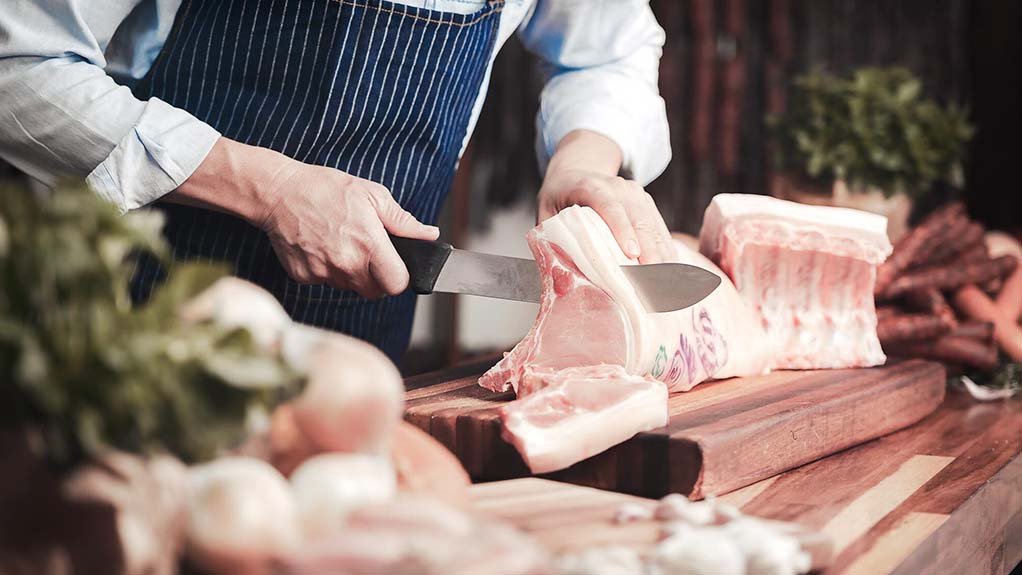



South African food and non-alcoholic beverage (NAB) inflation (hereafter to be referred to as food inflation, for short) declined in February, the Bureau for Food and Agricultural Policy (BFAP) reported in its latest 'Food Inflation Brief' report. Year-on-year food inflation in February was 3.7%, down from 4.4% in January. Year-on-year consumer price index (CPI) headline inflation in February was 3% (a drop from January’s 3.5%). In month-on-month terms, food inflation in February was -0.3%, again a decline from January, when it had been 0.4%. The equivalent figure for CPI headline inflation in February was 0.4%, which was an increase over the January number of 0.2%.
Food inflation was the second biggest contributor to year-on-year CPI headline inflation in February, accounting for 23% of the total. The biggest contributor was housing and utilities (37%), with insurance and financial services third (17%), and the remaining 23% being “other”.
Regarding factors that affect food production, the BFAP notes that in February fuel prices fell by 10.1% year-on-year and by 3.1%, month-on-month. However, electricity prices rose by 7.5% year-on-year and 0.1% month-on-month. The rand strengthened against the dollar by 12.8%, year-on-year, and by 1.1%, month-on-month. However, the BFAP warns of further (8.7%) electricity tariff increases, plus the oil supply and logistical disruptions caused by war in the Middle East that will lead to significant increases in South African fuel prices in the coming days.
The food category with the highest year-on-year inflation in February was meat, at 12.2%. Then came NAB (5%), followed by oils and fats (4%), then sugar and sugar-rich foods (3%), and fish and seafood (also 3%). Year-on-year deflation was experienced by fruits and nuts (-8%), vegetables (-3%), dairy and eggs (-1%) and cereal products (a little under -1%). In month-on-month terms, NAB had the highest inflation, at 1.4%, followed by fruit and nuts at 0.9%, fish and seafood (0.2%) and sugar and sugar-rich foods (0.1%). Month-on-month, deflation was experienced by meat (-0.1%), oils and fats (-0.4%), dairy and eggs (-0.2%), vegetables (-0.1%) and cereal products (also -0.1%).
The “dominant” foods that saw the highest year-on-year inflation in February were beef cuts (20% to 30%), pork cuts (13% to 20%), pumpkin (15%) and brick margarine (12%). Beef and pork together contributed more than 50% of the increase in meat inflation, while chicken, although it is the largest element in the meat “basket” used to calculate CPI, contributed only some 16% to meat inflation.
The cost of the BFAP’s Thrifty Healthy Food Basket (THFB) in February was R3 846. The THFB is a nutritionally-balanced energy-adequate diet composed of 27 food items, from all the food categories, designed to feed a low-income reference family of two adults and two children for a month. The biggest contributor to the cost of the THFB was meat, fish and eggs, at 28.6%, followed by fruit and vegetables (26.5%), starchy foods (19.6%), dairy (11.6%), legumes (7.2%), oils and fats (4.4%) and sugar (2.1%). For a family earning between R5 000/month and R10 000/month, the THFB would consume 57% of their total income. For a family earning between R10 000/month and R15 000/month, it would take 31%.
The BFAP has also created an Adequate Energy Basket (AEB), which supplies sufficient calories but no dietary diversity. This cost R1 245 in February. The AEB would have taken 18% of the income of a family earning between R5 000/month and R10 000/month, and 10% of the income of a family earning between R10 000/month and R15 000/month.
Overall, the increase in red meat prices could push people to buy more chicken, notes the BFAP. This would allow them to retain protein intake without any significant changes in their eating habits. But there could also be an increase in demand for plant-based protein-rich foods, such as tinned and dried beans. Decreasing prices for fresh produce, dairy and eggs could increase their consumption; these are nutrient-dense foods and can improve dietary diversity.
Regarding local food price expectations in the coming months, grains and oilseed are likely to see downward price pressures, owing to strong crops and stock from the 2024/25 season and favourable conditions for the current crop season. Meat prices are expected to stay firm during next month, supported by Easter, but thereafter prices are expected to ease as containment measures for food-and-mouth disease (FMD) take effect. FMD containment is also expected to weaken producer prices and lead to lower retail prices for dairy products. Regarding vegetables, progress with the harvest means a bigger supply, which will further push down prices; but the restarting of exports to Botswana will likely counter this trend.
Article Enquiry
Email Article
Save Article
Feedback
To advertise email advertising@creamermedia.co.za or click here
Research Reports

Projects


Latest Multimedia


Latest News


Showroom

ESAB South Arica, the leading supplier of high-end welding and cutting products to the Southern African industrial market is based in...
VISIT SHOWROOM
Developed to exceed the latest EN 15964 standards for police breathalysers proving that it will remain accurate and reliable for many years to come.
VISIT SHOWROOM



Announcements
What's On
Subscribe to improve your user experience...
Option 1 (equivalent of R125 a month):
Receive a weekly copy of Creamer Media's Engineering News & Mining Weekly magazine
(print copy for those in South Africa and e-magazine for those outside of South Africa)
Receive daily email newsletters
Access to full search results
Access archive of magazine back copies
Access to Projects in Progress
Access to ONE Research Report of your choice in PDF format
Option 2 (equivalent of R375 a month):
All benefits from Option 1
PLUS
Access to Creamer Media's Research Channel Africa for ALL Research Reports, in PDF format, on various industrial and mining sectors
including Electricity; Water; Energy Transition; Hydrogen; Roads, Rail and Ports; Coal; Gold; Platinum; Battery Metals; etc.
Already a subscriber?
Forgotten your password?
Receive weekly copy of Creamer Media's Engineering News & Mining Weekly magazine (print copy for those in South Africa and e-magazine for those outside of South Africa)
➕
Recieve daily email newsletters
➕
Access to full search results
➕
Access archive of magazine back copies
➕
Access to Projects in Progress
➕
Access to ONE Research Report of your choice in PDF format
RESEARCH CHANNEL AFRICA
R4500 (equivalent of R375 a month)
SUBSCRIBEAll benefits from Option 1
➕
Access to Creamer Media's Research Channel Africa for ALL Research Reports on various industrial and mining sectors, in PDF format, including on:
Electricity
➕
Water
➕
Energy Transition
➕
Hydrogen
➕
Roads, Rail and Ports
➕
Coal
➕
Gold
➕
Platinum
➕
Battery Metals
➕
etc.
Receive all benefits from Option 1 or Option 2 delivered to numerous people at your company
➕
Multiple User names and Passwords for simultaneous log-ins
➕
Intranet integration access to all in your organisation