SA has potential to be real player in the battery energy storage system market


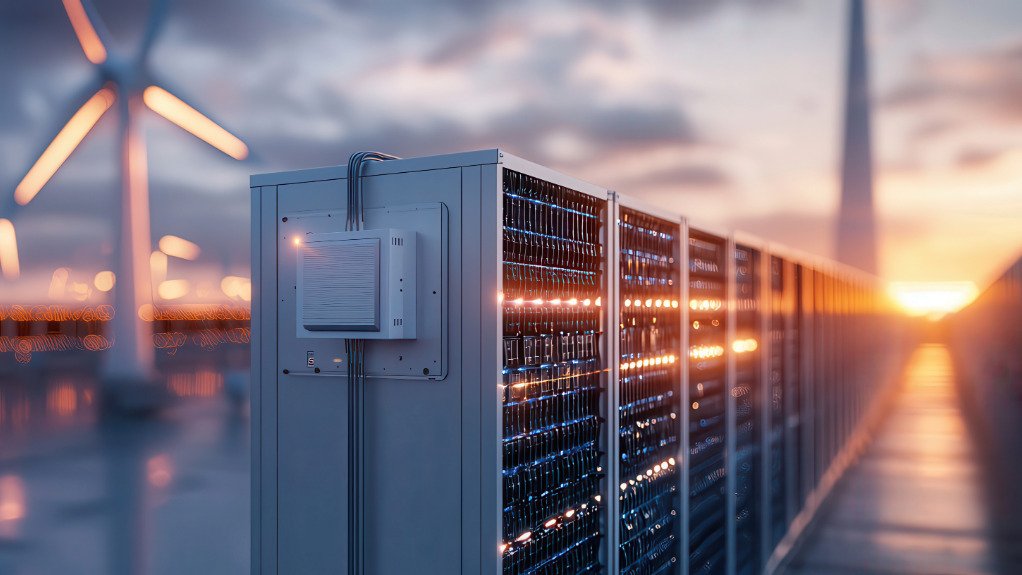




South Africa has the potential to develop at least one, and maybe as many as three, internationally competitive gigafactories for the manufacture of lithium iron phosphate (LFP) battery cells. This is the conclusion of a recent report undertaken for the non-profit and public benefit Localisation Support Fund (LSF) by Ernst & Young Advisory Services (EY-Parthenon). The biggest market will be the local manufacture of battery energy storage systems (BESS).
BESS has a key role to play in mainstreaming the large-scale use of solar and wind power. Most obviously, it provides a guaranteed amount of electricity for a known amount of time, when renewable energy sources are not functioning – at night, for solar, or in calm conditions, for wind. The renewables-plus- BESS combination provides a valuable option for major mining and industrial projects and operations, where grid electricity is unavailable, unreliable, or too expensive.
But BESS also helps with grid stability. “BESS swiftly addresses grid challenges like under-voltages, overloads, and reactive power deficits by injecting or absorbing power,” explains Eskom Distribution, on its website. “It effectively alleviates network congestion during peak periods, significantly reducing technical losses.” It further reduces technical losses that are a side effect of long-distance electricity transmission. “BESS offers rapid power output adjustments critical for grid stability, responding to supply and demand fluctuations, minimising outages, and ensuring reliable power delivery.”
It is also most beneficial during periods of low electricity demand, again alleviating grid issues, including instability. Without BESS, in low-demand periods the output of renewable energy facilities might have to be curtailed, which would waste energy. BESS is a more economically viable option. “BESS [also] contributes ancillary services such as frequency regulation, voltage support, and reactive power control, enhancing grid reliability and power quality.”
And there is a rapidly growing market for BESS in Southern Africa. The EY-Parthenon report for the LSF forecasts that the region will need 55 GWh of BESS capacity by 2034, which works out at a compound annual growth rate of some 30%. This demand will be mainly driven by increasing demand for BESS infrastructure for renewable energy integration with the grid, and for grid stabilisation. (For comparison, global demand is expected to grow from 1.6 TWh in 2024 to 4.9 TWh by 2034, a CAGR of 12%.)
In the longer-term, however, there is also the potential for locally made LFP battery cells to be used in the manufacture of battery electric vehicles (BEVs). This, the report describes as a “second demand wave”. Commercial BEVs, such as buses and trucks, are likely to be an earlier opportunity than BEV cars. LFP chemistry is preferred for commercial BEV applications, and operators prefer options which have local technical support. For BEV cars, cost competitiveness and scale are essential factors in the adoption of technology. However, government supports the transition to electric vehicles and retains a 150% tax deduction for investment in their production.
Resources, Challenges & Enablers
LFP battery cells use lithium ferrophosphate as their cathode material, the anode being made of graphitic carbon with a metal backing. To improve electrical conductivity, the LFP particles are “doped” with metals like aluminium, niobium and zirconium, or coated with carbon nanotubes or other conductive materials.
South Africa has a “structurally distinctive foundation” for the production of LFP battery cells – the country has large reserves of copper, iron-ore and phosphates. These are core elements required in LFP cell chemistry. South Africa smelts aluminium and is a major producer of zirconium, although only a minor producer of niobium. Taking advantage of the country’s mineral resources and locally refining and beneficiating the LFP precursor materials could result in landed costs of between $68/kWh and $72/kWh by 2030, which could be up to 40% less than global import prices.
There are gaps upstream in the value chain, regarding mineral processing and the manufacture of battery cell components. These can be overcome through the reinforcement of local and regional supply partnerships. In fact, such partnerships are essential to create long-term resilient supply chains. These, in turn, can be enabled by the implementation of the African Continental Free Trade Area and by initiatives such as the Lobito Corridor (which links the mines of Zambian and southern Democratic Republic of Congo Copperbelt to the Angolan port of Lobito). These initiatives will also allow for the reduction of transport costs and the aggregating of demand.
There are already local companies that assemble lithium batteries, which has created local expertise. This provides a solid base for battery assembly and integration.
By global standards, South Africa still has competitive energy and water prices. And the same goes for labour costs, when these are measured using the unit labour cost (ULC) metric. ULC measures wages relative to productivity, and not in absolute terms. In ULC terms, South African labour costs are lower than those in Germany, China, Brazil and Nigeria. However, they are higher than India, Indonesia and Hungary. South Africa is on a par with Thailand. On a ULC index, with South Africa as the benchmark of 100, Nigeria comes in at 367.2, followed by Brazil (292.0), China (202.5), Germany (106.0) and Thailand (100.6), as less competitive than, or on a par with, South Africa. More competitive than South Africa are Hungary (78.5), Indonesia (66.6) and India (56.8). These results emphasise the importance of technology and productivity, noted the report.
There are also investment incentives available. These can include grants, tax allowances and financial incentives. The report assumes that the gigafactory or factories would be built in one or more of the country’s Special Economic Zones (SEZs). These incentives could include Corporate Income Tax (S12R) and Accelerated Building Allowance (S12S). However, these have to be individually approved by the Finance Minister and there are no fixed timelines for the approval process.
Nevertheless, these incentives, plus the energy, water and labour costs, augmented with World Trade Organisation-compliant policy and tariff scenarios, have the effect of closing the cost gap between South African production and East Asian battery cell production. The result would be a competitively priced South African product within the Southern African market.
“The LSF-commissioned study indicates that a 5-10 GWh LFP gigafactory in South Africa is technically and commercially feasible under the scenarios assessed, with enough demand to support a number of local manufacturers and anchor a new battery value chain over the next decade,” sums up EY-Parthenon Partner Heather Orton.
Location, Location, Location
As already mentioned, the gigafactory will have to be set up in an SEZ. The study examined five SEZs, using a framework composed of weighted criteria that encompassed the depth of the available incentives, the available space, the readiness of the infrastructure, water security, the reliability of the electrical grid, the proximity to ports and the availability of talent. The SEZ that came out on top was Atlantis, in the north of metropolitan Cape Town, in the Western Cape province, with the Coega Industrial Development Zone, near Gqeberha (Port Elizabeth) in the Eastern Cape province, coming second.
The Atlantis SEZ is in first place for two main reasons. First, it lies close to the country’s densest grouping of battery pack assemblers and integrators. This would give the gigafactory an immediate anchor customer base. Second, it also provides unparalleled access to renewable energy, given the development of such power projects in the Western Cape. This would allow the gigafactory to be a green manufacturing plant from the get-go.
Coega ranks second because it has an established record of attracting large-scale automotive and metals industries investment. It also has direct access to the deep-water port of Ngqura.
Both SEZs provide competitive SEZ tax incentives, optimised permitting processes and infrastructure on the scale required to allow a gigafactory to operate. Nevertheless, some upgrades will be required for either (or both) of these locations to host the gigafactory.
There are very obvious job creation and skills development elements to such a project. Assuming the gigafactory has a production capacity of 5 GWh, the study found it would create more than 560 direct jobs. These would be concentrated in engineering, equipment operation, maintenance and quality assurance. There would also be multiplier effects along both the upstream (minerals processing) and downstream (systems integration) value chains. The result would be a significant contribution to government’s objective of creating 25 000 jobs in the green economy by 2030.
The study also highlights that the country’s skills development infrastructure has a critical role to play in the creation of such a gigafactory or factories. It recommends early engagement with the relevant Sector Education and Training Authorities (SETAs), namely the Manufacturing, Engineering and Related Services SETA and the Chemical Industries SETA, to ensure the supply of skilled workers.
Partnerships & Markets
It further cites the need for collaboration and partnerships with the Council for Scientific and Industrial Research and South African universities. This is necessary to ensure the development of the electrochemical and advanced manufacturing capabilities required by the LFP battery cell manufacturing sector. An aim should be the development of modular and scalable technology platforms that would allow flexibility in upgrading programmes and integration with new battery chemistries that could be developed in the future. Additionally, there is a need to develop local standards and testing facilities for storage batteries, which will require support from the South African Bureau of Standards and the National Regulator for Compulsory Specifications (NRCS).
Moreover, the study stresses the necessity of creating partnerships with established international battery cell producers. These are essential, as they will allow rapid technology transfer and access to world-class research and development as well as to proven manufacturing processes. In turn, these would reduce risk and accelerate the achievement of commercial scale production. South Africa’s status, as a jurisdiction with a transparent legal framework, a record of developing large industrial projects, and a solid intellectual property regime, makes very feasible the attracting of the quality of technical partner necessary for the project.
Partnerships will also accelerate market access. The African market should be prioritised. This should include sector-specific partnerships within the region, such as with mining, telecommunications, agricultural and even utility companies, for off-grid or back-up power applications.
Setting up the gigafactory could take three years. The needed infrastructure upgrades at the Atlantis SEZ would take about the same time. Legislative approval could take 12 months. The project would have to adhere to all environmental, social and governance regulations and obtain the required approvals. Some customers might need specific certifications, while batteries for automotive applications could need homologation by the NRCS for the parts that will have to be imported.
Conclusion
“South Africa does not need to be a passive consumer of the global energy transition,” affirms LSF CEO Irshaad Kathrada. “This feasibility study makes a compelling case that we have the minerals, the location, the industrial base, and the policy framework to be a manufacturer and exporter of the technologies that will power the transition. The market is here. The demand signal is clear and growing. What is needed now is coordinated commitment from government, industry, and capital to translate that opportunity into production capacity. The LSF looks forward to working with all stakeholders to take this forward.”
Article Enquiry
Email Article
Save Article
Feedback
To advertise email advertising@creamermedia.co.za or click here
Research Reports

Projects


Latest Multimedia
Latest News


Showroom
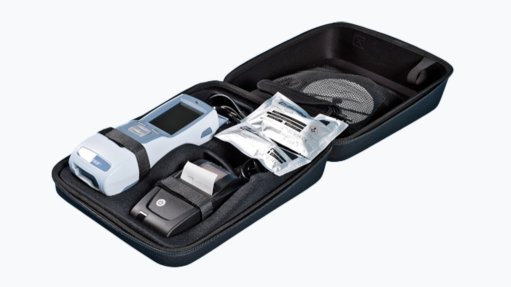
Developed to exceed the latest EN 15964 standards for police breathalysers proving that it will remain accurate and reliable for many years to come.
VISIT SHOWROOM
Supplier & Distributor of the Widest Range of Accurate & Easy-to-Use Alcohol Breathalysers
VISIT SHOWROOM


Press Office
Announcements
What's On
Subscribe to improve your user experience...
Option 1 (equivalent of R125 a month):
Receive a weekly copy of Creamer Media's Engineering News & Mining Weekly magazine
(print copy for those in South Africa and e-magazine for those outside of South Africa)
Receive daily email newsletters
Access to full search results
Access archive of magazine back copies
Access to Projects in Progress
Access to ONE Research Report of your choice in PDF format
Option 2 (equivalent of R375 a month):
All benefits from Option 1
PLUS
Access to Creamer Media's Research Channel Africa for ALL Research Reports, in PDF format, on various industrial and mining sectors
including Electricity; Water; Energy Transition; Hydrogen; Roads, Rail and Ports; Coal; Gold; Platinum; Battery Metals; etc.
Already a subscriber?
Forgotten your password?
Receive weekly copy of Creamer Media's Engineering News & Mining Weekly magazine (print copy for those in South Africa and e-magazine for those outside of South Africa)
➕
Recieve daily email newsletters
➕
Access to full search results
➕
Access archive of magazine back copies
➕
Access to Projects in Progress
➕
Access to ONE Research Report of your choice in PDF format
RESEARCH CHANNEL AFRICA
R4500 (equivalent of R375 a month)
SUBSCRIBEAll benefits from Option 1
➕
Access to Creamer Media's Research Channel Africa for ALL Research Reports on various industrial and mining sectors, in PDF format, including on:
Electricity
➕
Water
➕
Energy Transition
➕
Hydrogen
➕
Roads, Rail and Ports
➕
Coal
➕
Gold
➕
Platinum
➕
Battery Metals
➕
etc.
Receive all benefits from Option 1 or Option 2 delivered to numerous people at your company
➕
Multiple User names and Passwords for simultaneous log-ins
➕
Intranet integration access to all in your organisation