Sermon against executive excesses


On the second leg of a ten-day, four-nation African tour last month, Pope Leo XIV stood before Cameroon’s 93-year-old President Paul Biya in Yaoundé and did what many citizens would think twice before doing: he spoke plainly, and his message was not charitable towards the ageing strongman.
The American-born pontiff, who became head of the 1.3-billion-plus-strong Catholic Church in May last year, urged authorities in the Central African country to “examine their conscience” and break the “chains of corruption”, warning that security cannot come at the expense of human rights – a reference to a crackdown on protests sparked by Biya’s disputed re-election for an eighth term in October.
On a continent where dissent is frequently constrained, that kind of moral clarity, delivered publicly and to power, is not merely symbolic but fills a vacuum.
News agency reports underscore how unusually direct Pope Leo’s remarks were. They were delivered on his first day in Cameroon, the second stop on his itinerary, which started in Algeria and later took him to Angola and Equatorial Guinea. He criticised entrenched corruption, inequality and repression in the presence of Biya, who has ruled Cameroon since 1982.
The political climate in Cameroon explains why such a rebuke often comes from outsiders. The country, embroiled in a near-decade-long conflict between its English- and French-speaking regions, has witnessed a months-long crackdown on protesting activists and opposition-party supporters and has a heavily centralised executive under one of the world’s longest-serving leaders.
In such an environment, local politicians, civil society activists and other actors face legal – or even physical – risk when they confront executive power. The upshot is a familiar pattern across Africa where criticism of those in authority is often muted or voiced from abroad, including by international bodies or foreign leaders.
Religious bodies such as the Catholic Church occupy a unique position where they cannot easily be dismissed as meddling foreign busybodies, granting their leaders, such as Pope Leo, a degree of protection unavailable to domestic critics.
Besides Biya’s controversial re-election in October, there is currently a lot to criticise the veteran leader for. In early April, a joint sitting of the National Assembly and the Senate passed a constitutional amendment reintroducing a Vice President position, which had been abolished in 1984, with Biya subsequently appointing his son to fill that role.
Needless to say, the move has been widely slammed as an attempt to cement power within the Biya family.
Pope Leo’s rebuke of the Cameroonian authorities fits into a wider continental pattern where men and women of the cloth have acted as surrogate dissenters when formal democratic space narrows. Older South Africans will recall how figures such as Allan Boesak and the late Archbishop Desmond Tutu repeatedly called out State excesses during the dark days of apartheid.
More recently, in neighbouring Zimbabwe, the Council of Churches lambasted President Emmerson Mnangagwa’s attempt to prolong his second and final term by two years through a constitutional amendment as a “significant, cumulative and fundamentally antidemocratic restructuring of the constitutional order”. It added that stability – the main argument advanced for the proposed reform – is actually a deferred crisis if it is built on constitutional manipulation.
Owing to the protection they enjoy as religious leaders, there were no consequences for them, unlike activists who were arrested for conducting public awareness around the proposed constitutional tweak and the Zimbabwe Human Rights Commission, whose chairperson was promptly reassigned to the Public Service Commission in a more junior role for daring to voice the body’s opposition.
Clerics, especially Catholic bishops, have been equally vocal in other African countries, repeatedly condemning election irregularities in countries such as Nigeria, Uganda and the Democratic Republic of Congo.
It is worth noting that Pope Leo’s stance in Cameroon is consistent with his broader posture. He has not shied away from criticising Donald Trump over his hardline immigration policy and America’s war on Iran, which has prompted an avalanche of social media attacks by the US President.
The pontiff’s consistency strengthens his rebuke of characters like Biya.
He had not been to Equatorial Guinea at the time of writing, but I had my fingers crossed that he would also tell President Obiang Nguema – who has ruled the oil-producing country with an iron fist for the past 46 years – to fully embrace democratic values for once.
Article Enquiry
Email Article
Save Article
Feedback
To advertise email advertising@creamermedia.co.za or click here
Research Reports

Projects


Latest Multimedia

Latest News
Showroom
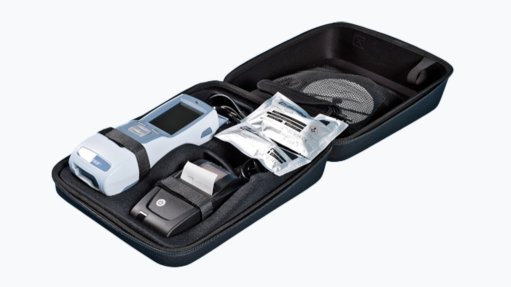
Developed to exceed the latest EN 15964 standards for police breathalysers proving that it will remain accurate and reliable for many years to come.
VISIT SHOWROOM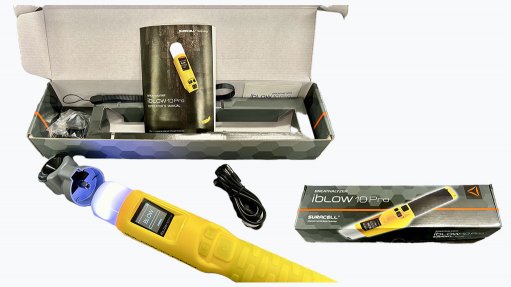
Supplier & Distributor of the Widest Range of Accurate & Easy-to-Use Alcohol Breathalysers
VISIT SHOWROOM
Press Office
Announcements
What's On
Subscribe to improve your user experience...
Option 1 (equivalent of R125 a month):
Receive a weekly copy of Creamer Media's Engineering News & Mining Weekly magazine
(print copy for those in South Africa and e-magazine for those outside of South Africa)
Receive daily email newsletters
Access to full search results
Access archive of magazine back copies
Access to Projects in Progress
Access to ONE Research Report of your choice in PDF format
Option 2 (equivalent of R375 a month):
All benefits from Option 1
PLUS
Access to Creamer Media's Research Channel Africa for ALL Research Reports, in PDF format, on various industrial and mining sectors
including Electricity; Water; Energy Transition; Hydrogen; Roads, Rail and Ports; Coal; Gold; Platinum; Battery Metals; etc.
Already a subscriber?
Forgotten your password?
Receive weekly copy of Creamer Media's Engineering News & Mining Weekly magazine (print copy for those in South Africa and e-magazine for those outside of South Africa)
➕
Recieve daily email newsletters
➕
Access to full search results
➕
Access archive of magazine back copies
➕
Access to Projects in Progress
➕
Access to ONE Research Report of your choice in PDF format
RESEARCH CHANNEL AFRICA
R4500 (equivalent of R375 a month)
SUBSCRIBEAll benefits from Option 1
➕
Access to Creamer Media's Research Channel Africa for ALL Research Reports on various industrial and mining sectors, in PDF format, including on:
Electricity
➕
Water
➕
Energy Transition
➕
Hydrogen
➕
Roads, Rail and Ports
➕
Coal
➕
Gold
➕
Platinum
➕
Battery Metals
➕
etc.
Receive all benefits from Option 1 or Option 2 delivered to numerous people at your company
➕
Multiple User names and Passwords for simultaneous log-ins
➕
Intranet integration access to all in your organisation