Oil persists, coal declines, renewables increase by 2040, but global warming to rise through to 2100, says Bain&Co

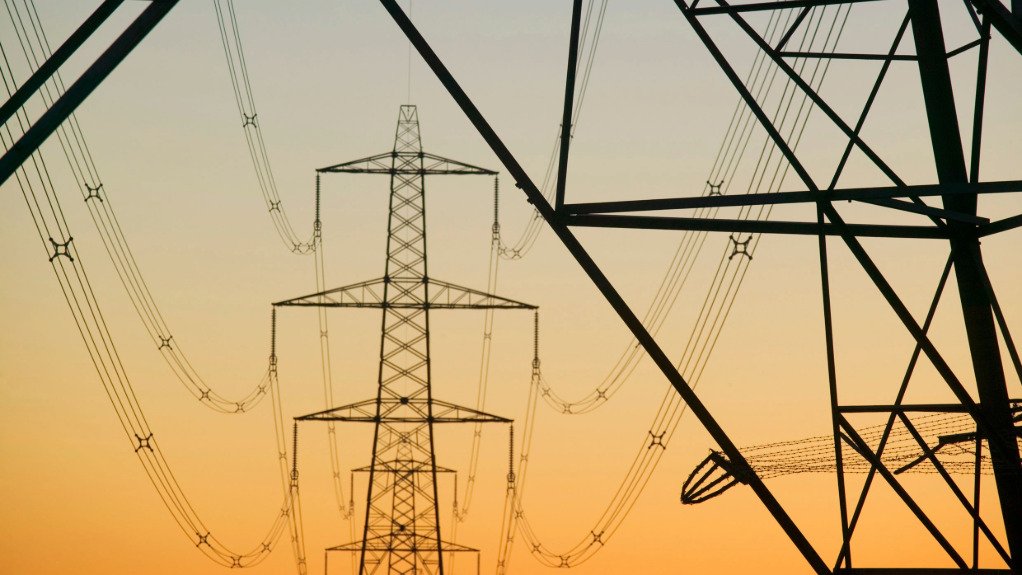


Even under the low-carbon scenario, modelled by consulting firm Bain & Co in its 'Global Energy and Materials Outlook 2026' report, fossil fuel supply constitutes 52% of global primary energy supply by 2040 and the world warms by 2.1 °C by 2100.
Even in the most coordinated decarbonisation scenario, climate impacts are severe and require that capital be allocated to resilience strategies, it notes.
The company also modelled a scenario in which present dynamics are perpetuated, as well as another scenario that modelled the impacts of divergent energy pathways.
Industry and buildings account for more than 60% of the total energy demand to 2040 across all three scenarios.
Primary energy supply continues to grow to meet this demand under two scenarios, although it stalls in the low-carbon scale scenario.
Energy demand rises with GDP, population growth and industrial activity. This presents a dual challenge in which the world needs more energy even as it transitions to a lower carbon footprint, with progress set to be uneven, Bain & Co highlights.
Electricity demand grows by 40% to 70% by 2040, and electricity becomes a larger share of final energy consumption under all three scenarios. System efficiency improves, but total electricity demand continues to rise substantially with population and GDP growth.
Further, transport electrification grows quickly, from less than 3% of current global demand today to 7% to 9% by 2040, depending on the scenario, the report shows.
However, the largest cumulative increase in electricity consumption will come from air-conditioning load in residential buildings, which will rise sharply as cooling expands in developing countries, while heat pumps will replace gas heating.
Residential buildings, along with steady, similar increases in industrial demand, account for the largest share of overall growth of electricity demand to 2040, the report points out.
Renewables continue to scale up across all three scenarios. Solar and wind increase their share of the generation mix by three- to seven times, grow much faster than all other sources and become the lowest-cost option in many markets by 2040.
In all three scenarios, solar accounts for the most significant increase in renewable electricity generation, Bain & Co adds.
“Renewables already are likely to overtake coal by the end of this year as the largest source of electricity generation and, in the divergent pathways scenario, renewable generation will make up more than 50% of all power by 2036.”
The cost of renewables and firming technologies, such as battery storage, will also continue to decline, the report notes.
Specifically, where renewables are constrained from scaling further or faster, the primary barriers are not technological viability, but interconnection delays, dispatchability requirements, transformer and transmission lead times, mineral supply chains, capital mobilisation, and shortages of skilled labour, it points out.
Electrification will reshape end-use demand, and the grid needs more wires, more transformers and more storage, the company points out.
Meanwhile, every scenario showed continued warming, surging electricity demand and resilient fossil fuel demand, even as renewables gain.
“In every case, fossil supply remains a significant share of total supply, growing under the perpetuate present dynamics and divergent pathways scenarios.
“Only in the low-carbon scale scenario, as a result of greater electrification and higher levels of efficiency, does its share of total supply decline sharply.”
Oil demand grows to 108-million barrels per day (Mb/d) by 2040 in the perpetuate present dynamics scenario, and plateaus at 97 Mb/d in divergent pathways. Only in the low-carbon scale scenario does it decline to 80 Mb/d by 2040.
Additionally, while electric vehicles will flatten or slow road fuel demand, the long-term trajectory of oil demand will depend on petrochemicals, aviation, shipping and heavy transport and freight, says Bain & Co.
Thermal coal demand declines across all three of the company’s scenarios as cheaper alternatives displace ageing coal power facilities, although coal continues to play a role in key regions, such as China and India.
Demand for metallurgical coal for industrial iron and steel production persists into the longer term, it adds.
However, China, which is currently the world’s largest coal consumer, leads the reduction in coal use as it works to improve air quality and meet emissions goals, and will account for more than 60% of the global decline in coal use by 2040, Bain & Co notes.
“China sets the stage. The world’s largest emitter of greenhouse gases is also its single largest decarbonisation engine.”
China leads in lowest-cost production of renewables and, although its coal emissions will remain significant, it is likely to account for more than 30% of global solar and wind generation by 2040, the report states.
Additionally, nuclear capacity grows across all three scenarios and competes with other grid firming technologies, such as batteries, pumped hydro storage and gas.
Separately, liquefied natural gas (LNG) is a flexible power source, and an industrial feedstock, which makes it highly sensitive to macro conditions, national policy choices, and the cost of alternatives such as storage-enabled renewables or nuclear.
In Bain & Co's modelling, gas demand swings by roughly 20% in both directions across scenarios.
The demand for gas grows in the present dynamics perpetuated and divergent pathways scenarios, in which grids rely more on gas for flexibility as renewables and storage scale slowly.
However, in the low-carbon scale scenario, gas demand tapers sooner as clean options expand and policy tightens. Stricter policy also increases the risk of stranded or under-used assets by widening the spread between lower-cost, lower-emissions gas and higher-cost supply.
The report also warns that critical minerals can create supply chain risk, as clean energy, electric vehicles, and defence systems all depend on many of the same critical minerals.
While copper, iron-ore, lithium, manganese, cobalt, graphite, and aluminium are plentiful, they are highly concentrated geographically.
Therefore, refining, processing, and manufacturing can become choke points, and supply chains can become national security, trade and industrial policy flash points, which is especially evident in the present dynamics or divergent pathways scenarios, the report notes.
Additionally, under the divergent pathways scenario in particular, gaps between critical minerals supply and demand emerge in the coming decade.
Further, the report shows that e-fuel targets in the EU and short-term biofuel mandates in India are providing tailwinds for sustainable fuel adoption.
However, e-fuels and bio-based fuels are likely to scale more narrowly than expected, as electrification moves faster in road transport.
They remain critical for decarbonising aviation and maritime shipping, in which electrification potential is limited, but still require significant development to reach scale in those sectors, the report explains.
Article Enquiry
Email Article
Save Article
Feedback
To advertise email advertising@creamermedia.co.za or click here
Research Reports

Projects


Latest Multimedia

Latest News


Showroom

ALBIS FLANGES — founded in 1965 — is a petro-chemical approved manufacturer of flanges and fittings in most grades of steel, listed with Sasol,...
VISIT SHOWROOM




Press Office
Announcements
What's On
Subscribe to improve your user experience...
Option 1 (equivalent of R125 a month):
Receive a weekly copy of Creamer Media's Engineering News & Mining Weekly magazine
(print copy for those in South Africa and e-magazine for those outside of South Africa)
Receive daily email newsletters
Access to full search results
Access archive of magazine back copies
Access to Projects in Progress
Access to ONE Research Report of your choice in PDF format
Option 2 (equivalent of R375 a month):
All benefits from Option 1
PLUS
Access to Creamer Media's Research Channel Africa for ALL Research Reports, in PDF format, on various industrial and mining sectors
including Electricity; Water; Energy Transition; Hydrogen; Roads, Rail and Ports; Coal; Gold; Platinum; Battery Metals; etc.
Already a subscriber?
Forgotten your password?
Receive weekly copy of Creamer Media's Engineering News & Mining Weekly magazine (print copy for those in South Africa and e-magazine for those outside of South Africa)
➕
Recieve daily email newsletters
➕
Access to full search results
➕
Access archive of magazine back copies
➕
Access to Projects in Progress
➕
Access to ONE Research Report of your choice in PDF format
RESEARCH CHANNEL AFRICA
R4500 (equivalent of R375 a month)
SUBSCRIBEAll benefits from Option 1
➕
Access to Creamer Media's Research Channel Africa for ALL Research Reports on various industrial and mining sectors, in PDF format, including on:
Electricity
➕
Water
➕
Energy Transition
➕
Hydrogen
➕
Roads, Rail and Ports
➕
Coal
➕
Gold
➕
Platinum
➕
Battery Metals
➕
etc.
Receive all benefits from Option 1 or Option 2 delivered to numerous people at your company
➕
Multiple User names and Passwords for simultaneous log-ins
➕
Intranet integration access to all in your organisation