Mediterranean migrants face rising deaths


More than 500 people died in the Mediterranean Sea in the first 40 days of 2026 as they desperately attempted to make their way to Europe in search of safety or opportunity, which their often conflict-affected home countries could not guarantee.
This figure, drawn from the International Organisation for Migration’s (IOM’s) Missing Migrants Project, marks the deadliest start to a year since the agency started systematically recording deaths in 2014. The deadliest tragedy this year occurred on February 6, when 53 migrants capsized off the Libyan coast.
Over the past decade, the IOM has recorded more than 30 000 missing migrant deaths in the Mediterranean, with 5 000 along the West African-Atlantic route to Spain and nearly 6 000 during Sahara Desert crossings.
These numbers are more than just statistics – they are lives cut short, families left in limbo, and communities burdened with grief.
It is against this grim backdrop that the IOM’s November 2025 initiative with the governments of the Gambia and Mauritania stands out as a model for humane, coordinated action. The programme seeks to strengthen national capacities to respond to migrant deaths and disappearances along routes connecting Africa and Europe.
Through this initiative, the Gambia and Mauritania are establishing coordinated government systems to investigate cases of missing migrants, recover identities of the deceased, and provide families with answers. Bespoke capacity building workshops and mentoring will strengthen institutional capacity and cross-border cooperation, thereby equipping the countries to locate the missing, identify remains, and ultimately prevent these tragedies from being forgotten.
The programme brings together expertise from the International Committee of the Red Cross, the Argentine Forensic Anthropology Team, and the Red Cross and Red Crescent Societies. Together, they offer forensic identification, family tracing and psychological support, tackling the crisis with both scientific rigour and empathy.
While interventions such as this are welcome, they underscore a bitter reality: the root causes of migration – conflict, political instability, economic desperation and climate shocks – remain unaddressed. Europe’s externalisation of migration control to third countries in return for financially supporting their efforts to combat migration, coupled with dangerous and poorly monitored crossing routes, continues to turn the Mediterranean into a graveyard.
If the world is to prevent these deaths, it must do more than just count bodies. African governments, international organisations and European partners should collaborate on creating safe, legal pathways for migration, bolstering livelihoods in source countries, and helping end conflicts.
One hopes this comes to fruition sooner rather than later.
I end with a mea culpa. A couple of weeks ago, I lamented what I called the African Union’s (AU’s) silence on Donald Trump’s third-country deportation scheme, which has seen scores of migrants whom the US doesn’t want sent to Cameroon, Eswatini, Ghana, Rwanda, and South Sudan – countries to which they have no historical or cultural ties – since July.
It turns out the continental body’s African Commission on Human and People’s Rights (ACHPR) did raise its voice on a couple of occasions. In September, for instance, it urged the countries involved in the scheme, as well as other African States, to ensure transparency in such deals, protect the rights of deportees and avoid policies that could turn the continent into a “drop-off zone” for arbitrary expulsions.
“These agreements reflect a logic of externalising migration responsibilities and put the individuals at greater risk of violations of their fundamental rights,” the ACHPR said. It warned that these arrangements may violate the principle of non-refoulement – the forcible return of refugees or asylum seekers to a country where they face threats – the ban on collective expulsions, and the rights to dignity and asylum guaranteed by the African Charter on Human and People’s Rights and other international and regional treaties.
Good on you, ACHPR!
My oversight is attributable to my search for speeches by AU Commission chairperson Mahamoud Ali Youssouf condemning Trump’s scheme drawing a blank. Ditto for evidence of denunciation by African heads of State and government at their shindigs.
Without condemnation at the highest level, the dispatch of unwanted migrants from the US becomes “normal” and more and more will likely wash up on our shores.
So, Mr Youssouff, be more media visible. Think of those who were there before you: Chadian Moussa Faki Mahamat, our very own Nkosazana Dlamini-Zuma, and Gabon’s Jean Ping.
Had this happened during their tenures, I’m sure there would be soundbites and reportage galore on this issue.
Article Enquiry
Email Article
Save Article
Feedback
To advertise email advertising@creamermedia.co.za or click here
Research Reports

Projects


Latest Multimedia

Latest News

Showroom
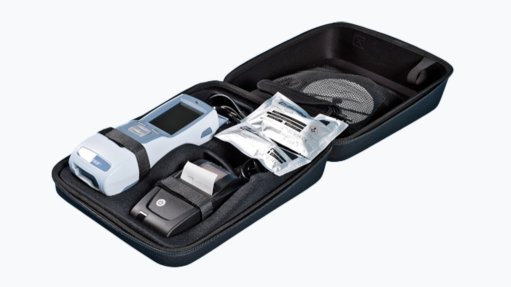
Developed to exceed the latest EN 15964 standards for police breathalysers proving that it will remain accurate and reliable for many years to come.
VISIT SHOWROOM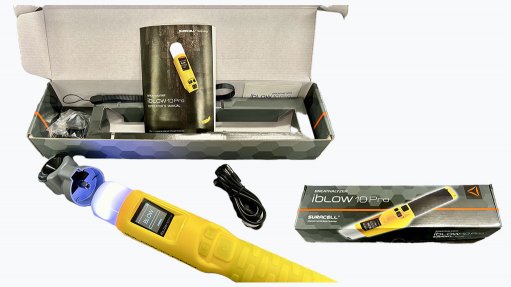
Supplier & Distributor of the Widest Range of Accurate & Easy-to-Use Alcohol Breathalysers
VISIT SHOWROOM
Press Office
Announcements
What's On
Subscribe to improve your user experience...
Option 1 (equivalent of R125 a month):
Receive a weekly copy of Creamer Media's Engineering News & Mining Weekly magazine
(print copy for those in South Africa and e-magazine for those outside of South Africa)
Receive daily email newsletters
Access to full search results
Access archive of magazine back copies
Access to Projects in Progress
Access to ONE Research Report of your choice in PDF format
Option 2 (equivalent of R375 a month):
All benefits from Option 1
PLUS
Access to Creamer Media's Research Channel Africa for ALL Research Reports, in PDF format, on various industrial and mining sectors
including Electricity; Water; Energy Transition; Hydrogen; Roads, Rail and Ports; Coal; Gold; Platinum; Battery Metals; etc.
Already a subscriber?
Forgotten your password?
Receive weekly copy of Creamer Media's Engineering News & Mining Weekly magazine (print copy for those in South Africa and e-magazine for those outside of South Africa)
➕
Recieve daily email newsletters
➕
Access to full search results
➕
Access archive of magazine back copies
➕
Access to Projects in Progress
➕
Access to ONE Research Report of your choice in PDF format
RESEARCH CHANNEL AFRICA
R4500 (equivalent of R375 a month)
SUBSCRIBEAll benefits from Option 1
➕
Access to Creamer Media's Research Channel Africa for ALL Research Reports on various industrial and mining sectors, in PDF format, including on:
Electricity
➕
Water
➕
Energy Transition
➕
Hydrogen
➕
Roads, Rail and Ports
➕
Coal
➕
Gold
➕
Platinum
➕
Battery Metals
➕
etc.
Receive all benefits from Option 1 or Option 2 delivered to numerous people at your company
➕
Multiple User names and Passwords for simultaneous log-ins
➕
Intranet integration access to all in your organisation