



Kieswetter heads up new police panel, as Cachalia announces 9.5% drop in murder rate

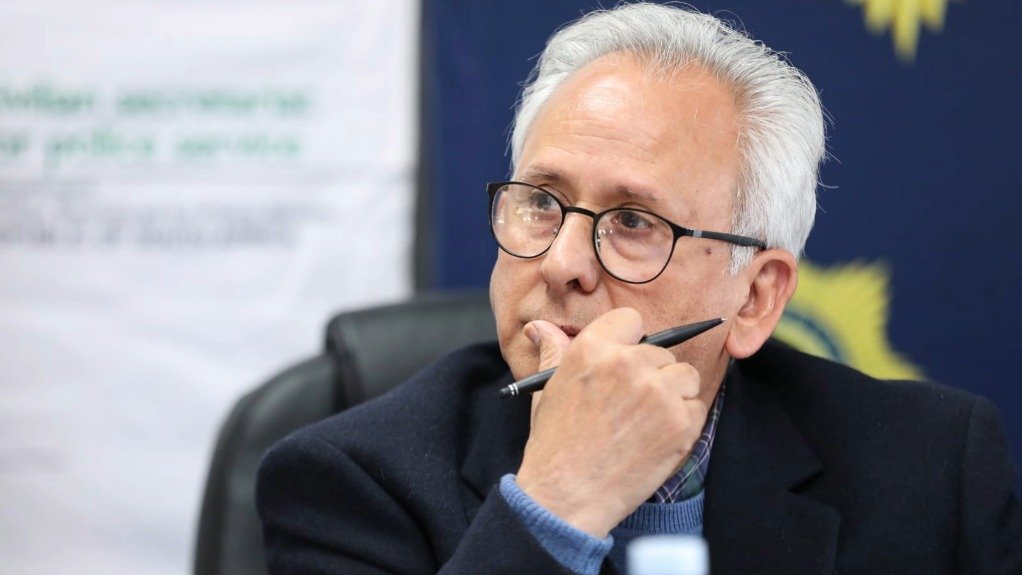



The South African Police Service (SAPS) has launched a massive operational turnaround strategy under a comprehensive "police reset agenda" aimed at aggressively dismantling the country's high crime rates.
To spearhead this transformation, Acting Police Minister Firoz Cachalia announced the establishment of a Police Advisory Panel, to be headed up by former South African Revenue Service (SARS) Commissioner Edward Kieswetter supported by Deputy Chair of the Public Service Commission Dr Zukiswa Mqolombo, as the panel's Deputy Chair.
The panel's primary mandate is to evaluate progress on the SAPS "reset agenda" and accelerate the implementation of recommendations from the Madlanga Commission.
Reporting directly to Cachalia and the Acting National Commissioner, the panel serves as a precursor to a permanent National Policing Board, an entity originally recommended by the National Development Plan.
Rather than wait for the Madlanga Commission’s final report scheduled for later this year, Cachalia explained that the panel was already fast-tracking urgent, clear-cut systemic changes.
This proactive approach, he said, ensured that immediate operational deficiencies were addressed while long-term legislative amendments were processed in Parliament.
The institutional shake-up comes at a critical time, as fourth-quarter crime statistics released by the SAPS revealed an overall downward trend across several major crime categories, but with a strong emphasis that total crime volumes remain critically high.
Most notably, South Africa's murder rate dropped by 9.5% in January 1 to March 31, recording 5 181 murders, compared with the same quarter in 2025.
While national data indicated slight decreases in other severe contact crimes, including rape, and aggravated robbery, Cachalia maintained that current levels of violence remained deeply concerning and unacceptable.
He said by focusing heavily on internal accountability, structural modernisation, and professional standards, the national police reset aimed to overhaul the existing culture of the police service.
Through the advisory panel, the government intends to transition the SAPS from a reactive force into a modern, professional, and trusted law enforcement agency capable of ensuring long-term public safety.
Cachalia said a cornerstone of the strategic deployment was a specialised focus on the top 50 high-crime precincts across the country.
These specific stations will receive intensive logistical backing, increased personnel allocations, and rigorous management oversight.
Simultaneously, successful tactics from high-performing stations will be formally documented and scaled nationwide to optimise standard operating procedures.
Recognising that localised cooperation was crucial to breaking the cycle of violence, the strategy prioritised public cooperation through a major revitalisation of community policing, Cachalia said.
"Plans include evaluating the viability and funding models for a national and provincial community patroller programme. This initiative intends to deploy trained and vetted local community members to expand the visible policing footprint directly into residential areas," he added.
The SAPS is also deploying a comprehensive, multi-sector offensive to dismantle highly sophisticated criminal networks.
Driven by Organised Crime Strategy, Cachalia said the SAPS was shifting its approach from isolated policing to an aggressive, synchronised national defence.
This strategic evolution targets sophisticated syndicates, such as construction mafia extortion, drug trafficking rings, and infrastructure sabotage.
Cachalia said by analysing specific trends, geographic patterns, and the underlying socioeconomic factors driving violence, authorities could design targeted, effective prevention plans.
However, government action alone is insufficient.
"Reversing crime trends requires a unified front that actively integrates the resources and insights of civil society organisations, the private sector and the community policing forums,” he said.
For law enforcement officers, stabilising or improving figures proved that strategic policing yielded results, he stated.
To sustain this momentum, he urged the SAPS to intensify its focus on advanced intelligence, rigorous investigations and “uncompromising integrity” to root out corruption and rebuild public trust.
Article Enquiry
Email Article
Save Article
Feedback
To advertise email advertising@creamermedia.co.za or click here
Research Reports

Projects


Latest Multimedia


Latest News


Showroom

The Beneficiation Academy is a certified training institution that follows all compliance legislation and is accredited with various Sector...
VISIT SHOWROOM
Sulzer South Africa, established in 1922, partners with critical industries like power, oil & gas, water, mining, and chemicals to boost...
VISIT SHOWROOM



Announcements
What's On
Subscribe to improve your user experience...
Option 1 (equivalent of R125 a month):
Receive a weekly copy of Creamer Media's Engineering News & Mining Weekly magazine
(print copy for those in South Africa and e-magazine for those outside of South Africa)
Receive daily email newsletters
Access to full search results
Access archive of magazine back copies
Access to Projects in Progress
Access to ONE Research Report of your choice in PDF format
Option 2 (equivalent of R375 a month):
All benefits from Option 1
PLUS
Access to Creamer Media's Research Channel Africa for ALL Research Reports, in PDF format, on various industrial and mining sectors
including Electricity; Water; Energy Transition; Hydrogen; Roads, Rail and Ports; Coal; Gold; Platinum; Battery Metals; etc.
Already a subscriber?
Forgotten your password?
Receive weekly copy of Creamer Media's Engineering News & Mining Weekly magazine (print copy for those in South Africa and e-magazine for those outside of South Africa)
➕
Recieve daily email newsletters
➕
Access to full search results
➕
Access archive of magazine back copies
➕
Access to Projects in Progress
➕
Access to ONE Research Report of your choice in PDF format
RESEARCH CHANNEL AFRICA
R4500 (equivalent of R375 a month)
SUBSCRIBEAll benefits from Option 1
➕
Access to Creamer Media's Research Channel Africa for ALL Research Reports on various industrial and mining sectors, in PDF format, including on:
Electricity
➕
Water
➕
Energy Transition
➕
Hydrogen
➕
Roads, Rail and Ports
➕
Coal
➕
Gold
➕
Platinum
➕
Battery Metals
➕
etc.
Receive all benefits from Option 1 or Option 2 delivered to numerous people at your company
➕
Multiple User names and Passwords for simultaneous log-ins
➕
Intranet integration access to all in your organisation
