Infrastructure seen as decisive factor in unlocking Africa’s mineral value-addition ambitions


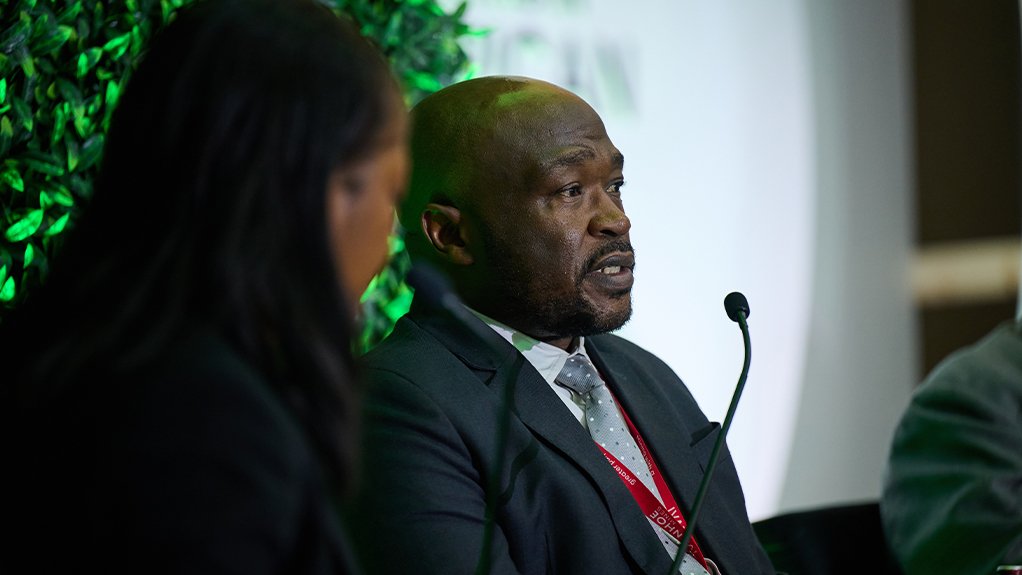




Africa’s ambition to move from being a supplier of raw minerals to a hub for value-added processing will ultimately not hinge on resource availability, but on whether the continent can overcome its infrastructure constraints.
This was the key takeaway from a panel discussion at Investing in African Mining Indaba 2026, where policymakers, industry leaders and investors agreed that while Africa holds about 30% of global mineral reserves, only around 10% of current output is processed locally – largely owing to persistent gaps in energy, transport and logistics infrastructure.
Panellists emphasised that the challenge is not whether Africa can build the required infrastructure to boost this figure substantially, but how it will do so – and at what pace.
South Africa’s Department of Mineral Resources and Petroleum director-general Jacob Mbele argued that the continent’s ambitions are achievable, pointing to existing infrastructure platforms such as regional power pools and transport networks that can be expanded and better coordinated.
“The ambition is realistic,” he said, adding that success will depend on aligning regulatory frameworks, infrastructure planning and regional cooperation. He also stressed the need to rethink roles within the value chain, noting that beneficiation should not be seen solely as the responsibility of mining companies.
“We need to enable industrialists to take advantage of that space, while mining houses focus on what they do best,” Mbele explained.
A key theme emerging from the discussion was the importance of regional “hub” development rather than attempting continent-wide industrialisation. According to Mbele, certain regions are better positioned to specialise in specific parts of the value chain, leveraging their existing strengths.
This view was reiterated by BHP VP of strategy and market intelligence Elise Bungo, who framed the debate as being about execution rather than feasibility.
“The real question is not whether Africa will do this, but how,” she said. “It’s about building layer by layer – connecting transport, energy and partners in a coordinated way.”
Bungo highlighted the importance of early-stage collaboration between governments, industry and communities to reduce risk and ensure long-term project viability. She noted that successful infrastructure development globally has relied on integrating multiple stakeholders and aligning their interests from the outset.
For downstream industries, however, infrastructure is not a secondary consideration – it is a determining factor.
Major global automotive manufacturer Stellantis VP for M&A sustainable raw materials Giuseppe Foglia stressed that for automotive manufacturers seeking critical minerals for electric vehicles, infrastructure is a “binary” investment criterion.
“Even world-class resources without ports, roads and energy cannot be competitive,” he said, adding that companies require long-term predictability across the entire supply chain. “We don’t need raw materials – we need processed materials.”
Foglia pointed to the need for coordinated partnerships across upstream and downstream players, including shared investment in industrial parks and processing capacity near mining operations. Without such integration, projects risk remaining economically unviable.
From a financing perspective, Organisation for Economic Cooperation and Development senior adviser Louis Maréchal highlighted structural challenges that continue to limit infrastructure development across the continent.
He noted that while Africa attracts about $80-billion a year in infrastructure investment, this falls well short of the estimated $150-billion needed yearly to meet development needs. Critically, only about 11% of current infrastructure funding comes from the private sector – significantly lower than in other regions.
“This raises the question of why private capital is not flowing at the expected scale,” Maréchal said.
He identified key barriers as including weak coordination between countries and within governments, limited project preparation capacity and broader concerns around investment attractiveness, such as regulatory uncertainty and fiscal instability.
The issue of risk – and how it is perceived – was further explored by Ivanhoe Atlantic chairperson Peter Pham, who argued that while Africa does face a genuine risk premium, it is often overstated.
He suggested that this gap presents an opportunity for investors willing to engage in appropriate derisking strategies.
Pham emphasised that investors are primarily seeking predictable operating environments, including strong rule of law, transparent regulatory frameworks and social licence to operate. He also highlighted the importance of multi-user infrastructure models, which can maximise economic benefits and improve project viability.
Drawing on Ivanhoe Atlantic’s experience in West Africa, he pointed to existing but underutilised infrastructure assets – such as railways and energy networks – that could be better integrated to support broader economic development.
“We often focus on what Africa doesn’t have, but not enough on what it already has and can use better,” he said.
The sentiment was reinforced in the referencing of the concept of “corridor development”, where infrastructure investments are designed to serve multiple sectors beyond mining, including agriculture, telecommunications and energy.
Such integrated approaches can help transform mining projects from isolated “enclave” operations into catalysts for wider economic growth.
Social licence to operate was also identified as a critical enabler of infrastructure development. Mbele noted that in South Africa, this is embedded in mining licences through social and labour plans, which require companies to invest in community development projects such as schools, clinics and roads.
He added that recent collaboration between government and industry – particularly in addressing energy and rail constraints – has demonstrated the potential of public–private partnerships in overcoming infrastructure bottlenecks.
However, panellists cautioned that greater private-sector participation will require improved enabling conditions, including clearer regulatory frameworks, better coordination and stronger governance.
Maréchal highlighted the role of international standards and policy frameworks in improving investment quality and environmental performance, noting that transparency and predictability are key to unlocking capital flows.
Ultimately, the discussion highlighted that Africa’s infrastructure gap is not solely a funding challenge, but a broader issue of coordination, governance and execution.
As Bungo noted, solving these challenges will require sustained collaboration by multiple stakeholders, with a focus on long-term outcomes rather than short-term gains.
“The strategy is partnership,” Foglia added, emphasising the need for structured collaboration with clearly defined roles, responsibilities and execution plans.
With global demand for critical minerals continuing to rise, the pressure is mounting for Africa to translate its resource wealth into industrial development. Whether the continent can do so will depend on its ability to build the infrastructure backbone required to support value addition – and to do so in a way that is inclusive, coordinated and sustainable.
As the discussion made clear, the building blocks are already in place. The challenge now is to connect them.
Article Enquiry
Email Article
Save Article
Feedback
To advertise email advertising@creamermedia.co.za or click here
Research Reports

Projects


Latest Multimedia

Latest News
Showroom
Rentech provides renewable energy products and services to the local and selected African markets. Supplying inverters, lithium and lead-acid...
VISIT SHOWROOM
Rio Carb is an OEM (Original Equipment Manufacturer) of R-C700 Chromium Carbide (CrC) alloy clad wear plates and pipes used for heavy materials...
VISIT SHOWROOM

Press Office
Announcements
What's On
Subscribe to improve your user experience...
Option 1 (equivalent of R125 a month):
Receive a weekly copy of Creamer Media's Engineering News & Mining Weekly magazine
(print copy for those in South Africa and e-magazine for those outside of South Africa)
Receive daily email newsletters
Access to full search results
Access archive of magazine back copies
Access to Projects in Progress
Access to ONE Research Report of your choice in PDF format
Option 2 (equivalent of R375 a month):
All benefits from Option 1
PLUS
Access to Creamer Media's Research Channel Africa for ALL Research Reports, in PDF format, on various industrial and mining sectors
including Electricity; Water; Energy Transition; Hydrogen; Roads, Rail and Ports; Coal; Gold; Platinum; Battery Metals; etc.
Already a subscriber?
Forgotten your password?
Receive weekly copy of Creamer Media's Engineering News & Mining Weekly magazine (print copy for those in South Africa and e-magazine for those outside of South Africa)
➕
Recieve daily email newsletters
➕
Access to full search results
➕
Access archive of magazine back copies
➕
Access to Projects in Progress
➕
Access to ONE Research Report of your choice in PDF format
RESEARCH CHANNEL AFRICA
R4500 (equivalent of R375 a month)
SUBSCRIBEAll benefits from Option 1
➕
Access to Creamer Media's Research Channel Africa for ALL Research Reports on various industrial and mining sectors, in PDF format, including on:
Electricity
➕
Water
➕
Energy Transition
➕
Hydrogen
➕
Roads, Rail and Ports
➕
Coal
➕
Gold
➕
Platinum
➕
Battery Metals
➕
etc.
Receive all benefits from Option 1 or Option 2 delivered to numerous people at your company
➕
Multiple User names and Passwords for simultaneous log-ins
➕
Intranet integration access to all in your organisation