How corruption is powering Nigeria’s darkness


Weeks before disappearing from public view, Saleh Mamman announced his intention to run for governor of the Nigerian state of Taraba in 2027. Earlier this month, the former federal Power Minister was sentenced in absentia to 75 years in prison for laundering billions of naira – equivalent to about R450-million – meant for electricity infrastructure.
In many countries, such a sentence would signal a decisive anti-corruption breakthrough, but in Nigeria it raises the more troubling question of why convictions of powerful political figures are so extraordinary that they feel historic.
Reuters described the ruling as “a rare conviction against a corrupt official”, while Nigeria’s Punch newspaper said it “took many Nigerians by surprise because of its rarity” in a system where “powerful people always get away”.
As far as I could establish, no serving or former Nigerian Cabinet Minister has received a prison sentence as severe as Mamman’s 75-year term in recent years. The closest high-profile cases involved far lighter penalties. Examples include former governor and senator Orji Uzor Kalu, who was sentenced to a 12-year term in 2019 before the conviction was overturned on procedural grounds, and lawmaker Farouk Lawan, who ultimately served a five-year sentence over a bribery scandal.
Historically, one of the few comparable penalties was handed to fraudster Emmanuel Nwude in 2005, when he received an effective 25 years in what was then seen as a landmark anti-corruption prosecution. But then Nwude was not a senior government official; he’s a former Union Bank of Nigeria director infamous for orchestrating one of the world’s largest advance-fee frauds, commonly known as 419 scams.
Mamman led Nigeria’s federal Power Ministry during a period when then President Muhammadu Buhari’s administration had promised to tackle corruption. He was eventually sacked in a Cabinet reshuffle following what Buhari described as an “independent and critical self-review”.
The West African nation has been embroiled in a power-sector crisis for decades. Sadly, that crisis is not merely technical failure; it is institutionalised rent extraction. Vast public resources have gone into generation, transmission and distribution projects, yet ordinary Nigerians endure chronic blackouts, a collapsing grid and heavy reliance on expensive diesel generators.
This points to a deeper problem in which the electricity sector functions more as a site of elite accumulation than as an engine for national development.
Scholars analysing Nigeria’s electricity reforms argue that politically connected individuals have consistently manipulated institutions, privatisation processes and regulatory arrangements to preserve access to rents rather than improve service delivery. One study by researchers from the School of Oriental and African Studies at the University of London and the Nigeria-based Centre for Democracy and Development notes that powerful interests routinely distort formal institutions “in ways that give them additional rents”, thereby locking the electricity sector into a “low-level equilibrium” of inefficiency and underperformance.
This helps explain why there is little to show for the massive investments over the years.
Nigeria officially privatised much of its electricity industry in 2013 amid promises of efficiency, competition and increased generation capacity. Yet, more than a decade later, the sector remains crippled by debt, weak infrastructure, subsidy distortions and governance failures. By August last year, six of the country’s 11 electricity distribution firms had been placed under receivership – business rescue in South African parlance – amid mounting financial distress.
The costs are staggering. According to World Bank estimates, unreliable electricity supply costs the Nigerian economy about $29-billion a year through lost production and disrupted business activity.
In that context, the Mamman case is significant not simply because a former Cabinet Minister was handed a hefty jail sentence but because it exposes how deeply embedded extraction has become in a sector central to national development. He was still at large at the time of writing, but I hope they locate his hideout before he can say blackout.
The funds that were diverted to line his pockets were linked to major hydroelectric projects intended to expand generation capacity in a country where electricity shortages are endemic.
The real tragedy therefore is not only corruption itself but the development paralysis it sustains. Nigeria boasts one of Africa’s largest economies, yet its electricity output continues to be grossly inadequate for a population exceeding 200-million people.
Until accountability becomes systemic rather than exceptional, landmark convictions will continue to be mere symbolic interruptions.
Article Enquiry
Email Article
Save Article
Feedback
To advertise email advertising@creamermedia.co.za or click here
Research Reports

Projects

Latest Multimedia

Latest News

Showroom
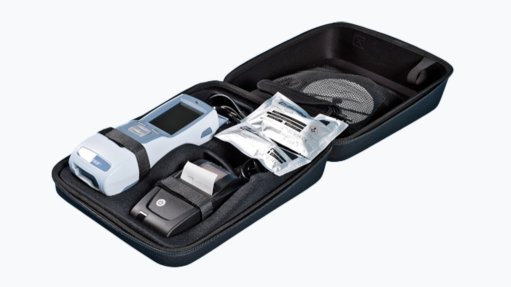
Developed to exceed the latest EN 15964 standards for police breathalysers proving that it will remain accurate and reliable for many years to come.
VISIT SHOWROOM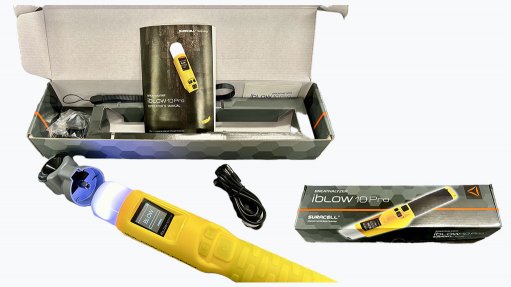
Supplier & Distributor of the Widest Range of Accurate & Easy-to-Use Alcohol Breathalysers
VISIT SHOWROOM

Press Office
Announcements
What's On
Subscribe to improve your user experience...
Option 1 (equivalent of R125 a month):
Receive a weekly copy of Creamer Media's Engineering News & Mining Weekly magazine
(print copy for those in South Africa and e-magazine for those outside of South Africa)
Receive daily email newsletters
Access to full search results
Access archive of magazine back copies
Access to Projects in Progress
Access to ONE Research Report of your choice in PDF format
Option 2 (equivalent of R375 a month):
All benefits from Option 1
PLUS
Access to Creamer Media's Research Channel Africa for ALL Research Reports, in PDF format, on various industrial and mining sectors
including Electricity; Water; Energy Transition; Hydrogen; Roads, Rail and Ports; Coal; Gold; Platinum; Battery Metals; etc.
Already a subscriber?
Forgotten your password?
Receive weekly copy of Creamer Media's Engineering News & Mining Weekly magazine (print copy for those in South Africa and e-magazine for those outside of South Africa)
➕
Recieve daily email newsletters
➕
Access to full search results
➕
Access archive of magazine back copies
➕
Access to Projects in Progress
➕
Access to ONE Research Report of your choice in PDF format
RESEARCH CHANNEL AFRICA
R4500 (equivalent of R375 a month)
SUBSCRIBEAll benefits from Option 1
➕
Access to Creamer Media's Research Channel Africa for ALL Research Reports on various industrial and mining sectors, in PDF format, including on:
Electricity
➕
Water
➕
Energy Transition
➕
Hydrogen
➕
Roads, Rail and Ports
➕
Coal
➕
Gold
➕
Platinum
➕
Battery Metals
➕
etc.
Receive all benefits from Option 1 or Option 2 delivered to numerous people at your company
➕
Multiple User names and Passwords for simultaneous log-ins
➕
Intranet integration access to all in your organisation