Engineering industry wants its voice heard as infrastructure development dithers

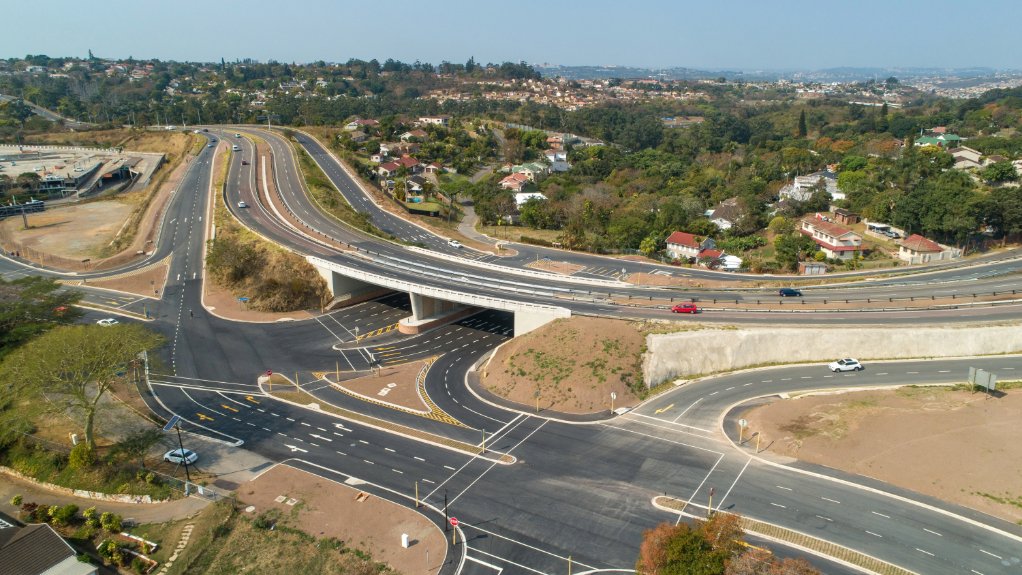



Representatives of professional engineering organisations and associations have again insisted that engineering professionals need to be part of decision-making processes in South Africa to ensure effective and sustainable infrastructure development.
CEOs of professional engineering organisations highlighted that South Africa had a shortage of engineers, including within government agencies and municipalities, but it also had graduate engineers who had not been absorbed into the industry owing to the financial pressure on companies.
“Engineering companies conventionally act as project-takers and, while there have been many promises of investments in infrastructure, the hiatus on the development of infrastructure projects means many companies are battling just to survive,” said industry organisation Consulting Engineers South Africa CEO Chris Campbell on March 25.
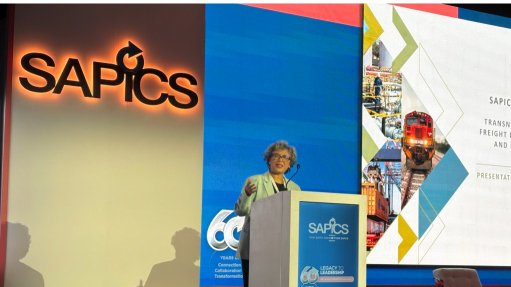
Professional association South African Institution of Civil Engineering (Saice) CEO Sekadi Phayane-Shakhane said the association had a strategic advocacy committee that reviewed and commented on policy and legislation, which was necessary to support government in the engineering space.
Saice also encouraged its members to serve on governance boards to have a voice and influence the industry, she said during a symposium hosted by industry regulator Engineering Council of South Africa (ECSA) and Saice.
However, collaboration with other industry organisations provided the industry with a greater voice than Saice alone had, she said.
Further, Saice's partnership with ECSA provided opportunities to identify engineering work needed in South Africa and could frame the professionalisation of the public sector, said Saice president Professor Chris Roth.
ECSA president TC Madikane, during an introductory speech, said that, to ensure sustainable development, engineers had to consider the needs of society in the future and design suitable solutions to ensure the next generation had secure, sustainable and impactful infrastructure.
“However, this task cannot be undertaken in isolation. Sustainable development requires a structured partnership and collaboration with policy makers and those who will implement projects, as well as funding for research to develop solutions that will be required in the decades to come.
“The engineering industry has a vast role to play and has the potential to own the changes required. Engineering can be a catalyst for change by solving the problems of tomorrow and engineering for sustainability,” he said.
All engineering industry associations advocated their positions and recommendations to government and recognised the need to collaborate to address the problems that plagued South Africa, said South African Institute of Electrical Engineers CEO Leanetse Matutoane.
Each association had its strengths and advocated for a specific engineering discipline, such as electrical, mechanical or civil engineering. However, when these organisations collaborated, a better understanding of the challenges and changes needed emerged, he said.
“Government has to step up to the plate. We have solved major problems, such as loadshedding, but we need to collaborate to solve the challenges we collectively face,” he said.
South Africa needed to build capacity within government departments, authorities and agencies, which should take place through the Department of Public Works and Infrastructure (DPWI), said South African Institution of Mechanical Engineering CEO Uncel Mhelembe.
Similarly, technical advisory boards, such as water boards and those of sector education and training authorities, must include subject matter experts, as they had to manage technical systems, but these were currently dominated by non-technical people, he said.
“We are advocating for more technical expertise on technical governing boards. We also nominate our members to be part of these boards where they can play an important role in aiding these boards in understanding the challenges and how to identify and implement suitable actions.
“We need to see registered professionals occupy some of these critical positions,” he said.
Meanwhile, the leaders of these engineering industry organisations were divided on the relevance of the appointment of an Engineer-General to oversee infrastructure projects.
Matutoane, for example, said the first task of an Engineer-General would be to ensure every government department and every municipality had recognised engineers within them to ensure the voice of engineering was included in decision-making.
Phayane-Shakhane, by comparison, questioned the relevance of such an appointment by highlighting that South Africa's engineering industry organisations were internationally recognised and were already ensuring the quality and fitness of professional engineers.
South African Road Federation CEO Marshall Muthen suggested that an Engineer-General should look at filling the gap left by the missing middle of the engineering industry, namely professionals aged between 30 and 50 who had often left the country to secure work elsewhere in Africa and globally.
He added that an Engineer-General would also have to ensure the development of future generations of engineers by encouraging and supporting school children to take mathematics and science subjects from primary school through to tertiary education.
Campbell suggested a different approach to establishing an office of an Engineer-General that would involve structural changes within local government to ensure engineering competency was present within local government, such as by establishing the position of city engineer.
He also suggested that funding derived from municipal services be ring-fenced to maintain infrastructure and thereby ensure good service delivery.
Engineering industry organisations not only helped to mobilise development resources, but strengthened collaboration, fostered knowledge sharing and deepened the engineering industry in Southern Africa, said regional engineering industry organisation Southern African Federation of Engineering Organisation Dr Alberto Tsamba.
This role of engineering organisations served as a platform where innovation met inclusion and engineering could serve as a catalyst for sustainable development, which served as the building blocks for Africa's future.
“Engineering is not only about structures and systems, but about human dignity and equity, and economic resilience. Regional collaboration and platforms, such as this symposium, provide a space to showcase the transformative role of the [engineering] profession to shape a sustainable future,” he said.
“Collaboration is key to ensuring the future of South Africa, as the problems we and countries around the world face are global, interconnected and urgent. We need to ensure ethical, sustainable engineering practices,” said Public Works and Infrastructure Deputy Minister Sihle Zikalala.
“The engineering profession must lead and build bridges of opportunity. The challenges South Africa faces are immense, but so is our capability for innovation. We must embed sustainability in all the work we do to create a future that is just, equitable and resilient,” he said.
Article Enquiry
Email Article
Save Article
Feedback
To advertise email advertising@creamermedia.co.za or click here
Research Reports
Projects


Latest Multimedia

Latest News

Showroom
M and J Mining are leading suppliers of physical support systems as used by the underground mining industry. Our selection of products are not...
VISIT SHOWROOM
Rittal is a world leading provider of top-quality integrated systems for enclosures, power distribution, climate control, IT infrastructure and...
VISIT SHOWROOM


Press Office
Announcements
What's On
Subscribe to improve your user experience...
Option 1 (equivalent of R125 a month):
Receive a weekly copy of Creamer Media's Engineering News & Mining Weekly magazine
(print copy for those in South Africa and e-magazine for those outside of South Africa)
Receive daily email newsletters
Access to full search results
Access archive of magazine back copies
Access to Projects in Progress
Access to ONE Research Report of your choice in PDF format
Option 2 (equivalent of R375 a month):
All benefits from Option 1
PLUS
Access to Creamer Media's Research Channel Africa for ALL Research Reports, in PDF format, on various industrial and mining sectors
including Electricity; Water; Energy Transition; Hydrogen; Roads, Rail and Ports; Coal; Gold; Platinum; Battery Metals; etc.
Already a subscriber?
Forgotten your password?
Receive weekly copy of Creamer Media's Engineering News & Mining Weekly magazine (print copy for those in South Africa and e-magazine for those outside of South Africa)
➕
Recieve daily email newsletters
➕
Access to full search results
➕
Access archive of magazine back copies
➕
Access to Projects in Progress
➕
Access to ONE Research Report of your choice in PDF format
RESEARCH CHANNEL AFRICA
R4500 (equivalent of R375 a month)
SUBSCRIBEAll benefits from Option 1
➕
Access to Creamer Media's Research Channel Africa for ALL Research Reports on various industrial and mining sectors, in PDF format, including on:
Electricity
➕
Water
➕
Energy Transition
➕
Hydrogen
➕
Roads, Rail and Ports
➕
Coal
➕
Gold
➕
Platinum
➕
Battery Metals
➕
etc.
Receive all benefits from Option 1 or Option 2 delivered to numerous people at your company
➕
Multiple User names and Passwords for simultaneous log-ins
➕
Intranet integration access to all in your organisation