Countries prioritising domestic energy options amid ‘largest-ever energy security crisis’

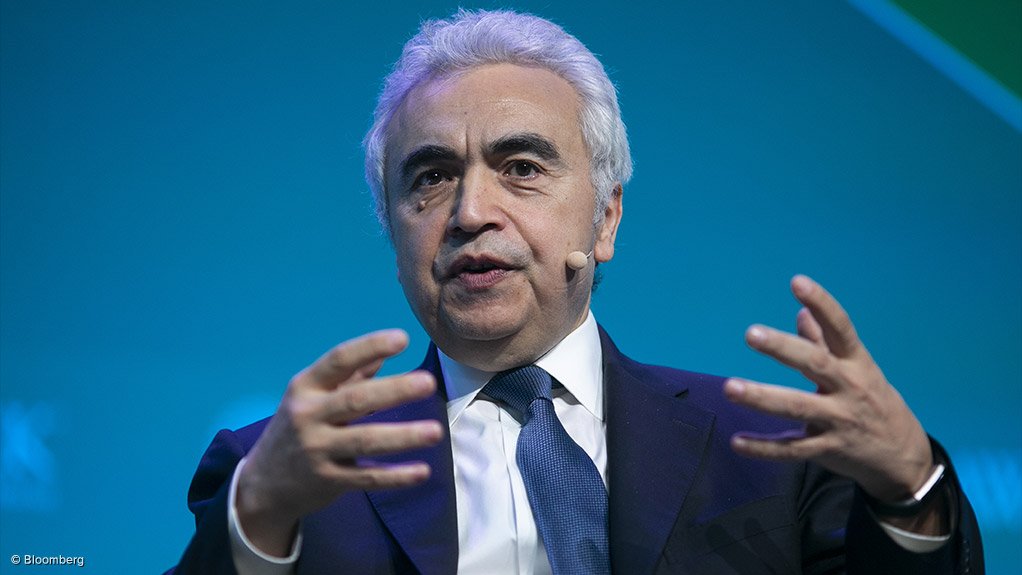


Countries are increasingly prioritising domestic energy resources as they seek to reduce their reliance on imported fuels in response to what the International Energy Agency (IEA) is describing as the world’s largest-ever energy security crisis, precipitated by the closure of the Strait of Hormuz.
Presenting the IEA’s eleventh World Energy Investment report, executive director Fatih Birol said that besides moves to domesticate energy supply amid a growing trust deficit, governments were also reshaping their investment strategies around diversification, electrification and energy efficiency.
This response to the crisis was creating upside for renewables, nuclear and potentially even coal, he said.
However, the US was also fuelling a surge in gas-fired power.
This together with some coal developments in the country will see the US overtake China as the world’s largest fossil-fuel power investor this year for the first time since the report’s inaugural publication in 2015.
“Orders for new gas-fired power plants reached a 25-year high in 2025, with data centre needs playing a significant role. The strong demand in the US and Middle East is limiting the availability of turbines for near-term deployment elsewhere in the world,” the IEA stated.
The report, which is forecasting that worldwide energy investments will rise to $3.4-trillion this year, showed that solar panel imports to developing countries in Asia and Africa had also jumped in recent months in response to the crisis.
“In Africa, 15 countries reported record-high solar imports of more than $400-million in the first quarter of 2026, compared with $650-million for the whole of 2025.
“Households and businesses can insulate themselves in part from energy shocks by installing solar panels and batteries especially if they rely on diesel to run small-scale generators,” the report stated.
Overall, about $665-billion was now being invested yearly into new renewables, led by solar PV, which accounted for $365-billion, or $1-billion daily.
Renewables spending had dipped recently, largely owing to market developments in China, but still comprised 70% of total power generation investment.
IEA chief energy economist Tim Gould stressed, too, that the investment numbers didn’t tell the whole story, as the decline in solar technology costs meant that far more capacity was being added for each dollar invested.
“The average cost of installing one gigawatt of solar capacity has fallen dramatically over the past decade, from $3-billion in 2015 to something like $700-million last year,” Gould said.
In the last decade this steep decline had supported a near ten-fold increase in annual capacity additions.
Electricity-related investment remained a dominant theme in what the IEA had termed the ‘age of electricity’, with such investment making up nearly 60% of all global energy investment.
About $2.2-trillion is expected to go to grids, storage, low-emissions fuels, nuclear, renewables, efficiency and electrification in 2026, while around $1.2-trillion is set to be invested in oil, natural gas and coal.
“We are in the midst of the largest energy security crisis the world has ever faced – and I believe this will reshape investment strategies globally, with parallels to the major changes the energy world witnessed after the oil shocks of the 1970s,” Birol said.
“We are already seeing intensified efforts by both producer and consumer countries to diversify trade routes and energy sources – such as advancing new pipelines and other supply infrastructure, on the one hand, and turning more to domestically available resources, on the other.”
Article Enquiry
Email Article
Save Article
Feedback
To advertise email advertising@creamermedia.co.za or click here
Research Reports
Projects

Latest Multimedia
Latest News

Showroom
Established in 1933, EKATO is the world leader in agitation technology, supplying agitators for processes and applications such as chemicals and...
VISIT SHOWROOM
Occupational health services, mobile clinics, wellness campaigns, aviation.
VISIT SHOWROOM

Press Office
Announcements
What's On
Subscribe to improve your user experience...
Option 1 (equivalent of R125 a month):
Receive a weekly copy of Creamer Media's Engineering News & Mining Weekly magazine
(print copy for those in South Africa and e-magazine for those outside of South Africa)
Receive daily email newsletters
Access to full search results
Access archive of magazine back copies
Access to Projects in Progress
Access to ONE Research Report of your choice in PDF format
Option 2 (equivalent of R375 a month):
All benefits from Option 1
PLUS
Access to Creamer Media's Research Channel Africa for ALL Research Reports, in PDF format, on various industrial and mining sectors
including Electricity; Water; Energy Transition; Hydrogen; Roads, Rail and Ports; Coal; Gold; Platinum; Battery Metals; etc.
Already a subscriber?
Forgotten your password?
Receive weekly copy of Creamer Media's Engineering News & Mining Weekly magazine (print copy for those in South Africa and e-magazine for those outside of South Africa)
➕
Recieve daily email newsletters
➕
Access to full search results
➕
Access archive of magazine back copies
➕
Access to Projects in Progress
➕
Access to ONE Research Report of your choice in PDF format
RESEARCH CHANNEL AFRICA
R4500 (equivalent of R375 a month)
SUBSCRIBEAll benefits from Option 1
➕
Access to Creamer Media's Research Channel Africa for ALL Research Reports on various industrial and mining sectors, in PDF format, including on:
Electricity
➕
Water
➕
Energy Transition
➕
Hydrogen
➕
Roads, Rail and Ports
➕
Coal
➕
Gold
➕
Platinum
➕
Battery Metals
➕
etc.
Receive all benefits from Option 1 or Option 2 delivered to numerous people at your company
➕
Multiple User names and Passwords for simultaneous log-ins
➕
Intranet integration access to all in your organisation