Cape Town progresses scheme to diversify water supply

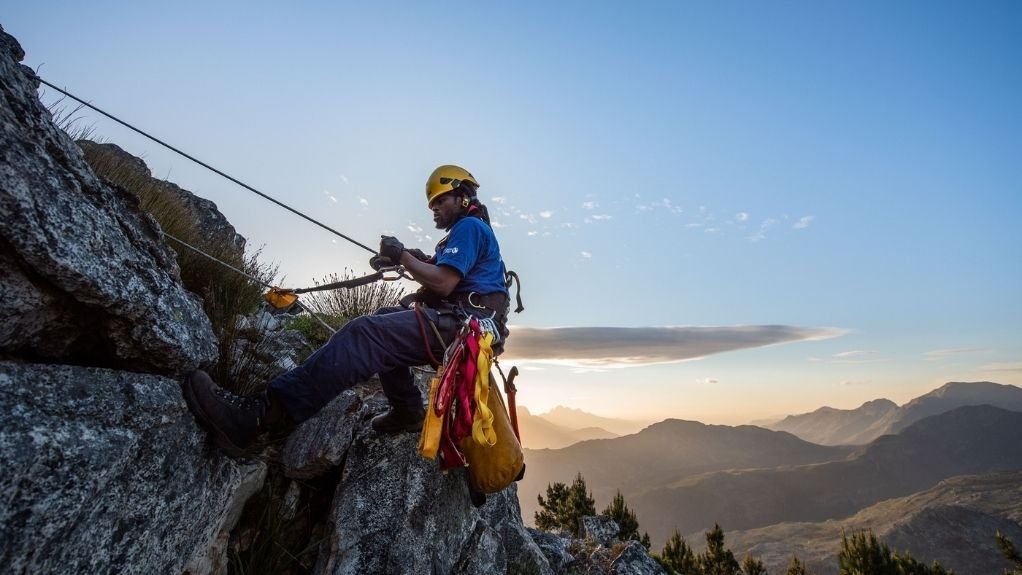
CLEARING INVASIVE PLANTS The clearing of invasive plants is a cost-effective way to free up billions of litres of water in Cape Town’s catchment areas



The City of Cape Town is advancing its New Water Programme (NWP) to reduce dependence on rain-fed dams, having allocated R492-million of its 2025/26 budget to the programme.
The NWP targets the addition of 300- million litres a day of alternative water supply by 2030.
Water and Sanitation MMC Councillor Zahid Badroodien says the NWP is structured around four streams: advanced water reuse, seawater desalination, groundwater abstraction and the clearing of invasive alien plants in water catchments.
“The city has learnt that we cannot solely rely on dams for water security in future, so it is actively investing in the NWP to diversify its water sources and build a resilient supply so that we can reduce our dependence on unpredictable rainfall and navigate future climate change shocks.”
Moreover, this aligns with Commitment 3 of the city’s Water Strategy, which is informed by the Water Master Plan. This plan evaluates various scenarios to estimate future water demand, including but not limited to development forecasts, population forecasts and the effect of climate change. Commitment 3 calls for the provision of sufficient, reliable water supply from diverse sources.
By 2040, the city is aiming for 75% surface water; 11% desalination; 7% groundwater; and 7% reuse.
Active Projects
The city is tapping into aquifers to secure about 100-million litres a day. To achieve this aspiration, the city is revamping an existing groundwater scheme, the Atlantis Aquifer, and is developing two new groundwater schemes, namely the Table Mountain Group Aquifer–Steenbras and the Cape Flats Aquifer.
Badroodien notes that the city has a fleet of 47 production boreholes in Atlantis and has drilled 16 and 79 production boreholes in Steenbras and the Cape Flats respectively, with another 10 to 15 production boreholes planned.
“To ensure the sustainability of the Cape Flats Aquifer as a viable water resource the city is developing a Reclamation plant at the Cape Flats wastewater treatment works (WWTW) that will replenish the aquifer on a daily basis.”
Work at these aquifers will account for about R465-million of the R492-millon allocated to the NWP, with about R25-million allocated to clearing and long-term control of alien invasive plants.
“The clearing of invasive plants is a cost- effective way to free up billions of litres of water in Cape Town’s catchment areas. The removal of non-indigenous, water guzzling plants is an important component of the City’s water strategy and long-term NWP, with the aim being to add 55-billion litres a year to the water network,” Badroodien says.
Regarding longer-term projects, he explains that the Faure New Water Scheme will be a “state-of-the-art” water reuse project that will produce up to 70-million litres of drinking water a day.
This aligns with the city’s placing a greater emphasis on its wastewater treatment infrastructure for water reuse purposes, as treated water from WWTWs can be further purified to potable standards.
“Wastewater treatment plants play a critical upstream role in enabling new water supply schemes, such as the proposed Faure project. The city has already made provision for this in its ongoing upgrade, refurbishment and expansion of WWTW – especially the Zandvliet WWTW,” notes Badroodien.
As evidence of the importance of WWTW, roughly R1.81-billion will be used for the expansion and upgrades of wastewater treatment works across the city.
Meanwhile, with Cape Town being the host city for Enlit Africa 2026, the Zandvliet WWTW will be one of the sites visited.
Desalination
The Paarden Eiland desalination plant, currently in the planning phase, will use multi- barrier treatment technology to remove pollutants and salt from seawater, ensuring the production of high-quality drinking water.
The project will be subject to a full environmental-impact assessment and environmental authorisation.
The city’s plans also include backup power to allow for the safe shutdown of the desalination plant and ensure all safety equipment remains functionally compliant when there are power outages.
Moreover, it has conducted a detailed 12-month water quality campaign in the area of influence for the project to understand the water quality characteristics throughout all four seasons.
“This is supplemented by the bathymetric surveys and other specialist studies to ensure the treatment systems and operational protocols are robust and adaptable to provide capability to treat and/or handle all expected intake water quality conditions,” he concludes.
Article Enquiry
Email Article
Save Article
Feedback
To advertise email advertising@creamermedia.co.za or click here
Research Reports
Projects


Latest Multimedia

Latest News

Showroom

North Ridge Pumps is an independent manufacturer of pumps. We have a proven track record for product support and customer service throughout the...
VISIT SHOWROOM



Announcements
What's On
Subscribe to improve your user experience...
Option 1 (equivalent of R125 a month):
Receive a weekly copy of Creamer Media's Engineering News & Mining Weekly magazine
(print copy for those in South Africa and e-magazine for those outside of South Africa)
Receive daily email newsletters
Access to full search results
Access archive of magazine back copies
Access to Projects in Progress
Access to ONE Research Report of your choice in PDF format
Option 2 (equivalent of R375 a month):
All benefits from Option 1
PLUS
Access to Creamer Media's Research Channel Africa for ALL Research Reports, in PDF format, on various industrial and mining sectors
including Electricity; Water; Energy Transition; Hydrogen; Roads, Rail and Ports; Coal; Gold; Platinum; Battery Metals; etc.
Already a subscriber?
Forgotten your password?
Receive weekly copy of Creamer Media's Engineering News & Mining Weekly magazine (print copy for those in South Africa and e-magazine for those outside of South Africa)
➕
Recieve daily email newsletters
➕
Access to full search results
➕
Access archive of magazine back copies
➕
Access to Projects in Progress
➕
Access to ONE Research Report of your choice in PDF format
RESEARCH CHANNEL AFRICA
R4500 (equivalent of R375 a month)
SUBSCRIBEAll benefits from Option 1
➕
Access to Creamer Media's Research Channel Africa for ALL Research Reports on various industrial and mining sectors, in PDF format, including on:
Electricity
➕
Water
➕
Energy Transition
➕
Hydrogen
➕
Roads, Rail and Ports
➕
Coal
➕
Gold
➕
Platinum
➕
Battery Metals
➕
etc.
Receive all benefits from Option 1 or Option 2 delivered to numerous people at your company
➕
Multiple User names and Passwords for simultaneous log-ins
➕
Intranet integration access to all in your organisation