



Analyst warns Parly ‘accountability failures’ risk politicising courts

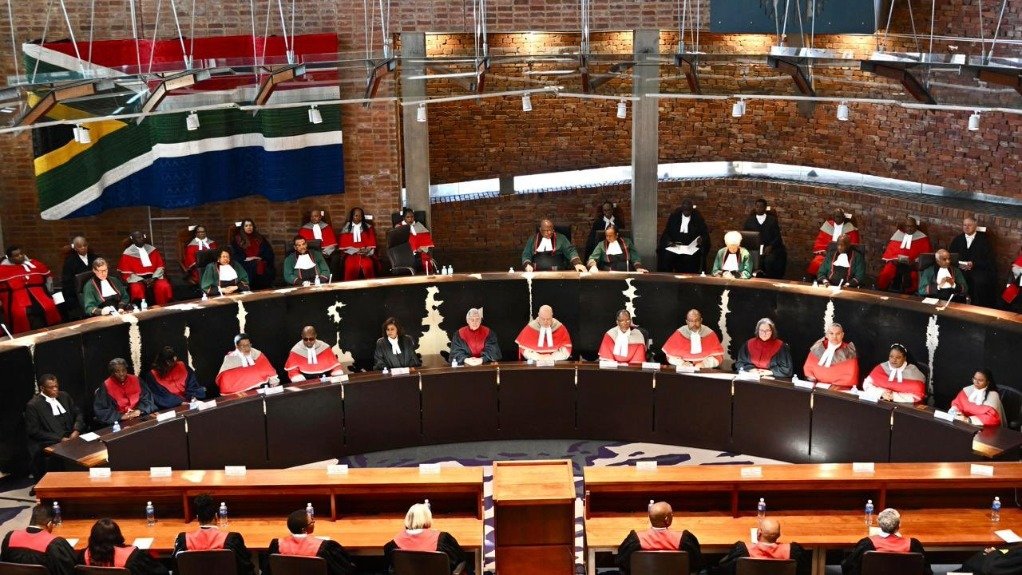


Political analyst Lukhona Mnguni’s critique of what he says are Parliament's accountability failures, following the recent landmark Constitutional Court ruling, highlights the legislature's “abdication” of its oversight duties.
Speaking during a Defend Our Democracy webinar, Mnguni warned that when Parliament failed to hold the executive accountable, it forced political issues into the judiciary, thereby tainting the separation of powers.
The Constitutional Court recently set aside Rule 129I of the National Assembly, which had effectively shut down the impeachment of President Cyril Ramaphosa and which Mnguni described as a defective rule.
He argued that from its inception, the rule provided a legislative loophole that allowed the National Assembly to bypass rigorous transparency. Because the rule required a simple majority to vote down the establishment of an impeachment committee, it effectively shielded the executive branch from accountability.
A core defect in this process was the limited capability of the Section 89 independent panel, chaired by former Chief Justice Sandile Ngcobo, which investigated the 2020 Phala Phala farm theft.
He pointed out that the panel was restricted to evaluating submissions provided by Members of Parliament and lacked the legal powers to call witnesses or subpoena critical documents.
He highlighted that by preventing the matter from escalating to a fully-fledged Impeachment Committee, which possessed the investigative powers and resources necessary to ventilate the facts thoroughly in Parliament, it undermined its own constitutional mandate.
The Constitutional Court has since mandated that the Independent Panel’s report be referred directly to an Impeachment Committee.
Mnguni said accountability and transparency could not be circumvented in processes involving the President and cautioned that when Parliament neglected to champion the Constitution robustly, accountability deficits landed in the courts.
Resolving political disputes in the judiciary, rather than in the political arena, ultimately risked politicising the courts and diminishing public trust in the State's democratic machinery, he added.
MAJORITARIAN POWERS
Mguni highlighted the perils surrounding the abuse of majoritarian power, specifically referencing jurisprudence that sought to curb such overreach.
In a functioning democracy, parliamentary and executive actions must be held accountable through the formal mechanism of judicial review. However, when an overabundance of governance disputes ended up in court, the core problem lay not with the judiciary, but with politicians, he argued.
“When lawmakers consistently fail to champion their oath of office or uphold the true spirit of the Constitution, it effectively leaves the courts to solve deeply entrenched political disputes,” he said.
The more heated a matter brought before the courts, the more their perceived credibility is placed at risk. Mguni noted that this dynamic was highly evident in the buildup to recent Constitutional Court rulings.
“Prolonged, drawn-out deliberations often lead the broader public to suspect that the judiciary is actively playing a political game, dragging the courts out of the strictly legal arena and into the public's political crossfire,” he said.
While judges may continue to apply the law impartially and develop jurisprudence, the public perception inevitably shifts. The courts begin to be viewed as political instruments rather than neutral arbiters of the law.
PRESIDENT'S POWER
Mguni also emphasised that the President retained the autonomy to use any legal mechanisms available to them. A prominent example was former President Jacob Zuma, who has spent roughly 21 years using legal strategies to evade trial in the arms deal.
He said this reality presented a double-edged sword regarding public accountability, noting that on one hand, using unending legal mechanisms made the leader appear to be someone desperate to avoid accounting for their actions. On the other hand, a leader is constitutionally entitled to exhaust all available legal defences and mechanisms.
In a parallel instance of utilising legal defences, Ramaphosa announced that he will legally review the Section 89 independent panel report regarding the Phala Phala incident.
Ramaphosa confirmed he would not resign and instead intended to challenge the findings, underscoring the ongoing tension in South Africa between political accountability and the constitutional right of leaders to exhaust all legal recourse, Mguni said.
Article Enquiry
Email Article
Save Article
Feedback
To advertise email advertising@creamermedia.co.za or click here
Research Reports

Projects


Latest Multimedia


Latest News
Showroom
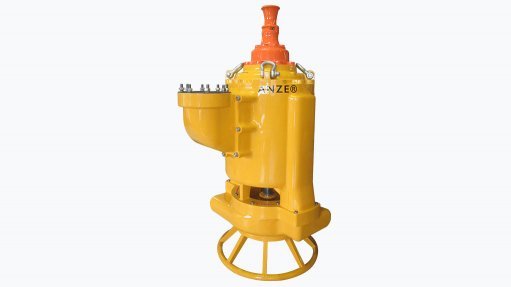
Goodwin Submersible Pumps Africa is sole distributors for Goodwin electrically driven, submersible, abrasion resistance slurry pumps.
VISIT SHOWROOM
ECG provides specialised electrical engineering services to the Mining, Utilities, Materials Handling and Industrial industries, with extensive and...
VISIT SHOWROOM



Press Office
Announcements
What's On
Subscribe to improve your user experience...
Option 1 (equivalent of R125 a month):
Receive a weekly copy of Creamer Media's Engineering News & Mining Weekly magazine
(print copy for those in South Africa and e-magazine for those outside of South Africa)
Receive daily email newsletters
Access to full search results
Access archive of magazine back copies
Access to Projects in Progress
Access to ONE Research Report of your choice in PDF format
Option 2 (equivalent of R375 a month):
All benefits from Option 1
PLUS
Access to Creamer Media's Research Channel Africa for ALL Research Reports, in PDF format, on various industrial and mining sectors
including Electricity; Water; Energy Transition; Hydrogen; Roads, Rail and Ports; Coal; Gold; Platinum; Battery Metals; etc.
Already a subscriber?
Forgotten your password?
Receive weekly copy of Creamer Media's Engineering News & Mining Weekly magazine (print copy for those in South Africa and e-magazine for those outside of South Africa)
➕
Recieve daily email newsletters
➕
Access to full search results
➕
Access archive of magazine back copies
➕
Access to Projects in Progress
➕
Access to ONE Research Report of your choice in PDF format
RESEARCH CHANNEL AFRICA
R4500 (equivalent of R375 a month)
SUBSCRIBEAll benefits from Option 1
➕
Access to Creamer Media's Research Channel Africa for ALL Research Reports on various industrial and mining sectors, in PDF format, including on:
Electricity
➕
Water
➕
Energy Transition
➕
Hydrogen
➕
Roads, Rail and Ports
➕
Coal
➕
Gold
➕
Platinum
➕
Battery Metals
➕
etc.
Receive all benefits from Option 1 or Option 2 delivered to numerous people at your company
➕
Multiple User names and Passwords for simultaneous log-ins
➕
Intranet integration access to all in your organisation
