Firm unpacks use of alternative fuels in boiler sector

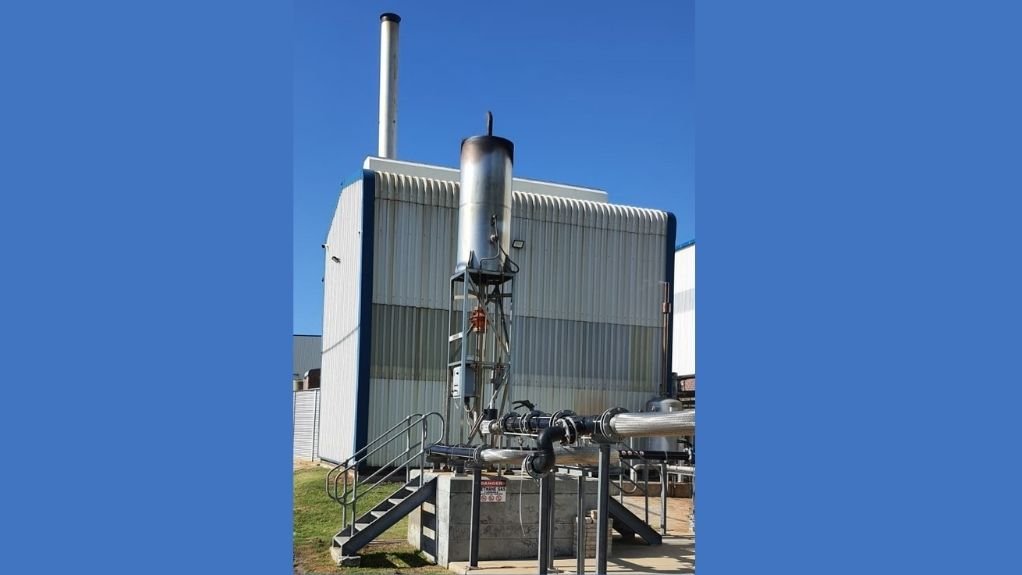
PROFIT CENTRE AES’s pitch to clients is straightforward: run boilers as value-adding profit centres, not cost centres. That means revisiting how steam is generated and used, identifying structural improvements and aligning operational metrics with cost, efficiency, safety and sustainability targets


South Africa’s industrial steam users are under pressure, with gas curtailment, volatile diesel prices and tightening emissions standards forcing a rethink on how plants generate heat, says energy operations and maintenance company AES.
According to MD Chris Paterson, operations should avoid temporary solutions and rather implement a systematic approach to fuel flexibility and combustion optimisation, exploring instead “turning boiler rooms into profit centres”.
Many industrial operations are eyeing alternatives such as biomass, hydrogen blends and biogas.
Managing 28 client sites’ energy operations and maintenance, AES argues that proper fuel preparation and matching combustion systems to fuel specifications remove the need for trade-offs.
The real challenge, notes Paterson, is economics and supply.
“The overall economic context must be clearly understood and considered before making a fuel change.”
He says that companies considering a switch to alternative fuels because of rising fuel costs must appreciate that a significant portion of industrial energy users are also evaluating a fuel change to support their decarbonisation efforts. This could create competition for relatively scarce biomass, biogas and other ‘greener’ feedstocks.
Moreover, the multinational entities that tend to pursue large-scale decarbonisation projects, having comparatively higher decarbonisation targets, are often willing to pay a premium to secure supply, disadvantaging those “simply looking to cut costs”.
No Clearcut Choice
South African industries are dominated by coal and heavy fuel oil (HFO) – inputs that have contributed to the local industrial base having one of the worst carbon footprints globally.
Regardless of its relatively poor environmental and sustainability credentials, South Africa’s industrial coal sector still has significant skills, logistics and supply depth, says AES commercial director Dennis Williams.
He adds that the sector’s resources are especially beneficial when fuel interruptions loom because of gas constraints or expensive imports. Moreover, there is still potential to deploy coal-based solutions in a more efficient manner, thereby improving operations’ energy consumption, and thus their emissions production.
“In instances where there is potential for business supply interruption because of unavailability of a fuel source – such as the impending natural gas supply constraints or limitations on cost- effective access to imported refined fuels such as kerosene – there is definitely a case for considering a solution involving the efficient use of coal,” he says.
He adds that biomass, while featuring a lower attributable carbon footprint than coal or HFO, can have exorbitant transport costs, with costs increasing exponentially once the material is transported outside of local supply zones. Moreover, processing such as briquetting or pelleting adds cost with only marginal gains in energy density.
Fostering Relationships
AES leverages its access at coal trader and mine supplier levels to secure reliable, high-calorific- value energy supply, including stockpiling where needed. The same model applies to biomass and, although newer, the market has established suppliers with solid networks.
“AES’s understanding of biomass sources, its qualities and specific supply characteristics – as well as how it can be integrated with specific combustion and boiler equipment – places it at the forefront of successful application in industrial energy operations,” says Williams.
AES further understands that long-term reliability comes down to relationships. This is cemented by engaging with suppliers in the value chain, ensuring that deliverables are understood and agreed to by all parties, and that measurable metrics form the cornerstone of delivery.
Tighter Emissions
South Africa’s emissions standards for nitrogen oxides (NOx), sulphur oxides (SOx) and particulates are increasingly stringent. AES argues that compliance starts with optimising existing boiler operations to cut fuel use and reduce the level of emissions.
The aim is phased compliance at the best possible life- cycle cost. The first step, according to Paterson, is to use less fuel to achieve the same steam output and better control of combustion to reduce harmful emissions.
The company runs its own in-house-developed boiler control system, now deployed on about 55% of the more than 75 boilers it manages. It has also developed load balancing systems across multi-boiler sites to better automate output distribution to keep each unit within its efficiency band. This reduces excess air, controls oxygen and CO2 levels and lowers fuel consumption and emissions simultaneously.
For NOx emissions, control strategies focus on minimising combustion temperatures that drive formation. For SOx, fuel selection is key, though lime dosing can provide additional mitigation. Particulate control uses high-efficiency cyclones and bag filters, with AES reporting levels below 50 mg/Nm3 PM10 in some installations.
Value Proposition
AES’s pitch to clients is straightforward: run boilers as value-adding profit centres, not cost centres. That means revisiting how steam is generated and used, identifying structural improvements and aligning operational metrics with cost, efficiency, safety and sustainability targets.
Its approach is built on more than 50 outsourced energy plant contracts since 1996, managed 24/7 to drive measurable gains.
As many in-house teams lack the specialised expertise and time to sustain improvements, gains made often regress once the company’s attention shifts elsewhere, Williams says.
AES’s contractual commitments to boiler efficiency and uptime – in the form of a performance guarantee – give clients recourse if objectives are unmet, creating a direct incentive for AES. The company points to contract longevity as proof, citing over 650 MW of boiler installations under management with an average contract duration of ten years currently.
The cost drivers are not going away, and supply constraints, carbon costs and emissions reporting are pushing operations towards new fuels and smarter control. AES’s view is that success depends on understanding fuel characteristics, matching them to the right combustion technology, and managing operations continuously.
In South Africa’s steam-heavy industries that means moving beyond short-term fuel swaps toward integrated solutions that balance cost, reliability and compliance.
Article Enquiry
Email Article
Save Article
Feedback
To advertise email advertising@creamermedia.co.za or click here
Research Reports

Projects


Latest Multimedia

Latest News
Showroom
North Ridge Pumps is an independent manufacturer of pumps. We have a proven track record for product support and customer service throughout the...
VISIT SHOWROOM



Announcements
What's On
Subscribe to improve your user experience...
Option 1 (equivalent of R125 a month):
Receive a weekly copy of Creamer Media's Engineering News & Mining Weekly magazine
(print copy for those in South Africa and e-magazine for those outside of South Africa)
Receive daily email newsletters
Access to full search results
Access archive of magazine back copies
Access to Projects in Progress
Access to ONE Research Report of your choice in PDF format
Option 2 (equivalent of R375 a month):
All benefits from Option 1
PLUS
Access to Creamer Media's Research Channel Africa for ALL Research Reports, in PDF format, on various industrial and mining sectors
including Electricity; Water; Energy Transition; Hydrogen; Roads, Rail and Ports; Coal; Gold; Platinum; Battery Metals; etc.
Already a subscriber?
Forgotten your password?
Receive weekly copy of Creamer Media's Engineering News & Mining Weekly magazine (print copy for those in South Africa and e-magazine for those outside of South Africa)
➕
Recieve daily email newsletters
➕
Access to full search results
➕
Access archive of magazine back copies
➕
Access to Projects in Progress
➕
Access to ONE Research Report of your choice in PDF format
RESEARCH CHANNEL AFRICA
R4500 (equivalent of R375 a month)
SUBSCRIBEAll benefits from Option 1
➕
Access to Creamer Media's Research Channel Africa for ALL Research Reports on various industrial and mining sectors, in PDF format, including on:
Electricity
➕
Water
➕
Energy Transition
➕
Hydrogen
➕
Roads, Rail and Ports
➕
Coal
➕
Gold
➕
Platinum
➕
Battery Metals
➕
etc.
Receive all benefits from Option 1 or Option 2 delivered to numerous people at your company
➕
Multiple User names and Passwords for simultaneous log-ins
➕
Intranet integration access to all in your organisation