Water balance management proving key for sustainability

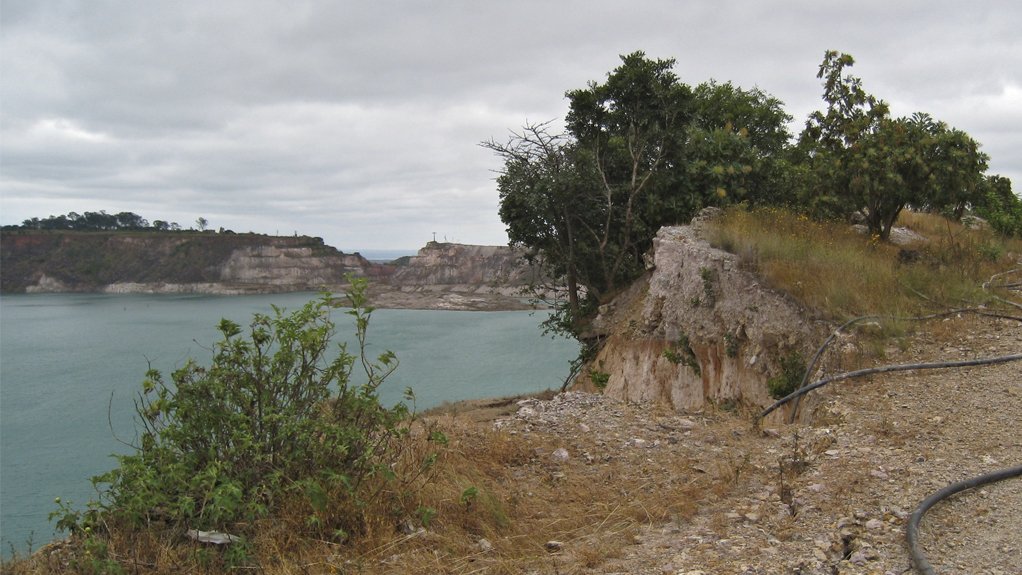
LIFE CYCLE PLANNING Water balances should be dynamic and site-wide with forecasting abilities for life-of-facility


Growing international pressure – driven by risks and liabilities for parent companies and shareholders – is driving accountability and a move toward mining companies developing and adopting more robust and detailed integrated water balances, reports mining consultancy SRK Consulting South Africa senior hydrologist Simon Bruton.
Such water balances should be dynamic and site-wide with forecasting abilities for life-of-facility with capacity to yield probabilistic outputs which can inform decision-making around risk.
“The adoption of the Global Industry Standard on Tailings Management’s [GISTM’s] principles and the review processes of the Independent Tailings Review Board drive mines to identify and fill gaps. While annual water balance reviews and updates are being approved more readily, we still find a reluctance to spend on climate and water studies, and water balance forecasting, while capital projects receive the funds required,” he says.
The irony, points out Bruton, is that improved monitoring and understanding of water needs, water management, water recycling and the balance between storage for surety of supply while maintaining capacity to mitigate spills – particularly under climate change – inform better forecasting, planning and design.
In turn, this can significantly reduce the capital cost (sizing) of water management and storage infrastructure, while also reducing risk, he adds.
In terms of water stewardship being increasingly tied to a mine’s social licence to operate, Bruton says it is critical for mining operations to gather comprehensive data to understand the site’s water footprint and water use, identifying, quantifying and balancing all water inflows, outflows and storage options.
While most mines monitor key water reticulation streams as a minimum, he says water stewardship requires accounting for the entire mine footprint and its effect on water. This includes water flows, which cannot typically be measured, needing to be accounted for: including rainfall-generated inputs, storm runoff, evaporation, seepage and water that is locked up in tailings or product.
An effective and accurate integrated site-wide water balance fills these gaps through hydrological calculation and simulation, fed by climate records, site and material characteristics and other metrics, says Bruton.
The water balance would also quantify and distinguish clean water volumes against those of dirty water and improve the quantification of water recycling across the entire mine footprint.
A water balance can also be programmed to categorise and total the various water streams for export, feeding routine water stewardship monitoring and reporting. In this context, he points out that an up-to-date, transparent and technically sound water balance is increasingly regarded as a basic requirement for project approval.
In contrast, incomplete or outdated water balances often trigger requests for further information, a revision of assessments or additional studies, leading to approval delays and potential challenges to the project’s social licence, he cautions.
Water Stress Implications
Considering water stresses are intensifying across Africa, most mines are encouraged to develop fully reliable and integrated water balances; however, some deficits remain.
“Institutionally, a gap we often come across is a lack of integration and continuity, along with poor institutional memory. However, through mandated monitoring and reporting to water and environmental authorities, and requirements in line with GISTM or other guidelines, mines are taking the need to develop water balances more seriously,” says Bruton.
Nonetheless, poor integration and continuity is often encountered.
While multiple water balance reports are developed by a selection of consultants over the course of a few years to meet specific needs in reporting to authorities, mine management, mine operations or to meet guideline requirements, some of these end up in individual silos, covering only a portion of the mine to meet a specific reporting need.
This can then be set back by change factors such as a new consultant being appointed, resulting in the previous water balance potentially falling away.
“The better approach is to develop an integrated, daily, site-wide water balance which can cover the entire site, and have the ability to meet the mines’ full reporting and forecasting needs across all departments, such as plant, tailings and environmental.
“Such a water balance can stand on its own, not at risk to personnel changes. This forms a central resource disseminating calibrated and approved water-related data and reporting across site,” says Bruton.
On the ground, the biggest gap is typically pipeline metering and water flow monitoring, he highlights, adding that the quality of meter or weir flow data is also a common gap.
Also, in practice, water balances, more often than not reveal that infrastructure is mis-sized or inefficient, points out Bruton.
While some managers are aware of the inefficiencies that the water balance model quantifies, they are unaware of the numbers, such as ratios of recycling, while in other cases the water balance may reveal unknown water losses or gaps in understanding.
“In all cases, daily, integrated site-wide water balances with stochastic modelling are best for understanding the full picture in balancing return/recycled water with stormwater and new water to minimise infrastructure costs and new water costs,” he says.
This presents a balancing act: excess water is costly to store, but risking spillage capacity runs the risk of mines falling foul with authorities, regulatory bodies and shareholders, particularly given risk to the environment and social impacts, suggests Bruton.
“Inadequate supply across seasons risks costly shutdowns or costly make-up water purchases.
“Stochastic water balances provide outputs as probabilities which put numbers to risk and aid decision-making,” he concludes.
Article Enquiry
Email Article
Save Article
Feedback
To advertise email advertising@creamermedia.co.za or click here
Research Reports
Projects

Latest Multimedia

Latest News

Showroom
Rentech provides renewable energy products and services to the local and selected African markets. Supplying inverters, lithium and lead-acid...
VISIT SHOWROOM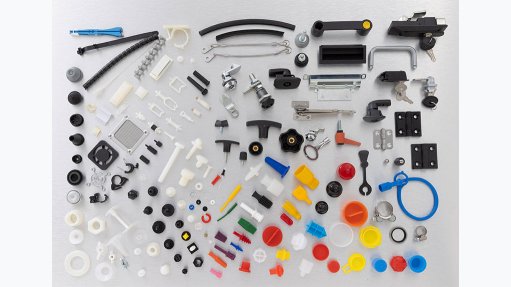
We are responsible manufacturers of essential components. Manufacturing 80 million parts a week, we have over 1 billion parts in stock.
VISIT SHOWROOM


Press Office
Announcements
What's On
Subscribe to improve your user experience...
Option 1 (equivalent of R125 a month):
Receive a weekly copy of Creamer Media's Engineering News & Mining Weekly magazine
(print copy for those in South Africa and e-magazine for those outside of South Africa)
Receive daily email newsletters
Access to full search results
Access archive of magazine back copies
Access to Projects in Progress
Access to ONE Research Report of your choice in PDF format
Option 2 (equivalent of R375 a month):
All benefits from Option 1
PLUS
Access to Creamer Media's Research Channel Africa for ALL Research Reports, in PDF format, on various industrial and mining sectors
including Electricity; Water; Energy Transition; Hydrogen; Roads, Rail and Ports; Coal; Gold; Platinum; Battery Metals; etc.
Already a subscriber?
Forgotten your password?
Receive weekly copy of Creamer Media's Engineering News & Mining Weekly magazine (print copy for those in South Africa and e-magazine for those outside of South Africa)
➕
Recieve daily email newsletters
➕
Access to full search results
➕
Access archive of magazine back copies
➕
Access to Projects in Progress
➕
Access to ONE Research Report of your choice in PDF format
RESEARCH CHANNEL AFRICA
R4500 (equivalent of R375 a month)
SUBSCRIBEAll benefits from Option 1
➕
Access to Creamer Media's Research Channel Africa for ALL Research Reports on various industrial and mining sectors, in PDF format, including on:
Electricity
➕
Water
➕
Energy Transition
➕
Hydrogen
➕
Roads, Rail and Ports
➕
Coal
➕
Gold
➕
Platinum
➕
Battery Metals
➕
etc.
Receive all benefits from Option 1 or Option 2 delivered to numerous people at your company
➕
Multiple User names and Passwords for simultaneous log-ins
➕
Intranet integration access to all in your organisation