Structured planning promotes optimal plant demolition

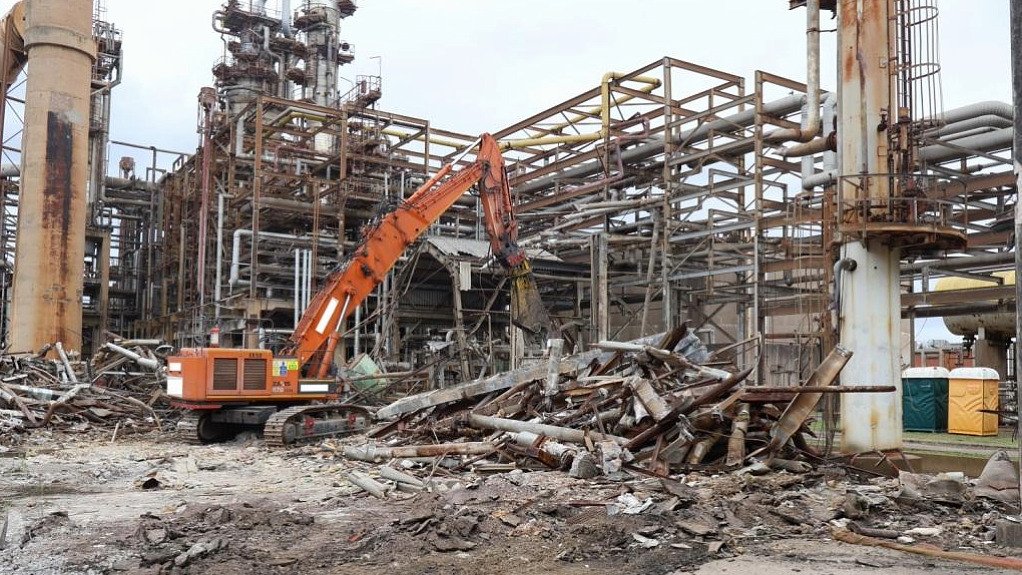
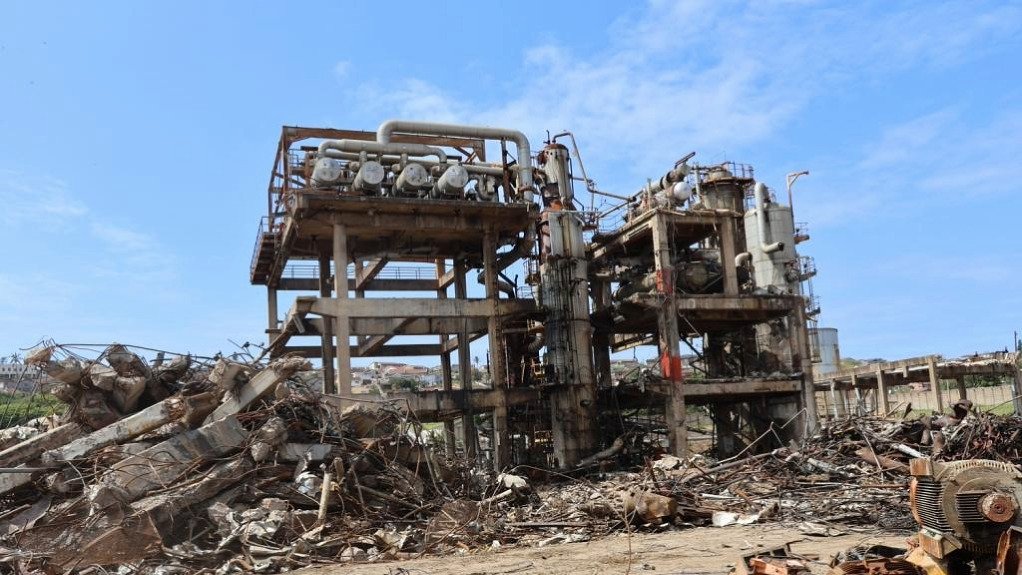
METHODICAL PROCEDURE For large, mostly concrete structures, the systematic dismantling of steel and mechanical components requires methodical work procedures, continuous assessment and anticipation of immediate dangers
SHIFTING LOCATION Plant demolition may be necessitated by a shift in the location of mining activities supplying the plant as feedstock or mark the complete end of a specific mining activity


The demolition of mine infrastructure or process plant needs to be planned with a primary focus on safety and optimal use, reports tertiary education institute University of Pretoria (UP) Graduate School of Technology masters in project management student Fortune Mkhungo and UP’s Professor Giel Bekker.
In a demolition study, based on a dissertation by Mkhungo – whose work includes all demolition activities – under the supervision of Bekker, Bekker points out that a demolition readiness assessment framework (RAF) was developed.
“Firstly, the facility to be demolished must be as hazard-free as possible, and where potential hazards can occur, detailed risk assessments should be conducted,” he notes.
The “worst thing” any company can do is send in bulldozers to flatten all structures, as a proper project management scoping study is needed to identify hazardous areas and ensure it is safe to enter and operate within, outline Bekker and Mkhungo.
In addition, Bekker says mining project managers should ensure that any items of value are removed and sold as-is or refurbished prior to site demolition.
Mining project managers can only then proceed to create a demolition scope document, which must be agreed upon and diligently followed, he notes.
“Once these three main scope areas have been defined in as much detail as possible, all supporting activities, such as drawings, procedures, procurement strategies and site preparation, among others, can be applied to develop a final project scope statement,” explains Bekker.
Following the completion of the project scope statement, he says mining project managers should have a risk assessment conducted, which may require a revision of the scoping document.
At this stage, a work breakdown structure and a detailed project schedule can be developed, with the information provided being the main input to the cost estimate and procurement plan of the project, says Bekker.
“Most of the technologies applied throughout the demolition will involve hazardous materials detection, safety structures and access control,” he notes.
A safe and profitable demolition project requires highly skilled crane and demolition equipment operators, explains Bekker, adding that apart from blasting skills for large, mostly concrete structures, the systematic dismantling of steel and mechanical components requires methodical work procedures, continuous assessment and anticipation of immediate dangers, including falling and unstable platforms and objects.
Planning Demolition
A mining demolition project starts with a desktop study involving a detailed assessment of the works drawings and equipment data sheets, says Bekker, adding that if drawings are not updated to reflect the as-is status, possible dangerous scenarios can emerge throughout site work.
Therefore, he says it is critical that design companies, original-equipment manufacturers and other equipment suppliers are made aware of the demolition plans and given the opportunity to highlight any concerns, risks or dangers that are not visible from the outset.
Through the use of modern-day cameras, videos, image superimposing and 3D model comparison, the demolition progress can be monitored in near real-time for improved control and safety, states Bekker.
Following any demolition and in line with legislation, authorities need to inspect the demolished site and confirm that the rehabilitation and reinstatement towards acceptable levels has been achieved as agreed, he points out.
“Demolition and environmental reinstatement is a project phase in its own right,” notes Bekker.
“Plant demolition may be necessitated by a shift in the location of mining activities supplying the plant as feedstock, or it may mark the complete end of specific [mining activity] or economic activity and should allow for the continuation of alternative livelihoods, albeit not at the scale of the mining plant,” he elaborates.
If done correctly, Bekker says the demotion and environmental reinstatement phase could create temporary jobs and generate profits from the sale of materials, whether redundant or refurbished.
Case in Point
To determine a structured approach for the RAF, a two-phase study involving subject-matter experts was conducted.
The first phase of this study aimed to identify the demolition readiness factors and associated risks, while the second phase aimed to determine the relative importance of those factors before assigning each factor an appropriate “weight”.
The RAF, according to Mkhungo, contains seven categories with relevant factors to consider, including planning and strategy; process safety and decommissioning readiness; engineering readiness; finance and procurement readiness; health, safety and risk management readiness; and sustainability and stakeholder management.
Each of the seven categories’ factor weightings are then used to calculate the project’s demolition readiness index. This index requires each factor to be given a score from one – indicating it has not been started, to five – which means the factor has been fully considered.
These scores are multiplied by the final factor weight – which is calculated by multiplying the category weight by the respective factor weight – to arrive at an acceptable value for the project.
“This model enables decision-makers to gauge whether they are truly ready to move forward with the demolition project. It can be used to boost confidence [regarding their] readiness [to undertake the] project,” explains Mkhungo.
Even though projects may have unpredictable challenges, this RAF model provides demolition teams with the assurance that they have developed an actionable plan that properly accounts for precautions and preparations.
Article Enquiry
Email Article
Save Article
Feedback
To advertise email advertising@creamermedia.co.za or click here
Research Reports
Projects


Latest Multimedia

Latest News


Showroom

We at Hawk High Pressure Pumps specialise in industrial pumps and pumping systems. Our high pressure washing equipment is locally manufactured and...
VISIT SHOWROOM
Your global lifecycle technology & service partner for materials & minerals processing equipment for coal, iron ore, copper, manganese & other...
VISIT SHOWROOM


Press Office
Announcements
What's On
Subscribe to improve your user experience...
Option 1 (equivalent of R125 a month):
Receive a weekly copy of Creamer Media's Engineering News & Mining Weekly magazine
(print copy for those in South Africa and e-magazine for those outside of South Africa)
Receive daily email newsletters
Access to full search results
Access archive of magazine back copies
Access to Projects in Progress
Access to ONE Research Report of your choice in PDF format
Option 2 (equivalent of R375 a month):
All benefits from Option 1
PLUS
Access to Creamer Media's Research Channel Africa for ALL Research Reports, in PDF format, on various industrial and mining sectors
including Electricity; Water; Energy Transition; Hydrogen; Roads, Rail and Ports; Coal; Gold; Platinum; Battery Metals; etc.
Already a subscriber?
Forgotten your password?
Receive weekly copy of Creamer Media's Engineering News & Mining Weekly magazine (print copy for those in South Africa and e-magazine for those outside of South Africa)
➕
Recieve daily email newsletters
➕
Access to full search results
➕
Access archive of magazine back copies
➕
Access to Projects in Progress
➕
Access to ONE Research Report of your choice in PDF format
RESEARCH CHANNEL AFRICA
R4500 (equivalent of R375 a month)
SUBSCRIBEAll benefits from Option 1
➕
Access to Creamer Media's Research Channel Africa for ALL Research Reports on various industrial and mining sectors, in PDF format, including on:
Electricity
➕
Water
➕
Energy Transition
➕
Hydrogen
➕
Roads, Rail and Ports
➕
Coal
➕
Gold
➕
Platinum
➕
Battery Metals
➕
etc.
Receive all benefits from Option 1 or Option 2 delivered to numerous people at your company
➕
Multiple User names and Passwords for simultaneous log-ins
➕
Intranet integration access to all in your organisation