Stakeholders proffer suggestions for public procurement reforms


The Broad-Based Black Economic Empowerment Commission, the Black Management Forum (BMF) and the Procurement Performance Institute on July 14 held a virtual press briefing outlining their joint stakeholder submission to National Treasury regarding the Draft Public Procurement Regulations issued under the Public Procurement Act.
Speaking in the briefing, BMF policy and research committee chairperson Dr Shevonne Henry warned that a major issue facing public procurement was criticisms of corruption, and that there was a need to corruption-proof these processes.
She pointed out that by “making the rules as rigid and centrally controlled as we did”, compliance demands became too high.
“When you overregulate, you create a breeding ground for corrupt practices, because what happens is your bigger players are better placed to compete, and your little guys simply can’t. And so, what do they do to make themselves more competitive? They engage in rent-seeking practices,” she explained.
Henry also outlined that a crucial issue that needed to be addressed, and was considered in the response, as being the lack of harmonisation between public procurement and other transformation mechanisms, such as broad-based black economic empowerment.
“We have this disparate context of these scorecards. There’s compulsory compliance measures where there are actually teeth, and there can be punitive measures taken, such as fines, and then you’ve got this whole other beast, which is voluntary compliance.
“There isn’t a harmonisation and alignment between all these different mechanisms that would make transformation broad based in the way that we want to see,” she averred.
Therefore, there was “a very lax approach” to compliance, and “apathy” to the transformation agenda, she pointed out.
Given these issues and the need to continue pushing transformation, with the private sector still largely untransformed and poverty still disproportionately affecting black people, the joint submission has proffered several suggestions.
Henry said these suggestions included a decentralisation of systems.
“What we’re suggesting is a decentralisation of these systems at local, municipal and provincial levels, which currently are not supportive of township industries, localised businesses and such.
She posited that decentralising would possibly decrease corrupt practices, as well as make these avenues a lot more accessible for small and emerging businesses.
She also called for an informed and intentional approach to addressing the structural and systemic barriers to economic participation by historically disadvantaged groups. Henry pointed out that there could not be standardised compliance measures for an unequal playing field, and one that was anticipated to remain so for the foreseeable future.
Henry explained that several of the recommendations regarding how public procurement legislation should be reformed relate to the 1996 Green Paper, which was “highly transformative and development- and people-centred”.
However, there was a major deviation from that towards a technocratic approach to public procurement, which had not worked, Henry averred.
She further noted that the recommendations include restructuring the economy, which entails dismantling historical monopolies, redistributing resources and opportunities, addressing the structural and systemic racial imbalances in the economy and promoting shared wealth distribution.
The need to drive industrialisation is another area that requires attention, with there still being very few black industrialists and a need to build this capacity. This would require accelerating enterprise supplier development programmes, increase localised product sourcing and expanding black-owned industries, Henry stressed.
“That means local manufacturing, local distribution and local investment.”
Henry also mentioned the need to address capital accumulation.
“The economy is still concentrated in historically advantaged hands and, unless we overcome the capital problem, we’re not going to overcome the compliance barriers,” she warned, emphasising that capital flows were necessary for the survival of black enterprises.
“Capital is the foundation of democratising this market that we’re in.”
Henry also advocated for building capacity, and supporting township economies, particularly those run by women, youth and informal entrepreneurs, to enable them to scale and to tackle regional poverty.
“We need to look at why township entrepreneurs, informal entrepreneurs, are disengaging from the system – whether that’s the system of democracy and also the mainstream economy . . . We need to address that disengagement through public participation programmes.”
Henry said the informal sector needed to be integrated into the mainstream economy to enable sustainable economic growth.
“We’re not talking about formalising the informal sector, but rather, creating an environment that’s integrated and included in the mainstream economy, and creating some sort of regularisation so that government can support them better, and they also get the sorts of protections that they need,” she explained.
Henry outlined that the targets being sought in public procurement reforms included enforceable quotas for black-owned firms, specifically those that are women- and youth-owned and in the informal sector, particularly township economies.
There is also a need for enforceable industrialised expansion, with a focus on localised thresholds.
Henry also called for domestic manufacturing support, compulsory technology transfer and specialised procurement financing options for new and emerging businesses.
She also stressed the need for socioeconomic reconstruction, with prioritisation of job creation that specifically targeted youth, women and the previously disadvantaged.
Article Enquiry
Email Article
Save Article
Feedback
To advertise email advertising@creamermedia.co.za or click here
Research Reports

Projects


Latest Multimedia


Latest News
Showroom

Design, Construction and Maintenance of Site Erected, Welded Bulk Storage Tanks for the Petrochemical, LNG, Ammonia and Sustainable fuel Sectors.
VISIT SHOWROOM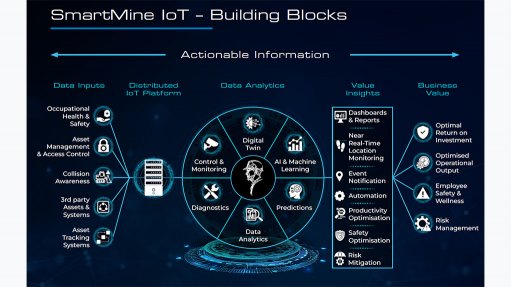
SmartMine IoT has been developed with the mining industry in mind, to provides our customers with powerful business intelligence and data modelling...
VISIT SHOWROOM


Press Office
Announcements
What's On
Subscribe to improve your user experience...
Option 1 (equivalent of R125 a month):
Receive a weekly copy of Creamer Media's Engineering News & Mining Weekly magazine
(print copy for those in South Africa and e-magazine for those outside of South Africa)
Receive daily email newsletters
Access to full search results
Access archive of magazine back copies
Access to Projects in Progress
Access to ONE Research Report of your choice in PDF format
Option 2 (equivalent of R375 a month):
All benefits from Option 1
PLUS
Access to Creamer Media's Research Channel Africa for ALL Research Reports, in PDF format, on various industrial and mining sectors
including Electricity; Water; Energy Transition; Hydrogen; Roads, Rail and Ports; Coal; Gold; Platinum; Battery Metals; etc.
Already a subscriber?
Forgotten your password?
Receive weekly copy of Creamer Media's Engineering News & Mining Weekly magazine (print copy for those in South Africa and e-magazine for those outside of South Africa)
➕
Recieve daily email newsletters
➕
Access to full search results
➕
Access archive of magazine back copies
➕
Access to Projects in Progress
➕
Access to ONE Research Report of your choice in PDF format
RESEARCH CHANNEL AFRICA
R4500 (equivalent of R375 a month)
SUBSCRIBEAll benefits from Option 1
➕
Access to Creamer Media's Research Channel Africa for ALL Research Reports on various industrial and mining sectors, in PDF format, including on:
Electricity
➕
Water
➕
Energy Transition
➕
Hydrogen
➕
Roads, Rail and Ports
➕
Coal
➕
Gold
➕
Platinum
➕
Battery Metals
➕
etc.
Receive all benefits from Option 1 or Option 2 delivered to numerous people at your company
➕
Multiple User names and Passwords for simultaneous log-ins
➕
Intranet integration access to all in your organisation