South Africa facing major mismatch between renewable energy, grid management

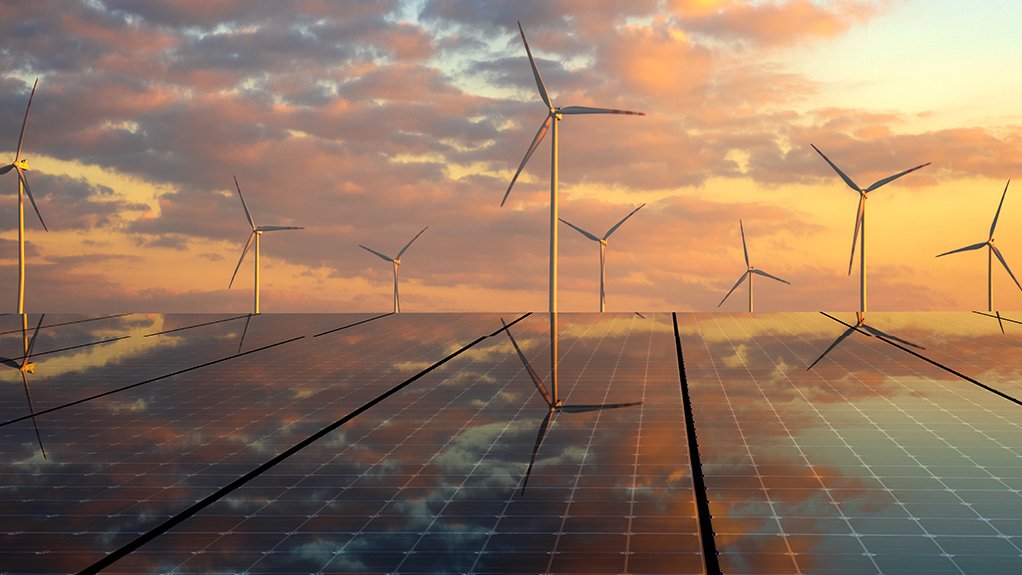


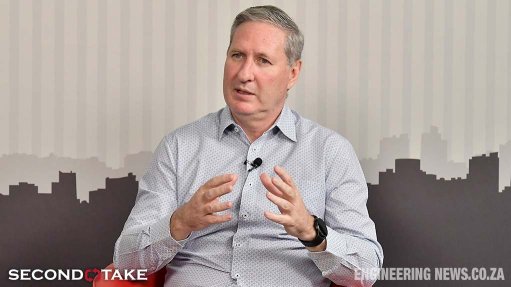
South Africa’s energy sector has undergone a remarkable transformation, RMB senior investment banker for infrastructure sector solutions Keith Webb says.
The country, once plagued by loadshedding, has seen a huge expansion in renewable-energy capacity.
Operational green generation capacity now exceeds 7 GW, with another 4 GW being built. Major energy users, such as mining and large industrial groups, have procured another 5 GW of privately-generated renewable power. Further, private households, small businesses, and small industries have installed 7 GW of rooftop solar capacity countrywide. When all forms of renewable energy are added together, the country’s total capacity in operation, or set to start operating soon, is more than 26 GW.
Another 14 GW is planned to come online by 2032.
“The economic logic behind this boom is simple: renewable energy is now incredibly cheap. When contrasted against [national electricity utility] Eskom’s standard daytime wholesale tariffs, the financial signal is clear. Building renewable generation remains a highly profitable move for investors and users," Webb states.
There is, however, a problem. There is a “profound mismatch” between renewable-energy generation and the ability of the national transmission grid to manage it.
South Africa’s most wind-rich provinces are the Eastern Cape and the Western Cape. Wind, of course, could blow any time of the day or night. However, these two provinces also suffer from “severe” grid congestion, which is a major constraint on the development of large-scale wind energy projects. As a result, the country’s renewable energy generation capacity and project development pipeline is heavily imbalanced towards solar, which naturally only functions in daylight. Daytime electricity generation capacity is poised to exceed daytime energy demand, which will require the excess electricity generation to be curtailed.
“During peak daylight hours, South Africa’s electricity demand hovers between 20 GW and 25 GW – a load that can increasingly be met almost entirely by renewables,” Webb points out. “However, when the sun sets and millions of households turn on their stoves and appliances, demand spikes sharply into the evening peak. Because renewables cannot bridge this gap, the country’s ageing coal fleet must remain online, idling at minimum capacity throughout the day simply to be ready to ramp up for the evening surge. The financial consequence of this bottleneck is severe," he adds.
Soon, the country would simultaneously have too much energy during the day and not enough energy for the morning and evening peak demand periods. That excess daylight energy would have to be paid for, under ‘take-or-pay’ contracts, and then go to waste.
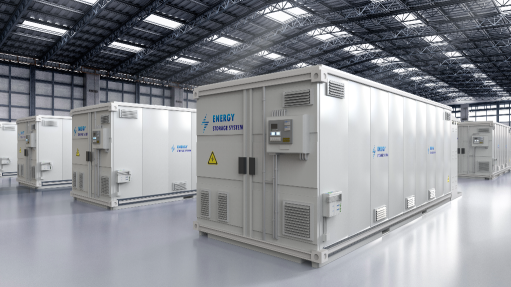
“Historically, our renewable energy procurement mechanisms rewarded the sheer volume of green electrons produced,” Webb mentions. “In the next phase of the energy transition, the market must explicitly reward the ability to deliver that electron at a certain time and to improve grid resilience – both of which can be provided by energy storage. Currently, South Africa’s storage pipeline is painfully inadequate.”
Currently, South Africa uses about 3 GW of pumped-hydro capacity and the State has committed itself to battery programmes with a total capacity of 2 GW. Under the current Integrated Resources Plan, only another 4 GW of battery storage will be developed by 2032, while the expansion of pumped-hydro capacity is only to take place by 2037.
As for the 5 GW to 6 GW capacity to be provided by gas-to-power projects, global supply chain bottlenecks for gas turbines mean that these will likely be delayed.
“To safeguard the 26 GW of renewable-energy capital already deployed, our models indicate that South Africa requires an additional 2 GW to 5 GW of commercial energy storage online well before 2030,” Webb reports. “Without it, the grid will choke on its own clean energy, and the country will miss its legally binding international decarbonisation targets.”
The country has to create a transparent and market-determined price for “capacity” and grid ancillary services. That would give participants in the electricity market a clearer view of the true cost of maintaining grid stability. And that would lead to the market naturally allocating capital across a healthy technological mix.
Article Enquiry
Email Article
Save Article
Feedback
To advertise email advertising@creamermedia.co.za or click here
Research Reports

Projects
Latest Multimedia
Latest News

Showroom
We are responsible manufacturers of essential components. Manufacturing 80 million parts a week, we have over 1 billion parts in stock.
VISIT SHOWROOM


Press Office
Announcements
What's On
Subscribe to improve your user experience...
Option 1 (equivalent of R125 a month):
Receive a weekly copy of Creamer Media's Engineering News & Mining Weekly magazine
(print copy for those in South Africa and e-magazine for those outside of South Africa)
Receive daily email newsletters
Access to full search results
Access archive of magazine back copies
Access to Projects in Progress
Access to ONE Research Report of your choice in PDF format
Option 2 (equivalent of R375 a month):
All benefits from Option 1
PLUS
Access to Creamer Media's Research Channel Africa for ALL Research Reports, in PDF format, on various industrial and mining sectors
including Electricity; Water; Energy Transition; Hydrogen; Roads, Rail and Ports; Coal; Gold; Platinum; Battery Metals; etc.
Already a subscriber?
Forgotten your password?
Receive weekly copy of Creamer Media's Engineering News & Mining Weekly magazine (print copy for those in South Africa and e-magazine for those outside of South Africa)
➕
Recieve daily email newsletters
➕
Access to full search results
➕
Access archive of magazine back copies
➕
Access to Projects in Progress
➕
Access to ONE Research Report of your choice in PDF format
RESEARCH CHANNEL AFRICA
R4500 (equivalent of R375 a month)
SUBSCRIBEAll benefits from Option 1
➕
Access to Creamer Media's Research Channel Africa for ALL Research Reports on various industrial and mining sectors, in PDF format, including on:
Electricity
➕
Water
➕
Energy Transition
➕
Hydrogen
➕
Roads, Rail and Ports
➕
Coal
➕
Gold
➕
Platinum
➕
Battery Metals
➕
etc.
Receive all benefits from Option 1 or Option 2 delivered to numerous people at your company
➕
Multiple User names and Passwords for simultaneous log-ins
➕
Intranet integration access to all in your organisation