Monitoring systems aid fire risk management

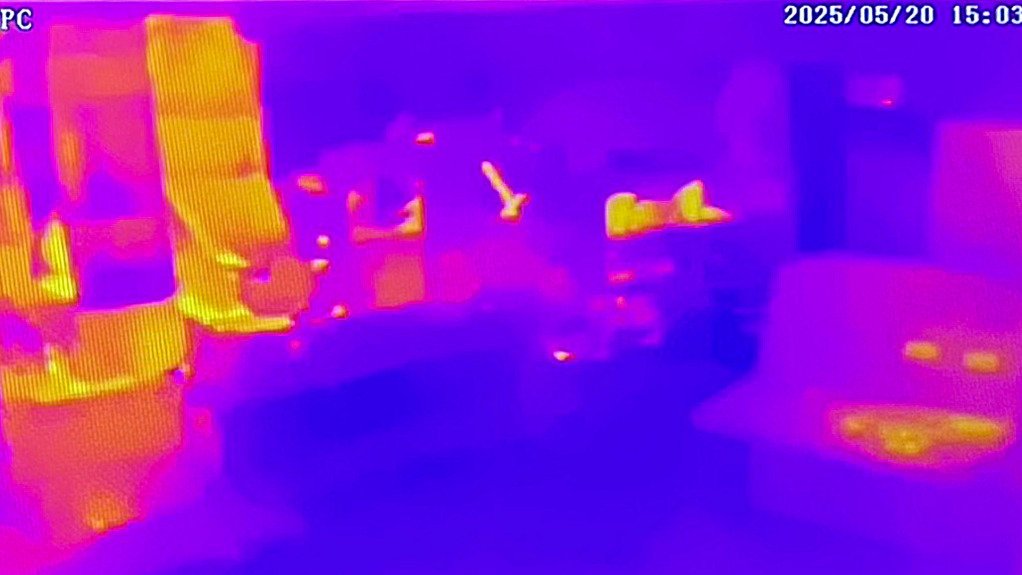
LAYERING SYSTEMS Adding another layer to monitoring systems, AI brings about more proactive alerts and notifications rather than having a human watch every second of the video


With the growing adoption of automation solutions, mines must increase their monitoring capabilities, because while many machines have built-in monitoring systems, mine management and safety teams need an overarching view of operations to make informed decisions and investigate incidents.
Video monitoring offers a way of “keeping an eye” on mines’ daily operations, says industrial video specialist Opticom Tech global sales manager Heidi Schmidt.
“AI simply adds another layer to this monitoring to bring about more proactive alerts and notifications, rather than having a human watch every second of the video.”
However, mining environments can be demanding, and durability is a key requirement.
While some thermal cameras are designed for direct mounting on high-vibration equipment, Opticom Tech’s MIB-5141T is typically deployed in positions that provide a broader view of operations. In such installations, in which the equipment is elevated or in protected mounting locations, the camera can operate reliably and continuously monitor large areas for thermal anomalies, she adds.
Placing the camera strategically can also enable mines to reduce exposure to vibration, debris and extreme conditions, which helps to support long-term performance and minimises maintenance needs.
When deployed correctly, the MIB-5141T provides a dependable monitoring solution that complements more ruggedised cameras used in higher-impact areas, she notes.
AI-based Detection
As fire management requires a multi-layer strategy, the use of AI-driven thermal monitoring in tracking a high-risk area at all times allows for heat signatures, undetectable by the human eye, to be identified earlier, compared with the results of manual inspections or regular camera feeds.
“Unintended heat is usually a sign of risk, whether that’s too much friction, an early sign of equipment failure or an actual spark,” Schmidt explains.
However, the main limitation in existing systems that thermal monitoring aims to address is reactivity, with many fire management approaches – such as sprinklers and smoke detectors – activating only once there are signs of a fire.
Alerts made through thermal monitoring can potentially trigger alarms before the traditional fire indicators, affording staff time to investigate and address potential issues.
“The AI-based detection brings two major advantages. The first [is] that alerts can be triggered even if no human is monitoring the feed, making it a 24/7 eye on operations. The second is that AI-based detection offers an ‘in-between’ alert that is triggered when unexpected heat is detected – even if this [has not] resulted in a spark or fire yet – helping to reduce unnecessary alerts/alarms so that maintenance teams aren’t chasing empty risks.”
Moreover, “with emails, texts, on-screen notifications and alarms, managers or safety officers will know about the alert, no matter what communication method they’re using at the time,” Schmidt emphasises.
Distinguishing Risks
By using AI, the MIB-5141T camera’s thermal feed output is able to distinguish between normal temperature fluctuations and genuine fire risks – particularly in high- activity mining environments.
Every camera can be configured to trigger outside of its expected temperature ranges, which are set by the facility. The systems, therefore, rely on knowledge about the “normal” level of heat within a given application, says Schmidt.
Even if an alert is triggered by something that is not an immediate fire risk, heat signatures outside of the normal defined range should be investigated.
“They could be signs of wear and tear, such as too much friction, or highlight other issues that require maintenance or redress before they develop into a larger fire risk or cause unplanned downtime,” Schmidt points out.
She encourages companies to adopt approaches that maximise safety and promote early fire risk detection in line with their particular needs.
“Thermal monitoring isn’t a one-time, set-it-and-forget-it solution that checks a box; it’s one piece of the larger puzzle,” Schmidt concludes.
Article Enquiry
Email Article
Save Article
Feedback
To advertise email advertising@creamermedia.co.za or click here
Research Reports

Projects

Latest Multimedia
Latest News

Showroom

We at Hawk High Pressure Pumps specialise in industrial pumps and pumping systems. Our high pressure washing equipment is locally manufactured and...
VISIT SHOWROOM
Your global lifecycle technology & service partner for materials & minerals processing equipment for coal, iron ore, copper, manganese & other...
VISIT SHOWROOM
Press Office
Announcements
What's On
Subscribe to improve your user experience...
Option 1 (equivalent of R125 a month):
Receive a weekly copy of Creamer Media's Engineering News & Mining Weekly magazine
(print copy for those in South Africa and e-magazine for those outside of South Africa)
Receive daily email newsletters
Access to full search results
Access archive of magazine back copies
Access to Projects in Progress
Access to ONE Research Report of your choice in PDF format
Option 2 (equivalent of R375 a month):
All benefits from Option 1
PLUS
Access to Creamer Media's Research Channel Africa for ALL Research Reports, in PDF format, on various industrial and mining sectors
including Electricity; Water; Energy Transition; Hydrogen; Roads, Rail and Ports; Coal; Gold; Platinum; Battery Metals; etc.
Already a subscriber?
Forgotten your password?
Receive weekly copy of Creamer Media's Engineering News & Mining Weekly magazine (print copy for those in South Africa and e-magazine for those outside of South Africa)
➕
Recieve daily email newsletters
➕
Access to full search results
➕
Access archive of magazine back copies
➕
Access to Projects in Progress
➕
Access to ONE Research Report of your choice in PDF format
RESEARCH CHANNEL AFRICA
R4500 (equivalent of R375 a month)
SUBSCRIBEAll benefits from Option 1
➕
Access to Creamer Media's Research Channel Africa for ALL Research Reports on various industrial and mining sectors, in PDF format, including on:
Electricity
➕
Water
➕
Energy Transition
➕
Hydrogen
➕
Roads, Rail and Ports
➕
Coal
➕
Gold
➕
Platinum
➕
Battery Metals
➕
etc.
Receive all benefits from Option 1 or Option 2 delivered to numerous people at your company
➕
Multiple User names and Passwords for simultaneous log-ins
➕
Intranet integration access to all in your organisation