



Fedgroup secures renewable capital to accelerate industrial energy projects

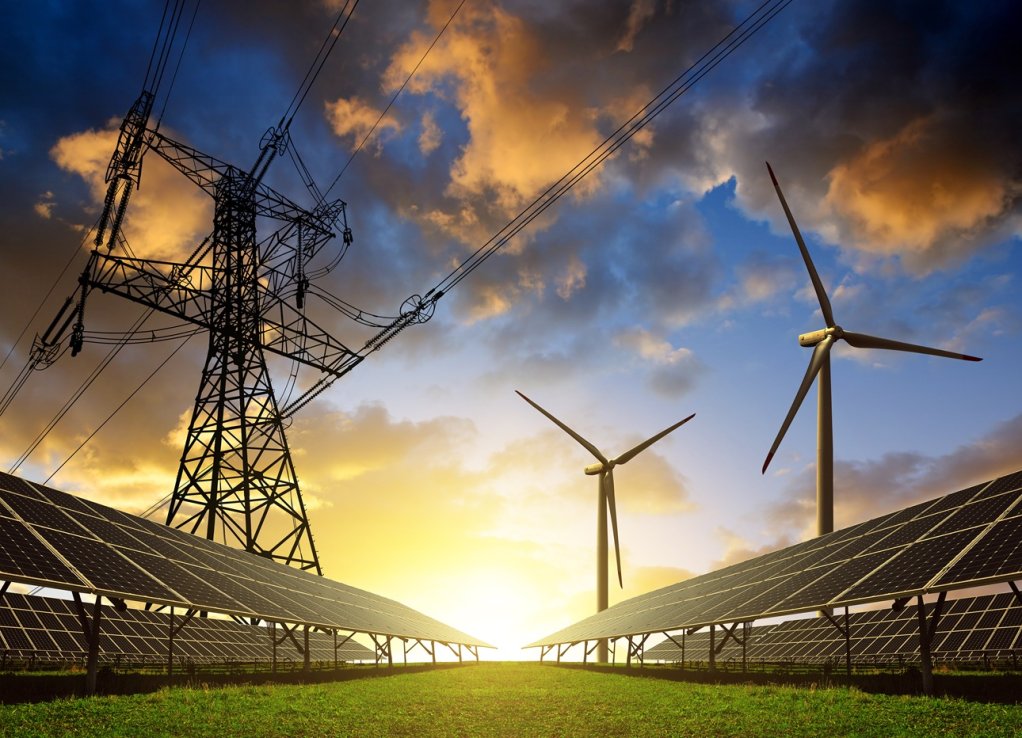


Fedgroup has secured R500-million in funding from development finance institution the Industrial Development Corporation (IDC) for its newly established Fedgroup Renewables Capital fund.
This fund houses a portfolio of renewable-energy and infrastructure-linked assets tied to major industrial and commercial counterparties including steel billet manufacturer Coega Steels and paper and packaging manufacturer Mondi.
Fedgroup chief commercial officer Rob Timmis says the IDC’s decision to partner with Fedgroup was driven by the strength of the project structure, the quality of the underlying assets and the calibre of the industrial counterparties involved.
“Given that we were already committed to developing these projects independently, the IDC recognised that this was not a speculative investment approach, but a scalable long-term infrastructure platform built around proven demand and real industrial activity,” he says.
Fedgroup’s renewable funding initiatives linked to the operation are aimed at supporting large-scale energy transition projects within one of the country’s traditionally energy-intensive industrial sectors.
The renewable infrastructure includes a 7.1 MW solar PV installation financed by Fedgroup Private Capital through a R51.8-million funding structure, and the project combines rooftop and ground-mounted solar installations across the Coega Steels site and is expected to generate about 9.3 GWh of electricity in its first year of operation.
The installation includes rooftop and ground-mounted components using more than 11 000 solar panels across the site and is expected to deliver electricity savings of about R19-million in the first year, while reducing reliance on grid electricity.
The deal comes at a time when many South African industrial and infrastructure projects are struggling to access long-term funding for large-scale energy transition initiatives and reflects growing recognition of private capital models focused on income-generating infrastructure assets that support operational resilience and economic growth.
“The deal comes against the backdrop of private credit emerging as one of the fastest-growing alternative asset classes globally as traditional lenders retreat from sectors requiring specialised structuring and long-term capital deployment.
“In South Africa, this funding gap is particularly evident across infrastructure, renewable energy and agriculture, where businesses often struggle to secure flexible funding despite operating in sectors critical to economic growth and industrial resilience,” Timmis says.
He says real assets such as renewable-energy infrastructure, agricultural operations and industrial utility systems remain attractive as they generate predictable long-term cash flows, provide inflation protection and are less exposed to short-term market volatility, while remaining aligned with structural growth themes such as the energy transition and food security.
“Our approach differs from traditional funding models by focusing on [an] operational understanding of the underlying assets rather than relying purely on contractual risk transfer.
“We get into the operational detail, understand the assets and work closely with specialist technical partners over long-term periods. That reduces risk for the technical partner, improves value for the client and delivers stronger outcomes for investors,” Timmis adds.
The Coega Steel project operating in the Coega Industrial Development Zone outside Gqeberha, in the Eastern Cape, is viewed as significant given that the area represents one of South Africa’s most strategically important industrial and export-focused manufacturing hubs, where energy reliability and infrastructure resilience are critical to long-term competitiveness.
“Overall, projects like this are strategically important because they sit within sectors central to South Africa’s industrial economy. When you combine strong counterparties with long-term infrastructure demand and renewable energy transition opportunities, it creates a compelling investment case,” Timmis concludes.
Article Enquiry
Email Article
Save Article
Feedback
To advertise email advertising@creamermedia.co.za or click here
Research Reports

Projects


Latest Multimedia


Latest News
Showroom
As one of South Africa's leading manufacturers, Bell Equipment distributes and exports its wide range of heavy equipment globally to mining,...
VISIT SHOWROOM
We supply customers with practical affordable solutions for their testing needs. Our products include benchtop, portable, in-line process control...
VISIT SHOWROOM



Announcements
What's On
Subscribe to improve your user experience...
Option 1 (equivalent of R125 a month):
Receive a weekly copy of Creamer Media's Engineering News & Mining Weekly magazine
(print copy for those in South Africa and e-magazine for those outside of South Africa)
Receive daily email newsletters
Access to full search results
Access archive of magazine back copies
Access to Projects in Progress
Access to ONE Research Report of your choice in PDF format
Option 2 (equivalent of R375 a month):
All benefits from Option 1
PLUS
Access to Creamer Media's Research Channel Africa for ALL Research Reports, in PDF format, on various industrial and mining sectors
including Electricity; Water; Energy Transition; Hydrogen; Roads, Rail and Ports; Coal; Gold; Platinum; Battery Metals; etc.
Already a subscriber?
Forgotten your password?
Receive weekly copy of Creamer Media's Engineering News & Mining Weekly magazine (print copy for those in South Africa and e-magazine for those outside of South Africa)
➕
Recieve daily email newsletters
➕
Access to full search results
➕
Access archive of magazine back copies
➕
Access to Projects in Progress
➕
Access to ONE Research Report of your choice in PDF format
RESEARCH CHANNEL AFRICA
R4500 (equivalent of R375 a month)
SUBSCRIBEAll benefits from Option 1
➕
Access to Creamer Media's Research Channel Africa for ALL Research Reports on various industrial and mining sectors, in PDF format, including on:
Electricity
➕
Water
➕
Energy Transition
➕
Hydrogen
➕
Roads, Rail and Ports
➕
Coal
➕
Gold
➕
Platinum
➕
Battery Metals
➕
etc.
Receive all benefits from Option 1 or Option 2 delivered to numerous people at your company
➕
Multiple User names and Passwords for simultaneous log-ins
➕
Intranet integration access to all in your organisation
