Committees must prepare for more demanding executive remuneration conversations – PwC


Amendments to the Companies Act took effect on May 22 and have fundamentally changed the governance of executive remuneration in South Africa, says assurance, advisory and tax services firm PwC South Africa.
Listed and unlisted public and State-owned companies must present a remuneration policy and an annual remuneration report for approval by ordinary resolution.
The remuneration policy must be renewed every three years, but may be put to an earlier vote, if needed.
If the remuneration report is not approved, remuneration committee members must stand for re-election to the committee at the following AGM.
A second consecutive failure bars those members from serving on the committee for two years.
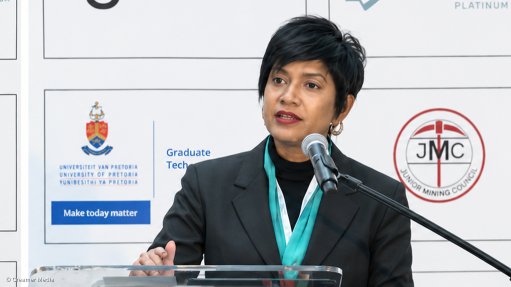
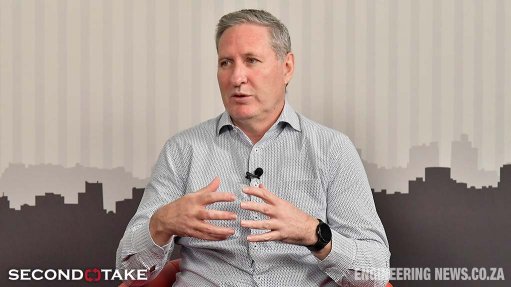
“Remuneration committees need to be prepared for a more demanding conversation with shareholders,” says PwC South Africa executive reward, tax and legal services partner Leila Ebrahimi.
While executive pay outcomes in South Africa appear well supported, with shareholders endorsing remuneration outcomes at an 83.8% approval rate in 2025, this support is under a nonbinding regime, she says.
Further, the amendments also introduce mandatory workforce pay disclosures, including the remuneration of the highest-paid and lowest-paid employees, average and median pay, and a wage gap ratio between the top 5% and bottom 5% of earners.
“These are not simply disclosure enhancements. This is a shift in the locus of power. Shareholders have a statutory mechanism to hold individual committee members accountable for remuneration decisions, and that changes how every remuneration policy and report should be prepared,” says Ebrahimi.
South Africa is entering a phase characterised by greater transparency and fairness, although this transition is unlikely to be without challenges and may face resistance, according to the 'South African Executive Remuneration Landscape 2026: Strategic insights for leadership' report.
Experience in more developed markets suggests that this is not the end point. Over time, the focus tends to shift from transparency to fairness and, ultimately, to competitiveness, as the realities of a globally mobile executive talent market reassert themselves.
However, there are potential trade-offs involved in prioritising fairness alone.
The UK's experience offers a cautionary example, namely that restrictive approaches to executive pay are thought by some to have contributed to high-profile companies relocating their primary listings offshore.
“Instead of focusing only on fairness, and risk losing our best talent and companies, South Africa should optimise for competitiveness and create conditions for broad-based prosperity, which is what the Companies Act amendments aim to achieve,” she says.
During the past year, total CEO pay rose by 8% and CFO remuneration increased by 19% year-on-year.
However, the report finds a significant disconnect between how companies design incentives and how executives experience them.
A survey of South African executives showed that, while 77% view short-term incentives as effective motivators, only 39% say the same about long-term incentives, despite long-term awards often comprising the largest portion of executive pay.
Complexity, delayed outcomes and a lack of clarity on how daily behaviours connect to long-term vesting are driving this gap.
“Boards of directors must consider whether their incentive structures are shaping behaviour or simply satisfying governance requirements. Under a binding vote regime, shareholders will increasingly be asking this question,” says PwC South Africa executive reward, tax and legal services partner Makhosazana Mabaso.
Further, the report also challenges the common practice of applying uniform incentive schemes across diverse business units.
This creates unintended cross-subsidies, where high-performing divisions fund incentive pools for underperforming ones, which drives talent-loss in the areas where it matters most, she says.
PwC also highlights the growing case for embedding cybersecurity performance in executive incentive structures.
In South Africa, only 8% of organisations reported no high-impact cyberbreaches over the past three years, significantly below the global average of 18%.
King V explicitly mandates cybersecurity as a board-level responsibility, creating a governance foundation for linking executive accountability to cyber outcomes. However, most companies remain reactive, relying on disciplinary action after a breach rather than incentivising proactive risk management, the report shows.
Article Enquiry
Email Article
Save Article
Feedback
To advertise email advertising@creamermedia.co.za or click here
Research Reports

Projects

Latest Multimedia

Latest News

Showroom

For over 60 years, VEGA has provided industry-leading products for the measurement of level, density, weight and pressure. As the inventor of the...
VISIT SHOWROOM
AirNox (Pty) Ltd is a level 1 BBBEE manufacturer of complete AdBlue® solutions for operators of SCR diesel engines and AUS40 across South Africa...
VISIT SHOWROOM
Press Office
Announcements
What's On
Subscribe to improve your user experience...
Option 1 (equivalent of R125 a month):
Receive a weekly copy of Creamer Media's Engineering News & Mining Weekly magazine
(print copy for those in South Africa and e-magazine for those outside of South Africa)
Receive daily email newsletters
Access to full search results
Access archive of magazine back copies
Access to Projects in Progress
Access to ONE Research Report of your choice in PDF format
Option 2 (equivalent of R375 a month):
All benefits from Option 1
PLUS
Access to Creamer Media's Research Channel Africa for ALL Research Reports, in PDF format, on various industrial and mining sectors
including Electricity; Water; Energy Transition; Hydrogen; Roads, Rail and Ports; Coal; Gold; Platinum; Battery Metals; etc.
Already a subscriber?
Forgotten your password?
Receive weekly copy of Creamer Media's Engineering News & Mining Weekly magazine (print copy for those in South Africa and e-magazine for those outside of South Africa)
➕
Recieve daily email newsletters
➕
Access to full search results
➕
Access archive of magazine back copies
➕
Access to Projects in Progress
➕
Access to ONE Research Report of your choice in PDF format
RESEARCH CHANNEL AFRICA
R4500 (equivalent of R375 a month)
SUBSCRIBEAll benefits from Option 1
➕
Access to Creamer Media's Research Channel Africa for ALL Research Reports on various industrial and mining sectors, in PDF format, including on:
Electricity
➕
Water
➕
Energy Transition
➕
Hydrogen
➕
Roads, Rail and Ports
➕
Coal
➕
Gold
➕
Platinum
➕
Battery Metals
➕
etc.
Receive all benefits from Option 1 or Option 2 delivered to numerous people at your company
➕
Multiple User names and Passwords for simultaneous log-ins
➕
Intranet integration access to all in your organisation