Cadastre key to increased mining in Botswana – Chamber

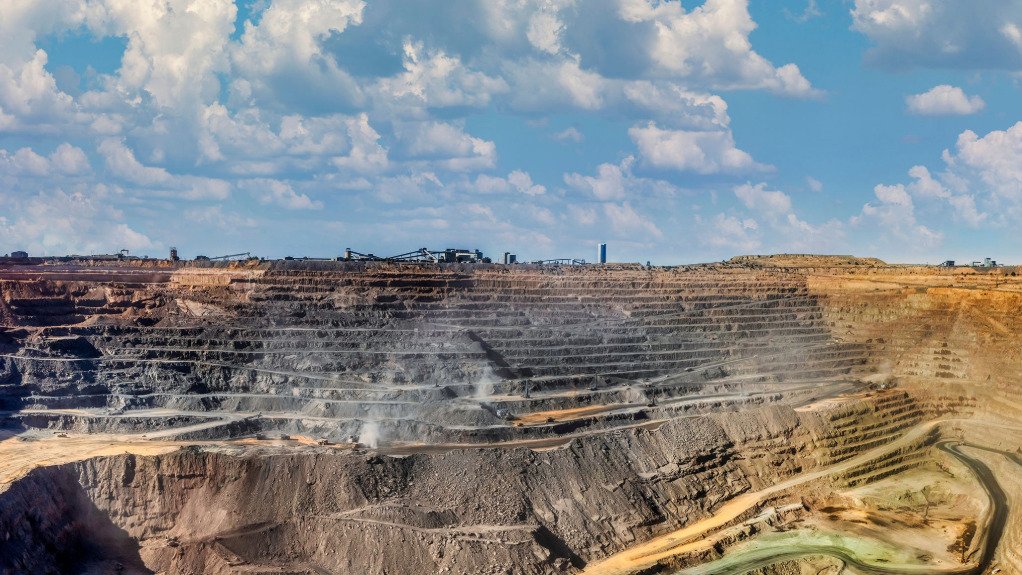
EXPANDED EXPLORATION Following the implementation of the Botswana’s Department of Mines’ Mining Cadastre Portal, the country has seen an increase in exploration activity



Once anchored on its natural diamond mining sector, Botswana’s diamond mining industry has been on a decline as a result of a growing demand for cheaper lab-grown diamonds and other factors related to the world economy. However, following the implementation of Botswana’s Department of Mines’ Mining Cadastre Portal, the country has seen an increase in activity for the exploration of other minerals, according to mining industry employers association Botswana Chamber of Mines CEO Charles Siwawa.
Mining and exploration activity in Botswana has followed two very different paths over the past few years: diamond mining has decreased somewhat, while base metal and critical mineral exploration has increased significantly.
“This [renewed exploration drive], to a large extent, is because users can now apply for an exploration licence from anywhere in the world,” he says.
The Mining Cadastre Portal provides mining licence holders, prospectors and mining right seekers with an electronic platform that enables them to engage directly with the Botswana’s Ministry of Minerals and Energy.
Once registered, portal users can manage the complete process of handling representation, including requests, approval and cancellations of person, company or syndicate representation.
In addition to this, users can manage and submit licence applications through the portal to ensure the accurate reporting of all exploration data, while being able to submit payments, reports and documents for review, including the necessary approvals and feedback, online.
Moreover, to promote transparency in governance, the portal provides the public with access to searchable licence records, enhancing engagement and communication. Users can also rely on interactive maps to visualise cadastre data and validate spatial information in real-time.
In all, this enables users to efficiently manage their licences through streamlined processes, ensuring compliance, while facilitating the easy tracking of renewals and audits.
Policy Adjustments
Driven by the African Union’s Africa Mining Vision policy framework, four major policy changes were made to Botswana’s Mines and Minerals Act – the primary legislation regulating Botswana’s mining sector, which vests all mineral rights in the State – in 2025.
The first major policy change to the Mines and Minerals Act was to encourage companies to look at the beneficiation of their mineral products within Botswana, explains Siwawa.
The second major policy change was made to the government’s shifting of the State’s first right of refusal regarding it’s stake in any new mining operation.
Previously, if a mineral exploration programme were to transition into the mining phase of its operation, the government mandated a 15% stake in any operation; however, under the new law, the government shifted from a mandatory 15% State stake to a mandatory 24% local ownership rule, designed to ensure citizens and local entities have a greater stake in the country's mineral wealth.
“If the government feels that it will be too onerous for any reason to invest money into the project, then the 24% stake should be offered to the citizens of Botswana,” explains Siwawa.
Further, he explains that following Botswana coming into independence in 1966, there were very few qualified personnel for the mining industry to take on, particularly in the subjects of science, technology, engineering and mathematics. Subsequent to this, Siwawa says the government started to heavily invest into the education of its citizens. As a result, the country is now at a stage where, through enhanced education, most of these citizen skills have been developed within the mining industry.
Following these developments, he says the government then moved to the mining industry supply chain, where it encourages Botswana citizens to open companies and businesses to supply goods and services to the mining industry. To date, this initiative has been a success, says Siwawa.
Relatedly, the Botswana government also encouraged Botswana citizens to increase their shareholdings in domestic mining entities, which, he says, was the core idea behind the allocation of the 24% minimum local ownership stake in mining operations to the public.
The third major policy change affected the rehabilitation of shuttered mining operations, with mining companies now having to establish a rehabilitation fund.
This policy change, highlights Siwawa, aims to strengthen the obligations for mine closure.
The fourth major policy change included new regulations to target illegal mining within Botswana.
Article Enquiry
Email Article
Save Article
Feedback
To advertise email advertising@creamermedia.co.za or click here
Research Reports

Projects


Latest Multimedia

Latest News
Showroom
Astore Keymak is one of South Africa’s leading suppliers of high-quality Thermoplastic Pipeline Systems, with branches in the major provinces.
VISIT SHOWROOM
ESAB South Arica, the leading supplier of high-end welding and cutting products to the Southern African industrial market is based in...
VISIT SHOWROOM



Press Office
Announcements
What's On
Subscribe to improve your user experience...
Option 1 (equivalent of R125 a month):
Receive a weekly copy of Creamer Media's Engineering News & Mining Weekly magazine
(print copy for those in South Africa and e-magazine for those outside of South Africa)
Receive daily email newsletters
Access to full search results
Access archive of magazine back copies
Access to Projects in Progress
Access to ONE Research Report of your choice in PDF format
Option 2 (equivalent of R375 a month):
All benefits from Option 1
PLUS
Access to Creamer Media's Research Channel Africa for ALL Research Reports, in PDF format, on various industrial and mining sectors
including Electricity; Water; Energy Transition; Hydrogen; Roads, Rail and Ports; Coal; Gold; Platinum; Battery Metals; etc.
Already a subscriber?
Forgotten your password?
Receive weekly copy of Creamer Media's Engineering News & Mining Weekly magazine (print copy for those in South Africa and e-magazine for those outside of South Africa)
➕
Recieve daily email newsletters
➕
Access to full search results
➕
Access archive of magazine back copies
➕
Access to Projects in Progress
➕
Access to ONE Research Report of your choice in PDF format
RESEARCH CHANNEL AFRICA
R4500 (equivalent of R375 a month)
SUBSCRIBEAll benefits from Option 1
➕
Access to Creamer Media's Research Channel Africa for ALL Research Reports on various industrial and mining sectors, in PDF format, including on:
Electricity
➕
Water
➕
Energy Transition
➕
Hydrogen
➕
Roads, Rail and Ports
➕
Coal
➕
Gold
➕
Platinum
➕
Battery Metals
➕
etc.
Receive all benefits from Option 1 or Option 2 delivered to numerous people at your company
➕
Multiple User names and Passwords for simultaneous log-ins
➕
Intranet integration access to all in your organisation