Agri dept to gazette new measures for FMD management, incl communal systems

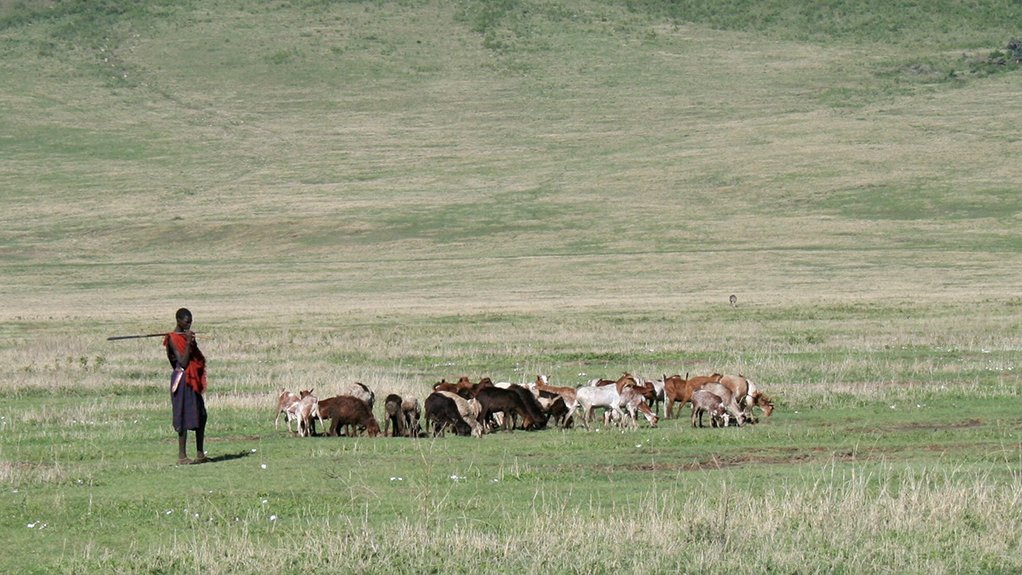


The Department of Agriculture (DoA) has approved new Foot-and-Mouth Disease (FMD) control measures that will reportedly provide farmers, veterinarians and veterinary authorities with a clear and practical, science-based framework for managing outbreaks while minimising economic losses.
The measures will consolidate and replace previous directives under Section 9 of the Animal Diseases Act, including the 2019 FMD Contingency Plan.
Government says South Africa will, for the first time, have a single integrated set of national control measures that clearly outline how FMD outbreaks must be managed – from detection through to recovery.
The department says the country’s livestock producers need certainty: clear rules, sound science and practical pathways that allow them to manage outbreaks without unnecessarily jeopardising their livelihoods.
FMD remains one of the most economically devastating animal diseases facing livestock producers. An outbreak can disrupt production, restrict market access, threaten jobs and place immense financial pressure on farming families and rural communities.
Accordingly, the department explains that the new measures seek to strike a balance between protecting animal health and ensuring that farming businesses can continue operating safely wherever the scientific evidence allows.
Importantly, the measures clarify that animals that have been vaccinated but have never been infected and have not been subject to quarantine remain healthy animals and may continue to be traded and moved in accordance with normal requirements.
One of the most significant advances contained in the new framework is the introduction of clearer pathways for trade to continue during quarantine periods.
Rather than imposing blanket restrictions that unnecessarily prolong economic hardship, the measures establish scientifically informed timelines that allow livestock producers to resume certain activities once the risk of disease transmission has been adequately managed.
Animals may be directed to designated FMD abattoirs from 16 days after a property has been declared clinically clear, while broader slaughter options become available after 42 days, including access to export-approved facilities.
"The objective is simple: protect animal health and stop the disease spreading, while ensuring that farmers can continue operating safely wherever possible. Disease control and economic sustainability cannot be treated as mutually exclusive goals," the department states.
The updated measures also substantially reduce unnecessary wastage of animal products and agricultural inputs.
Advances in scientific understanding of the FMD virus have demonstrated that certain materials do not pose a risk for as long as previously believed.
As a result, fewer animal products need to be destroyed, reducing financial losses for producers while maintaining the highest standards of food safety and disease control.
Feed, fodder and manure will similarly be managed according to scientifically established risk periods rather than blanket disposal requirements.
Another major reform is the move away from the historic assumption that entire herds must be removed before quarantine can be lifted.
Under the new framework, producers will have several pathways available to achieve disease recovery and lift quarantine restrictions.
Depending on the circumstances, farms may remove animals, restock with vaccinated animals or restock with animals from FMD-free sources. These options provide significantly greater flexibility and reduce the financial devastation that can result from unnecessary whole-herd depopulation.
"For many farmers, particularly those operating under difficult financial conditions, the prospect of losing an entire herd can be devastating. These measures introduce practical alternatives that are scientifically sound and economically realistic," the department says.
COMMUNAL SYSTEMS
For the first time, the measures also provide specific provisions for communal and peri-urban livestock systems.
Traditional outbreak management approaches have often been designed around commercial farming operations. However, communal and peri-urban cattle populations present unique management challenges owing to shared grazing areas, multiple ownership arrangements and differing movement patterns.
The new measures recognise these realities and establish practical mechanisms for quarantine management and targeted vaccination programmes tailored to local disease risks.
"This is an important step forward because our disease control framework must work for all livestock owners, not only for commercial farming operations. The realities of communal and peri-urban livestock systems require practical solutions that recognise how these production systems function," the department notes.
The regulations further introduce several practical improvements designed to make disease management more efficient and proportionate.
Well-fenced farms may now manage outbreaks within affected portions of a property rather than automatically subjecting entire operations to full quarantine. Larger properties with clearly separated production units will benefit from more risk-based movement controls.
Veterinary procedures for declaring herds clinically clear have been streamlined and clarified, while farmers seeking authorisation to move products will benefit from defined response timelines and escalation mechanisms where decisions are delayed.
The measures also strengthen biosecurity requirements by focusing attention on the activities and materials that present the greatest risk of transmission, while extending precautionary controls to situations where FMD is suspected and not only where infection has already been confirmed.
COLLABORATION COMMITMENT
The DoA says the new measures reflect the growing partnership between government, veterinary experts and industry in the national campaign against FMD.
"These measures are the product of extensive collaboration between the Department of Agriculture, the Ministerial Task Team, the FMD Industry Coordination Council and veterinary experts from across the sector.
“They reflect the latest scientific evidence, recognise the realities facing farmers on the ground and provide a balanced framework that protects animal health while limiting economic disruption."
For Steenhuisen, collaboration remains South Africa’s greatest strength in the national campaign and fight against FMD outbreaks.
The department will continue to review the measures as new scientific evidence emerges and will conduct a formal review within 12 months of implementation.
Article Enquiry
Email Article
Save Article
Feedback
To advertise email advertising@creamermedia.co.za or click here
Research Reports

Projects


Latest Multimedia

Latest News


Showroom

The Aluminium Federation of South Africa (AFSA), is the voice of the South African aluminium industry.
VISIT SHOWROOM
Industrial Nozzles & Systems (Pty) Ltd (Est. 2000) exclusive representative in Southern Africa for LECHLER GmbH (Est. 1879) - Europe's leading...
VISIT SHOWROOM



Press Office
Announcements
What's On
Subscribe to improve your user experience...
Option 1 (equivalent of R125 a month):
Receive a weekly copy of Creamer Media's Engineering News & Mining Weekly magazine
(print copy for those in South Africa and e-magazine for those outside of South Africa)
Receive daily email newsletters
Access to full search results
Access archive of magazine back copies
Access to Projects in Progress
Access to ONE Research Report of your choice in PDF format
Option 2 (equivalent of R375 a month):
All benefits from Option 1
PLUS
Access to Creamer Media's Research Channel Africa for ALL Research Reports, in PDF format, on various industrial and mining sectors
including Electricity; Water; Energy Transition; Hydrogen; Roads, Rail and Ports; Coal; Gold; Platinum; Battery Metals; etc.
Already a subscriber?
Forgotten your password?
Receive weekly copy of Creamer Media's Engineering News & Mining Weekly magazine (print copy for those in South Africa and e-magazine for those outside of South Africa)
➕
Recieve daily email newsletters
➕
Access to full search results
➕
Access archive of magazine back copies
➕
Access to Projects in Progress
➕
Access to ONE Research Report of your choice in PDF format
RESEARCH CHANNEL AFRICA
R4500 (equivalent of R375 a month)
SUBSCRIBEAll benefits from Option 1
➕
Access to Creamer Media's Research Channel Africa for ALL Research Reports on various industrial and mining sectors, in PDF format, including on:
Electricity
➕
Water
➕
Energy Transition
➕
Hydrogen
➕
Roads, Rail and Ports
➕
Coal
➕
Gold
➕
Platinum
➕
Battery Metals
➕
etc.
Receive all benefits from Option 1 or Option 2 delivered to numerous people at your company
➕
Multiple User names and Passwords for simultaneous log-ins
➕
Intranet integration access to all in your organisation