



African domestic capital pools now exceed external capital inflows

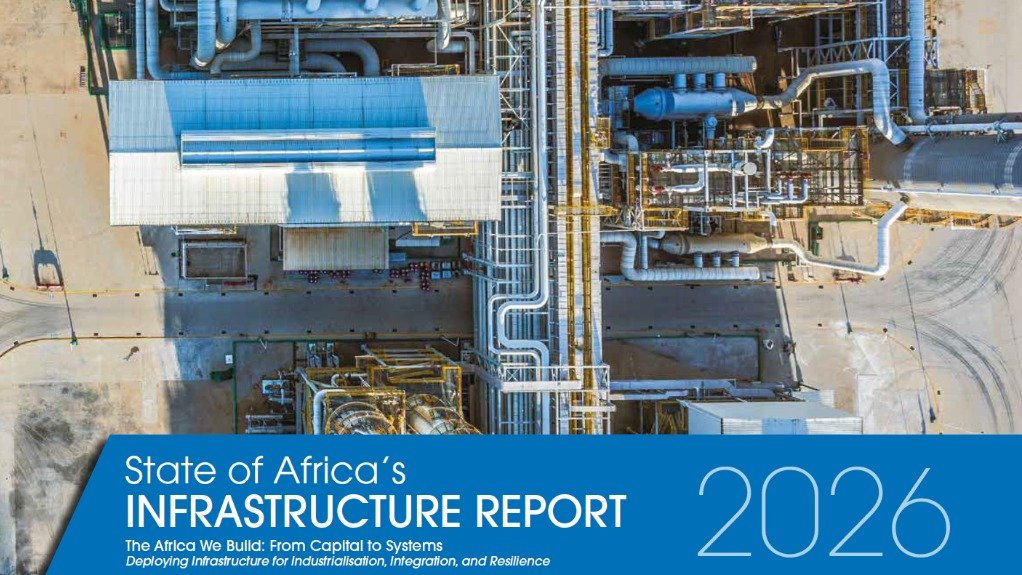


The ten years from 2014 to 2024 saw a hugely important turning point for Africa, infrastructure and industrial development finance institution Africa Finance Corporation (AFC) has highlighted, in its 'State of Africa’s Infrastructure Report 2026', released in Nairobi, Kenya, on Thursday. The turning point was that, for the first time, Africa’s non-bank domestic capital pools exceeded the value of external capital flows into the continent.
Over the period 2014 to 2024, while external capital flows into Africa totalled $1.7-trillion, the continent’s non-bank domestic capital pools totalled more than $2-trillion. This meant that African capital could play a much stronger role in the continent’s development. Africa’s development priority was no longer capital mobilisation, the AFC argued, but intermediation – turning savings into industry, infrastructure, and large-scale productive investment.
“The constraint is no longer capital – it is intermediation,” asserted AFC president and CEO Samaila Zubairu. “We have the savings, but not yet the systems to channel them into infrastructure and industry at scale. Closing that gap is now Africa’s most important economic task. The next phase of Africa’s infrastructure story must move beyond standalone assets towards integrated systems.”
African pension and insurance assets now exceed $1-trillion. The continent’s public investment banks have assets totalling $276-billion, with sovereign wealth funds adding another $164-billion. Central bank reserves rose from $480-billion in 2024 to $530-billion last year. While gold accounted for less than 10% of Africa’s total reserves in 2022/23, the yellow metal now accounts for 17%. In terms of physical gold, African countries had held 663 t in 2022, but this increased to an estimated 738 t last year.
On the other hand, official development assistance to Africa, which had totalled $83.8-billion in 2020, had fallen to $73.5-billion in 2023, and was forecast to decline further. Sovereign issuance (of bonds and bills) by African countries was still far below pre-Covid (2019) levels – while these issues had totalled more than $29-billion in 2018, they had come to only $4-billion to $5-billion in 2022/23. Foreign direct investment in Africa had been roughly steady at the rate of $45-billion to $55-billion every year. The AFC affirmed that external capital is now complementary to Africa’s development model, and not foundational to it.
However, African capital remains concentrated in low-risk and short-term assets, especially government securities. This is a consequence of limited investment opportunities, regulations that favour liquidity, and inadequate risk-sharing mechanisms. This creates a persistent gap between the available savings and long-term productive investment.
“Africa is not capital poor – it is capital rich but system poor,” stressed Zubairu. “The priority must be to build the institutions, instruments, and project pipelines required to deploy that capital into infrastructure and industry at scale.”
The biggest opportunity is presented by demand-driven integrated infrastructure. Transport and logistics corridors should be designed as production ecosystems, including trade facilitation, and not merely as transit routes.
“A continental backbone is already taking shape; the opportunity now is to improve performance, execution and coordination,” pointed out the AFC. “Similarly, in energy, the priority is no longer incremental capacity additions alone, but integrated systems combining generation, transmission, storage, fuels and industrial demand.”
Article Enquiry
Email Article
Save Article
Feedback
To advertise email advertising@creamermedia.co.za or click here
Research Reports

Projects


Latest Multimedia


Latest News
Showroom

Iritron delivers advanced automation, control, and optimisation solutions to the Mining, Minerals & Metals, Consumer Package Goods and...
VISIT SHOWROOM
ISO-certified Condra manufactures overhead cranes, portal cranes, cantilever cranes and crane components: hoists, drives, end-carriages, brakes and...
VISIT SHOWROOM



Announcements
What's On
Subscribe to improve your user experience...
Option 1 (equivalent of R125 a month):
Receive a weekly copy of Creamer Media's Engineering News & Mining Weekly magazine
(print copy for those in South Africa and e-magazine for those outside of South Africa)
Receive daily email newsletters
Access to full search results
Access archive of magazine back copies
Access to Projects in Progress
Access to ONE Research Report of your choice in PDF format
Option 2 (equivalent of R375 a month):
All benefits from Option 1
PLUS
Access to Creamer Media's Research Channel Africa for ALL Research Reports, in PDF format, on various industrial and mining sectors
including Electricity; Water; Energy Transition; Hydrogen; Roads, Rail and Ports; Coal; Gold; Platinum; Battery Metals; etc.
Already a subscriber?
Forgotten your password?
Receive weekly copy of Creamer Media's Engineering News & Mining Weekly magazine (print copy for those in South Africa and e-magazine for those outside of South Africa)
➕
Recieve daily email newsletters
➕
Access to full search results
➕
Access archive of magazine back copies
➕
Access to Projects in Progress
➕
Access to ONE Research Report of your choice in PDF format
RESEARCH CHANNEL AFRICA
R4500 (equivalent of R375 a month)
SUBSCRIBEAll benefits from Option 1
➕
Access to Creamer Media's Research Channel Africa for ALL Research Reports on various industrial and mining sectors, in PDF format, including on:
Electricity
➕
Water
➕
Energy Transition
➕
Hydrogen
➕
Roads, Rail and Ports
➕
Coal
➕
Gold
➕
Platinum
➕
Battery Metals
➕
etc.
Receive all benefits from Option 1 or Option 2 delivered to numerous people at your company
➕
Multiple User names and Passwords for simultaneous log-ins
➕
Intranet integration access to all in your organisation
