



African development needs greater refining capacity


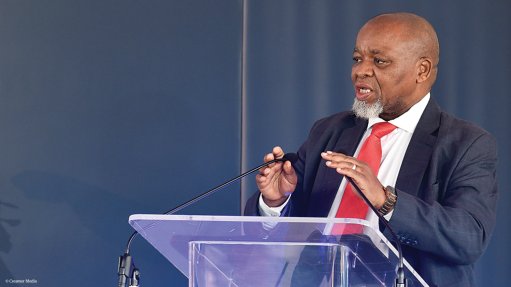
African industrialisation needs secure energy supply chains. So highlighted African Refiners and Distributors Association (ARDA) executive secretary Anibor Kragha in a concise address to the 2026 ARDA Conference, being held at the Century City Conference Centre in Cape Town.
ARDA, which had 80 members, championed African energy security, he affirmed. The new normal for the world today was a series of international political crises, which had nothing to do with Africa, and which were causing countries to prioritise their own interests.
Africa exported a lot of oil but still imported a lot of its fuel. "To ensure security, you need fuel," he observed.
A robust downstream sector was going to be essential for African industrialisation. "Mines run on diesel, not crude [oil]," he noted.
East and Southern Africa were heavily reliant on fuel product supply from the Middle East. West Africa was suffering less disruption because of Nigeria's giant Dangote refinery, among others.
"We don't have enough refineries," he warned. Nor did African countries have anywhere near enough storage capacity. Few had as much as 20 days storage.
Addressing the need required much more than just constructing refineries. There was also the need to build the necessary support and downstream infrastructure -- terminals and depots, pipelines, road tanker fleets, service station networks, and gas bottling plants and distribution centres, all the way down to efficient cooking technologies.
"On top of that, we need to look at petrochemicals, at value addition," he stressed. He cited the Indorama Eleme petrochemical plant as a major Nigerian success story.
"Economic development is more important right now for us than the energy transition," averred Kragha. Nevertheless, he also stressed that the transition to green energies presented real opportunities for ARDA's members, that should be seized.
"Are we looking at [sustainable aviation fuel -- SAF] opportunities?" he queried. Were African refiners looking to modify their plants to produce SAF? Further, the shipping sector was now also looking for alternative, low-carbon, fuels to power their vessels, again offering great opportunities for the African sector.
"Energy security is critical to Africa's industrialisation ambitions," he asserted.
The African Petroleum Producers Organisation (APPO) pledged its support for the expansion of African refining capacity. So assured APPO secretary-general Farid Ghezali, addressing the same conference.
He highlighted that currently Africa exported 75% of its petroleum as crude, while importing 70% of its fuel. The effect was to cost the continent $50-billion a year. This meant less development, inadequate industrialisation, fewer jobs, and vulnerability to global political crises.
To be competitive, a refinery needed a minimum capacity of 150 000 bb/d. It had to be integrated with a petrochemicals plant, be ESG- (environmental, social and governance-) certified and be able to meet Euro-6 standards.
Currently, in all of Africa, there were only two global major refinery complexes. These were Nigeria's 650 000 bbl/d Dangote refinery and Algeria's 500 000 bbl/d Sonatrach refinery.
APPO was proposing the development of five major refining hubs across the continent. In addition to Algeria (North Africa) and Nigeria (West Africa), these were Angola (Central Africa), South Africa (Southern Africa) and Tanzania (East Africa). For Angola, APPO was proposing an expansion of refining capacity to 300 000 bbl/d by 2030; for South Africa, the proposal was a capacity of 400 000 bbl/d by 2035, and for Tanzania, 350 000 bbl/d by 2032.
Ghezali suggested that all these refineries be owned 51% by their host States and 49% by the private sector, preferably African investors. They also needed to be integrated into petrochemicals industries, with 30% of their output going to petrochemicals.
By 2035, Africa should be able to refine 3 000 000 bbl/d, in the process creating 500 000 direct and 2 000 000 indirect jobs and retain $100-billion in value in Africa. As for now, Ghezali affirmed ARDA should be able to develop regional roadmaps, start mobilising funding (via the African Energy Bank), and be harmonising standards, by the end of this year.
APPO and ARDA together, he stated, would achieve African industrialisation.
Article Enquiry
Email Article
Save Article
Feedback
To advertise email advertising@creamermedia.co.za or click here
Research Reports

Projects


Latest Multimedia


Latest News
Showroom

Sika South Africa is a trusted partner for the nation’s infrastructure, commercial, residential, and industrial sectors.
VISIT SHOWROOM
As a reticulator, Egoli Gas provides natural gas to homes and businesses via underground pipes.
VISIT SHOWROOM



Press Office
Announcements
What's On
Subscribe to improve your user experience...
Option 1 (equivalent of R125 a month):
Receive a weekly copy of Creamer Media's Engineering News & Mining Weekly magazine
(print copy for those in South Africa and e-magazine for those outside of South Africa)
Receive daily email newsletters
Access to full search results
Access archive of magazine back copies
Access to Projects in Progress
Access to ONE Research Report of your choice in PDF format
Option 2 (equivalent of R375 a month):
All benefits from Option 1
PLUS
Access to Creamer Media's Research Channel Africa for ALL Research Reports, in PDF format, on various industrial and mining sectors
including Electricity; Water; Energy Transition; Hydrogen; Roads, Rail and Ports; Coal; Gold; Platinum; Battery Metals; etc.
Already a subscriber?
Forgotten your password?
Receive weekly copy of Creamer Media's Engineering News & Mining Weekly magazine (print copy for those in South Africa and e-magazine for those outside of South Africa)
➕
Recieve daily email newsletters
➕
Access to full search results
➕
Access archive of magazine back copies
➕
Access to Projects in Progress
➕
Access to ONE Research Report of your choice in PDF format
RESEARCH CHANNEL AFRICA
R4500 (equivalent of R375 a month)
SUBSCRIBEAll benefits from Option 1
➕
Access to Creamer Media's Research Channel Africa for ALL Research Reports on various industrial and mining sectors, in PDF format, including on:
Electricity
➕
Water
➕
Energy Transition
➕
Hydrogen
➕
Roads, Rail and Ports
➕
Coal
➕
Gold
➕
Platinum
➕
Battery Metals
➕
etc.
Receive all benefits from Option 1 or Option 2 delivered to numerous people at your company
➕
Multiple User names and Passwords for simultaneous log-ins
➕
Intranet integration access to all in your organisation
